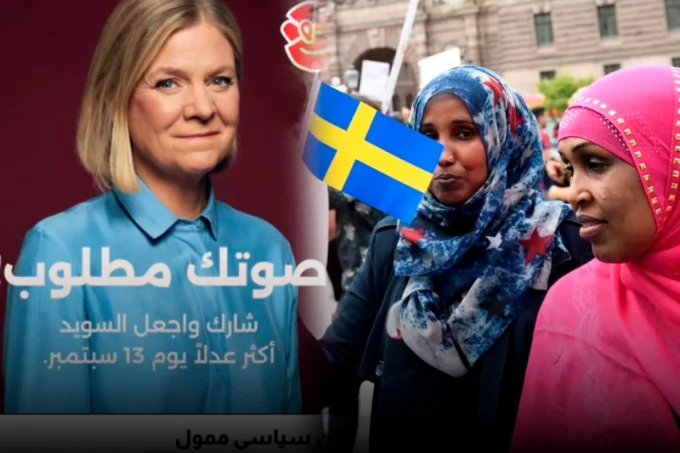

The Social Democrats of Sweden decided to launch an electoral campaign in Arabic ahead of the general elections on September 13, aiming to gain the support of the large number of illegal Muslim immigrants who have settled in the country.
The decision highlights the influence these groups of foreigners have gained within Swedish society, particularly in major urban centers.
Official figures from Statistics Sweden (SCB) show that approximately 2.94 million people, equivalent to 28% of the population, have foreign origins. This category includes both those born outside of Sweden and residents born in the country whose two parents are foreigners.
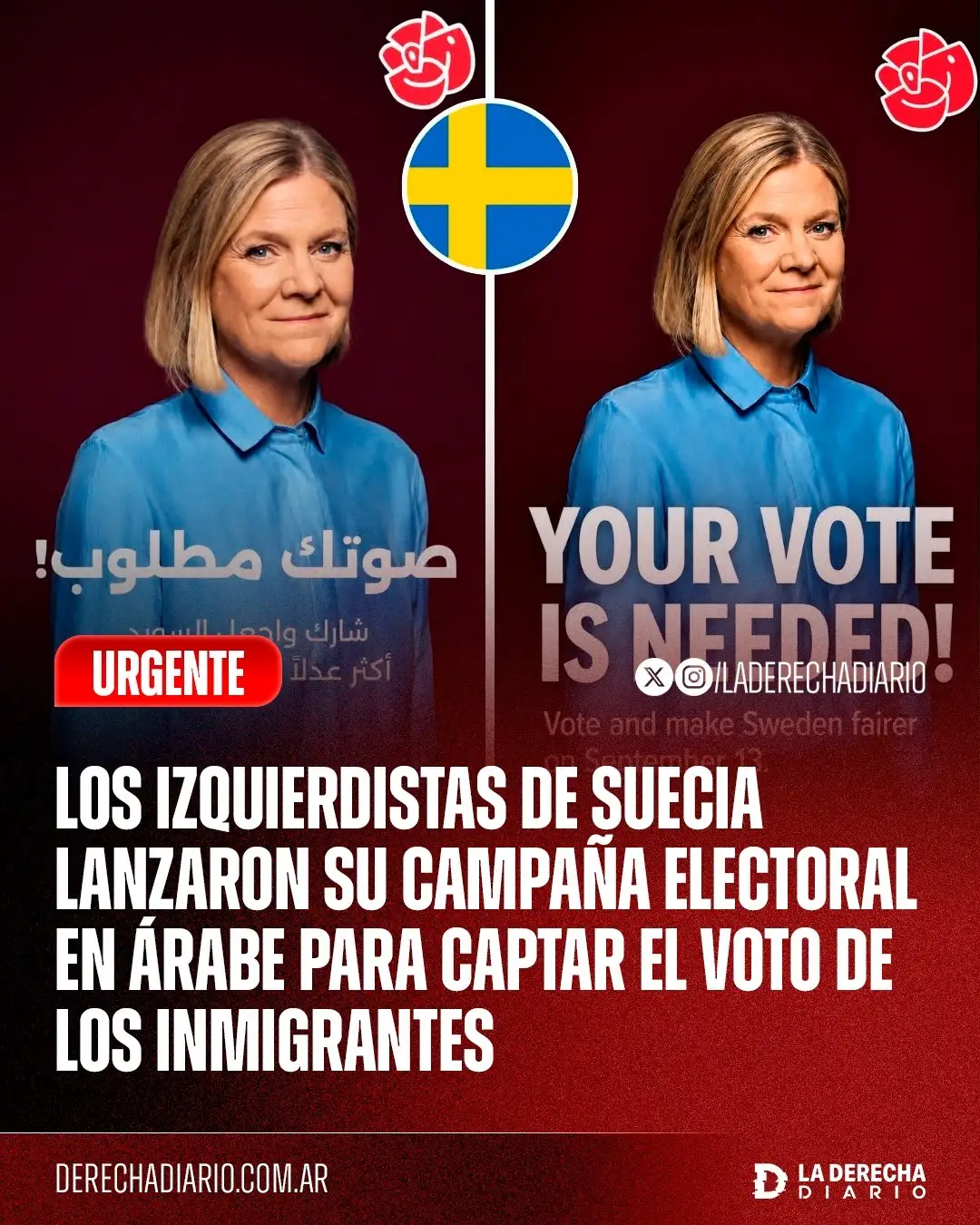
The campaign in Arabic
Within this process of demographic transformation, Sweden has significant groups from Muslim countries, particularly from Syria and Iraq.
The growth of the foreign population has also made Arabic increasingly visible in the daily life of various urban areas in the country.
Cities like Stockholm, Gothenburg, and Malmö have a significant presence of illegal Muslim immigrants and have become spaces where Arabic is notably present.
In this context, the Social Democrats seek to leverage the electoral weight of these sectors. The campaign includes messages directly aimed at Arabic-speaking voters.
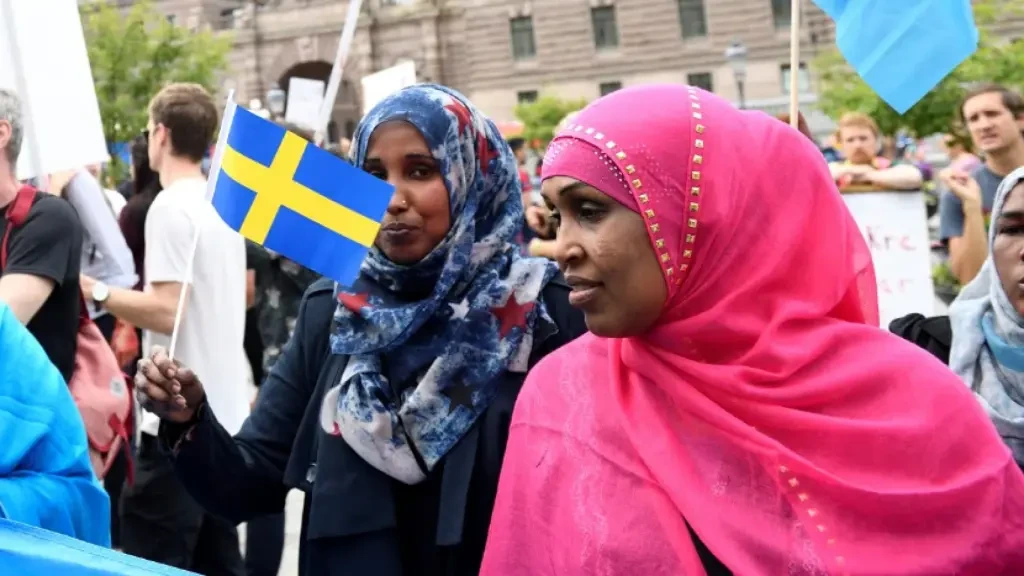
Muslims in Sweden
"Your vote is necessary! Vote and make Sweden fairer on September 13", states one of the party's campaign posters.
The electoral approach in Arabic comes as the strong illegal immigration of recent decades has considerably altered the demographic composition of the country. The fact that more than a quarter of the population has foreign origins underscores the magnitude of the change experienced by Sweden.
The strategy of the Social Democrats also occurs in a favorable electoral scenario for the left opposition. A new poll places that bloc at 53.9% of voting intention, compared to the 43.9% of the ruling right-wing bloc, led by Prime Minister Ulf Kristersson.
Within the opposition, the Social Democrats led by Magdalena Andersson appear as the main individual political force, with a 30.5% support in the survey.
After decades of immigration and profound demographic transformation, local political parties are seeking to consolidate their presence among an increasingly less Swedish population.