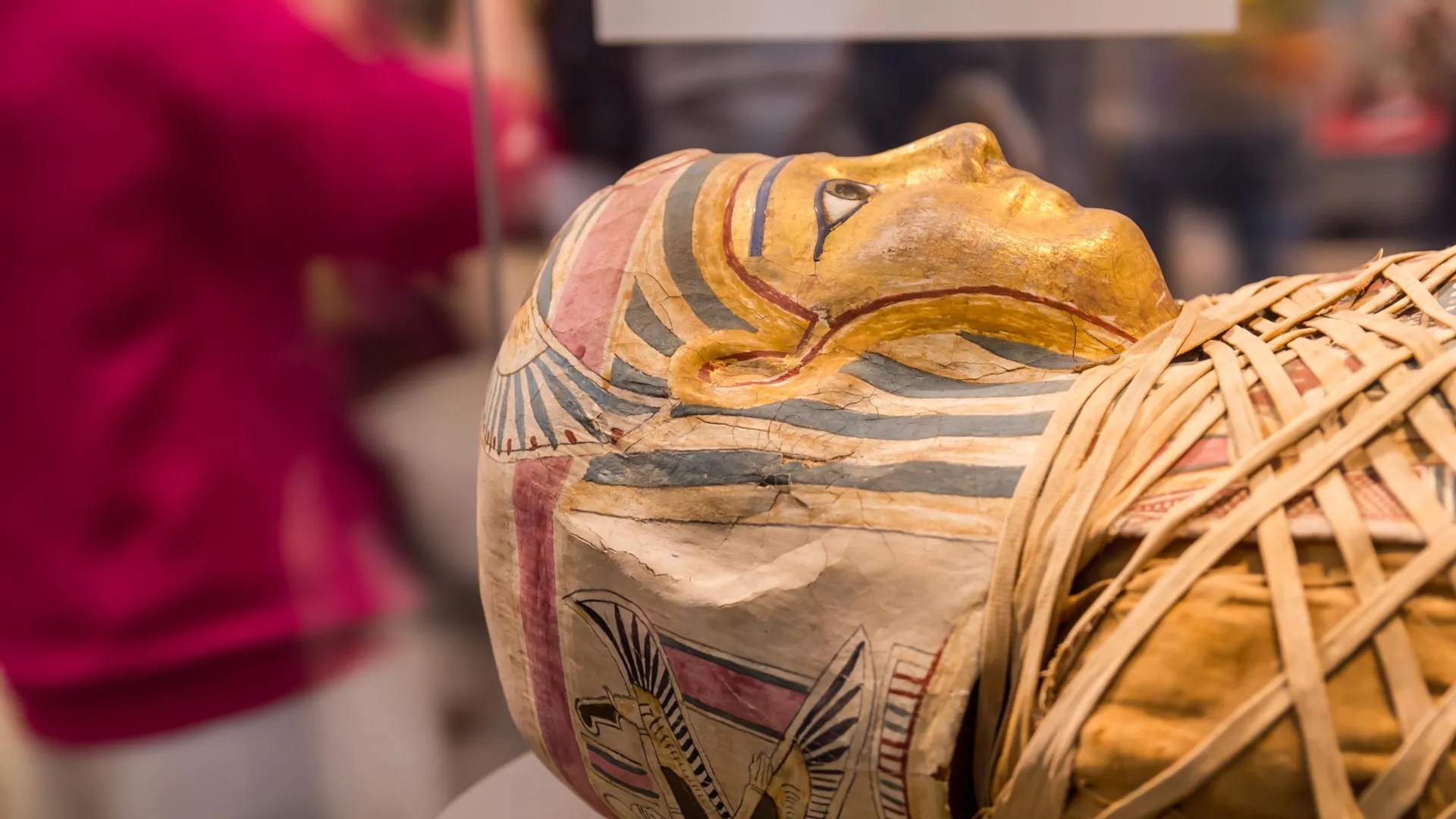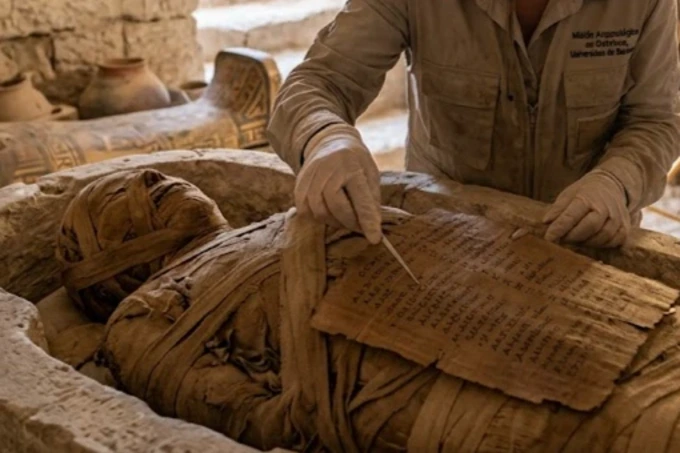

Archaeologists from the University of Barcelona made an extraordinary discovery at the site of Oxyrhynchus in Egypt. Inside a 1,600-year-old mummy, they found a papyrus containing a fragment of Homer's Iliad. This is the first documented case where a Greek literary text was intentionally incorporated into the embalming process.
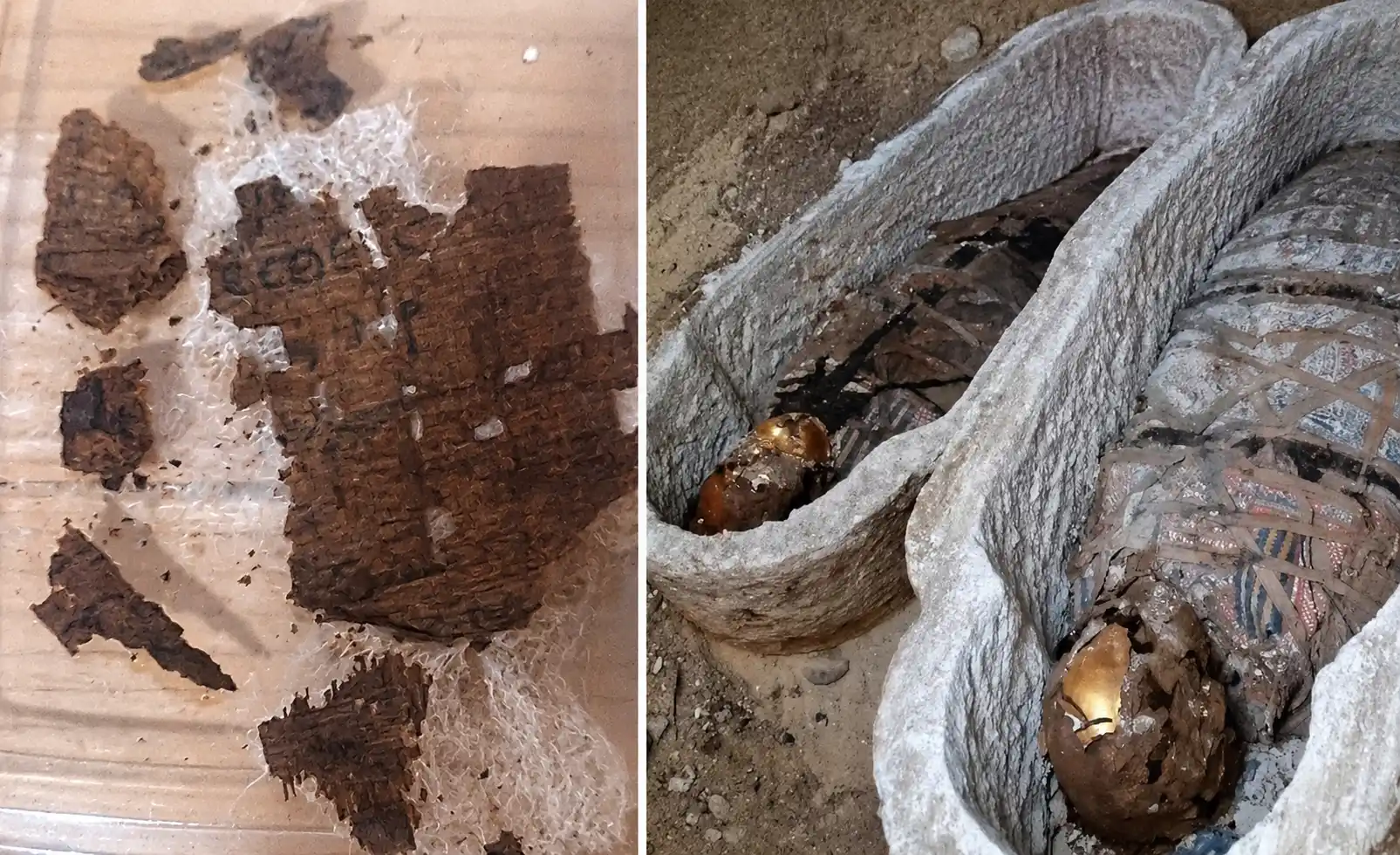
The finding occurred during excavations conducted between November and December 2025 in tomb 65 of sector 22 of the Al Bahnasa necropolis. The papyrus was resting on the abdomen of the mummy, deliberately placed as part of the funeral ritual. Until now, Greek papyri found in similar contexts contained magical or ritual texts.
This papyrus is different. Experts identified it as belonging to the famous “Catalogue of Ships,” a passage from Book II of the Iliad that lists the Greek forces preparing for the Trojan War. It is one of the most well-known sections of the Homeric epic.
An unprecedented use of literature in funeral rituals
The analysis of the document was completed in a second research campaign in January and February 2026. Conservators, papyrologists, and classical philologists participated. The reading of the text confirmed its literary origin and historical relevance. For the first time, a Greek literary text appears integrated into Egyptian mummification.
The site of Oxyrhynchus, located about 190 kilometers south of Cairo, is famous for the enormous number of Greek papyri that have been preserved there since the late 19th century. Many of them contain important literary works, but this is the first case where one is found in a funerary context.