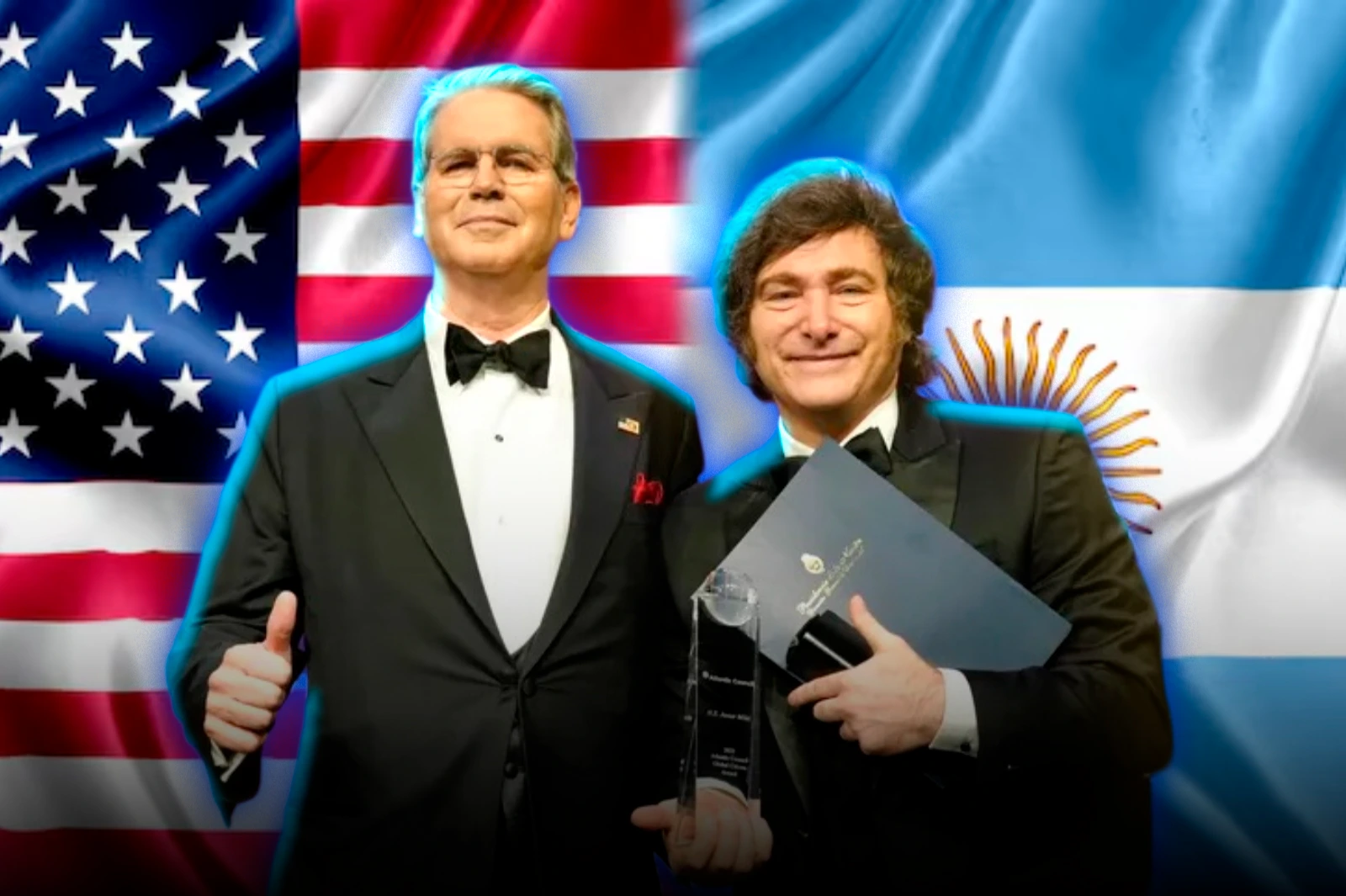
The Argentina of Javier Milei is no longer the same. With each passing day, the numbers confirm what Kirchnerists and Peronists try to deny: the country is re-integrating into the world, regaining credibility, and beginning to attract investments that for years chose other destinations. Economic freedom is no longer a promise but is becoming a visible reality. After decades of isolation, controls, uncertainty, and statism, Argentina is back on the global capital radar.
Investments do not come by chance. They arrive when there are clear rules, macroeconomic stability, and a government willing to respect private property and entrepreneurial initiative. This is precisely what is beginning to be rebuilt after years of policies that punished production, scared away savings, and destroyed trust.
A compelling example is the announcement by Louis Dreyfus Company, one of the world's giants in the sector, which will invest 400 million dollars to build one of the largest sunflower and soybean processing plants in the world in Bahía Blanca. The project emerged after meetings held during Argentina Week and reflects a fundamental change in perception: large international companies are once again considering Argentina as a long-term opportunity.
The same trend can be observed in the projects recently approved by the RIGI. The San Matías gas pipeline will mobilize an investment of 1.3 billion dollars to transport gas from Neuquén to the San Matías Gulf for LNG exports. Meanwhile, POSCO is advancing with the second phase of Sal de Oro through an investment of 547 million dollars aimed at expanding lithium carbonate production for export.
These projects are not isolated cases. With the latest approvals, the RIGI has accumulated 18 initiatives worth over 31.7 billion dollars. Behind each of them is a concrete business decision to bet on Argentina. These are investments that generate jobs, infrastructure, production, and exports. They are resources that flow in because there is a growing expectation of stability and growth.
The recovery of trust is not limited to specific projects. Argentina has just formalized its adherence to the Comprehensive and Progressive Agreement for Trans-Pacific Partnership, one of the most important trade agreements in the world. Joining this space brings the country closer to markets that represent a significant portion of the global economy and sends a very clear signal to investors and companies. This is complemented by a sustained improvement in the country's financial perception, reflected in the decline of sovereign risk, the improvement of credit ratings, and better prospects for access to credit for the state and the private sector. Argentina no longer intends to shut itself behind protectionist barriers but to integrate into the major circuits of international trade.
The logic behind all these decisions is the same. The government seeks to transform a historically closed and hostile economy towards capital into a competitive, open, and predictable country. While for years politics debated how to distribute scarcity, today a framework aimed at generating wealth, attracting investments, and expanding opportunities is beginning to be built.
The results are starting to be reflected in various indicators. The deceleration of inflation, the recovery of reserves, the improvement of business expectations, and the growing interest from international companies show a trend that few imagined possible just a few years ago. Core inflation has returned to below 2%, while country risk has reached its lowest levels in recent years, accompanied by an improvement in Argentina's credit rating. At the same time, the strengthening of the Central Bank's reserves, the improvement of financial assets, the drop in the dollar, and the possibility of a future international re-rating of the Argentine market reinforce the perception that the country is gradually regaining access to financing and credibility. Even the Treasury is getting closer to securing the necessary resources to meet future debt maturities under much more favorable conditions than those inherited.
What for decades seemed like a regional exception is beginning to normalize: companies that invest, projects that advance, and capital that is once again looking at Argentina. Economic stabilization ceases to be a goal in itself and transforms into the foundation of a new phase of growth, investment, and productive development.
That is why the real debate no longer revolves around the slogans repeated by the opposition. The central question is whether the country will continue to move along a path of openness, stability, and economic freedom or if it will return to the recipes that led it to stagnation. Every announced investment, every approved project, and every new commercial link constitutes signals that the first option is beginning to consolidate.
The Argentina of the future is not built with subsidies, controls, or grandiloquent speeches. It is built with trust, predictable rules, investment, and work. And the facts show that this process is already underway.