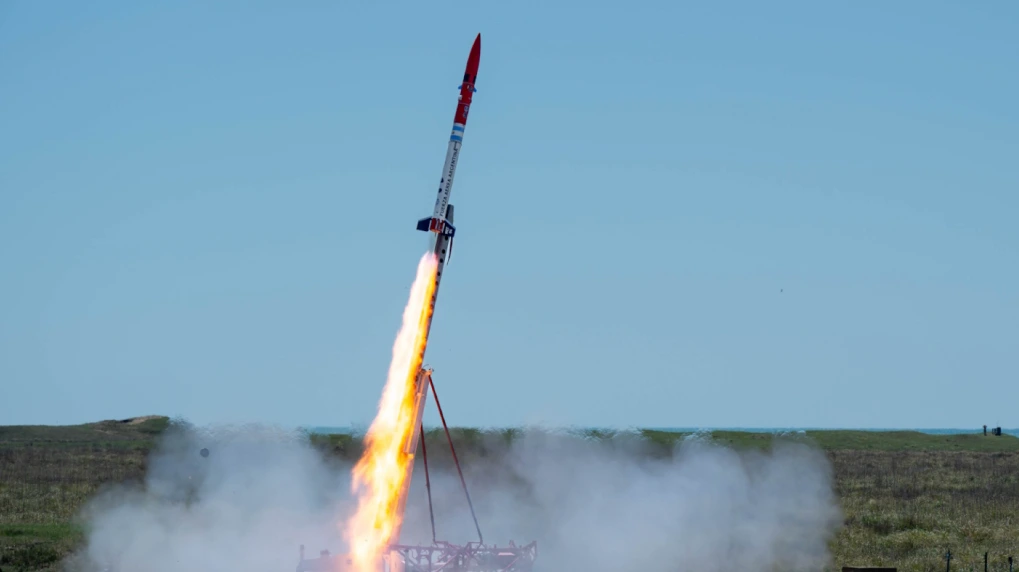
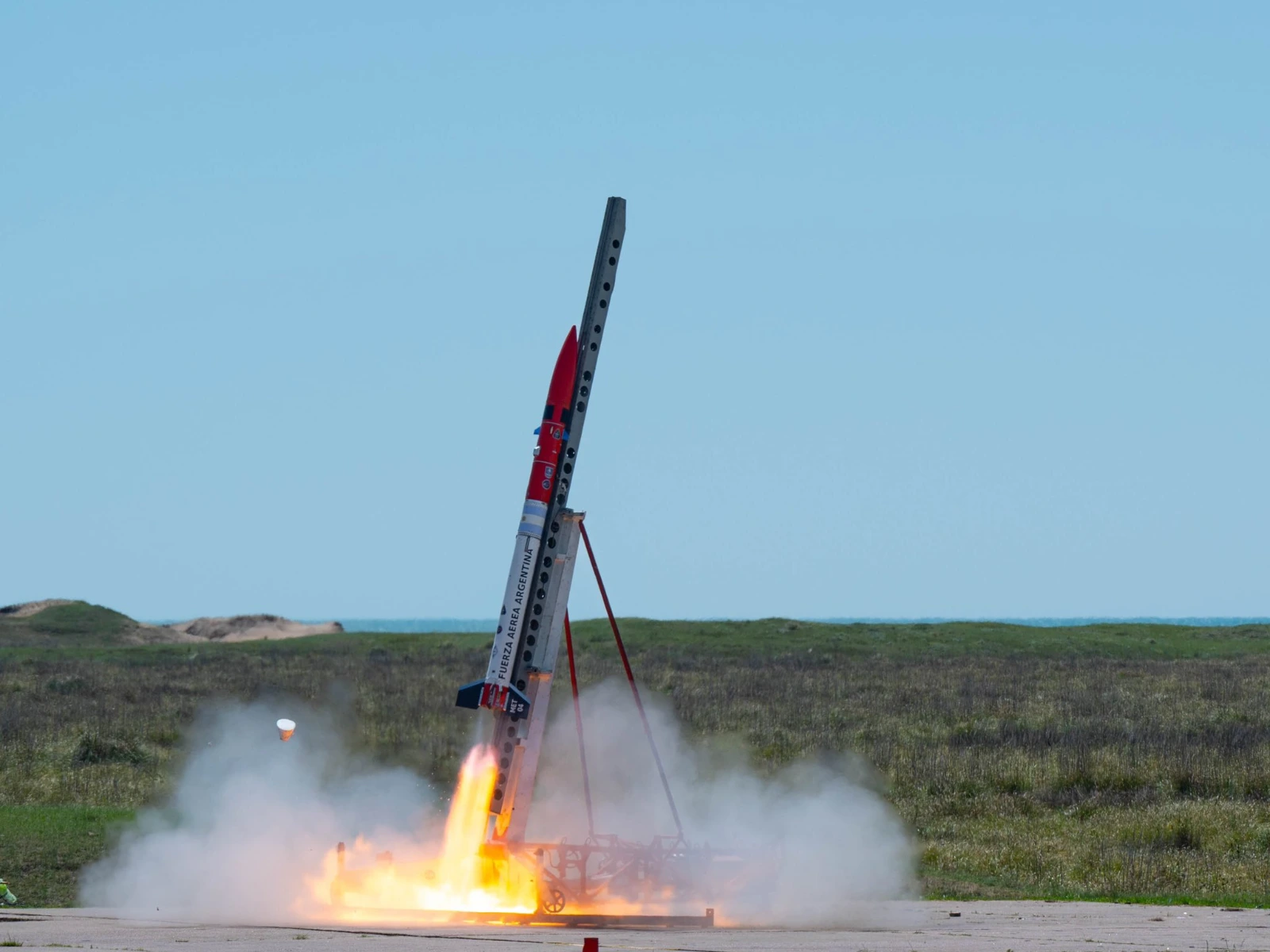
The Argentine Air Force (FAA) successfully carried out the launch of two new sounding rockets and is advancing with its program for the development of national aerospace technology under the Government of Javier Milei, after decades of neglect.
These are the models MET 3-SO “Cástor” and MET 4-SO “Pólux”, which were tested at the Center for Experimentation and Launch of Self-Propelled Projectiles II (CELPA II Atlántico), located in Mar Chiquita, Buenos Aires province.
The tests were conducted last week as part of the Gemini launch campaign. The first vehicle, the “Cástor,” took off on Tuesday night, while the “Pólux” was launched on Thursday morning.
The launch.
The tests represent a new phase in the work initiated in 2025, when the Air Force conducted tests of the sounding rockets MET 1-SO “Escorpio” and MET 2-SO “Crux.” The goal of this continuity is to deepen technical knowledge, procedures, and capabilities acquired during previous experiences.
New engines, telemetry, and recovery systems
The two launches allowed for the evaluation of different technological developments. In the case of the MET 3-SO “Cástor,” a design with lightweight engine and nozzle was used, while the MET 4-SO “Pólux” had as one of its main objectives to test the recovery capability of its payload.
Additionally, the vehicles incorporated a new mission computer that is in the qualification process and new telemetry systems.
President Javier Milei.
The development of these components involved the participation of various departments of the General Directorate of Research and Development (DGID) of the Air Force. Its Center for Applied Research was responsible for the payload, recovery systems, telemetry, fins, fuselage, avionics, and other subsystems.
Meanwhile, the Electronic Warfare Center of the DGID developed an innovation for the flight termination system, in a joint effort with the Scientific and Technical Research Institute for Defense (CITEDEF).
This last institution also played a central role in the construction of the engines, which were developed according to the engineering parameters required by the Argentine Air Force.
The launch.
A joint operation to recover the rockets
After the launches, search operations were deployed in the coastal maritime area to locate and recover the payloads. The operation involved unmanned systems from the DGID and surface naval units of the Argentine Navy.
A Cessna 182 aircraft from the Mar del Plata Military Air Base also participated, assisting in locating the elements. The Naval Prefecture provided support through control and delimitation tasks of the coastal maritime area, in addition to remaining on SAR alert.
During the campaign, the deployment of the SAMIRP “BÚHO,” a system developed by the DGID that recently obtained its certification, was also utilized. On this occasion, it was used with a new gimbal in coastal maritime scenarios to conduct search activities.
The launches of “Cástor” and “Pólux” consolidate the continuity of the Gemini campaign and expand the technical experience accumulated by the Argentine Air Force since the first tests conducted in 2025, as part of the modernization process led by Milei's Government.