The Central Bank of the Argentine Republic (BCRA)closed October with net purchases of USD 1.395 billion in the official exchange market, a figure nearly three times higher than the USD 474 million acquired during September. The result occurred despite the exchange rate volatility of recent days, driven by the depreciation of the Brazilian real following the confirmation of the continuation of the Lula da Silva regime in Brazil.
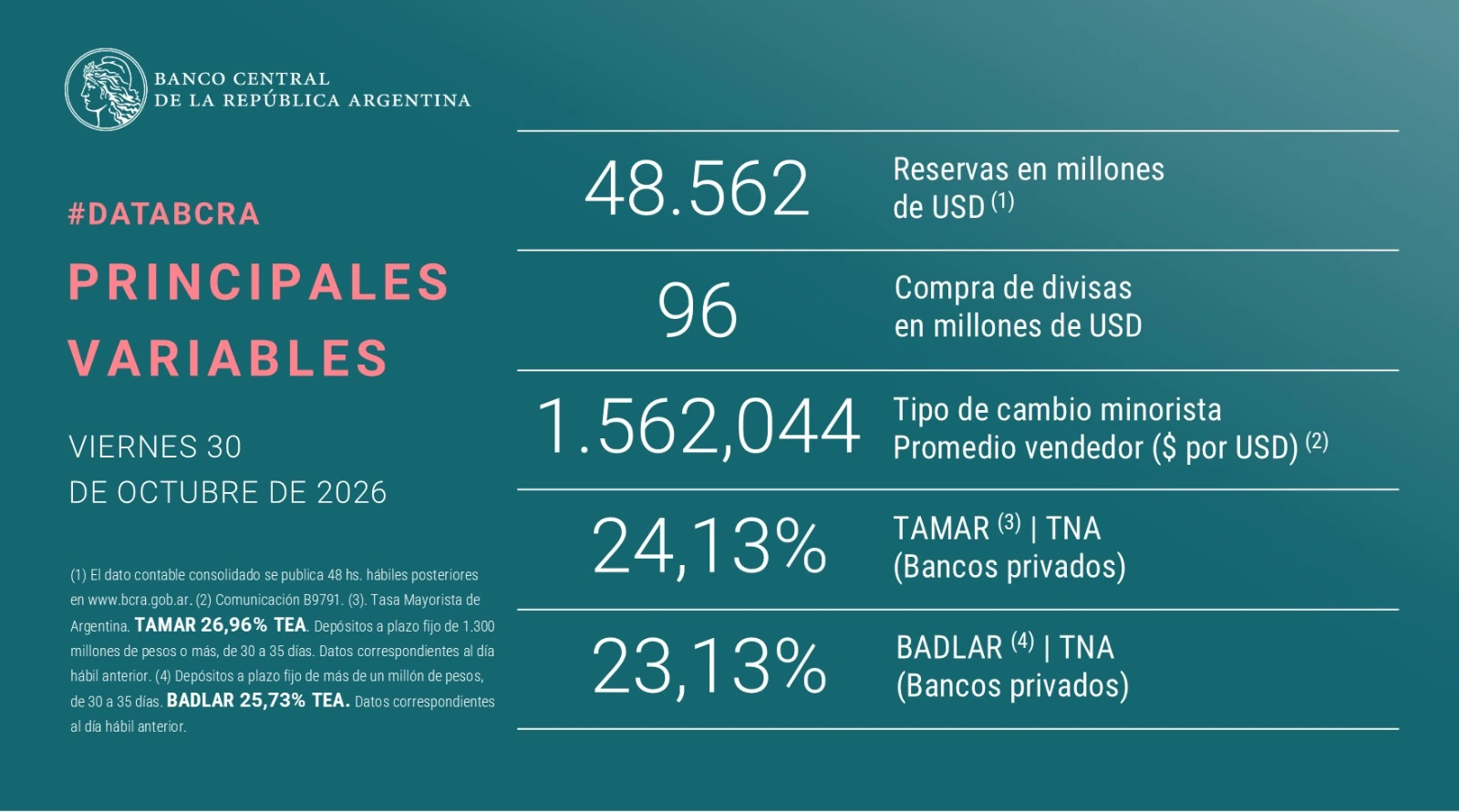
The monetary authority ended the month with another positive day, having purchased USD 96 million this Friday, October 30, equivalent to approximately 19% of the trading volume in the spot market, which reached USD 518.8 million. With this operation, the weekly buying balance reached USD 143 million, while the accumulated purchases during 2026 amounted to USD 15.963 billion.
The summary of the last day of the BCRA in the month.
The performance in October represented a significant acceleration compared to the previous month, with an increase of nearly 194% in net currency purchases. The result is even more relevant considering that the BCRA had interrupted a streak of 19 consecutive days with a positive balance and remained three days without making purchases amid the exchange tensions caused by the Brazilian situation.
The recovery in purchases coincided with a moderation in the demand for dollars in the last trading sessions. The wholesale exchange rate fell by $5 this Friday and closed at $1,534, after having recorded new nominal highs at the beginning of the week. During October, the wholesale dollar accumulated an increase of 1.12%, while the increase so far this year reached 5.43%.
However, the higher volume of purchases did not automatically translate into an increase in the stock of international reserves. During the last trading session, the gross reserves decreased by USD 592 million and ended at USD 49.562 billion, again below the threshold of USD 50 billion.
Santiago Bausili presented the BCRA's monetary policy report and anticipated higher economic growth
Part of this reduction was due to valuation factors, particularly the 3.50% drop in the international price of gold, which would have caused an approximate decrease of USD 280 million in the value of the holdings. Financial movements related to month-end closures may also have had an impact, although their specific effect has not yet been detailed.
Thus, the Central Bank ended October with a significant acceleration in its dollar purchases, consolidating a positive balance of USD 15.963 billion so far in 2026, despite the exchange pressures recorded in the region during the last week.