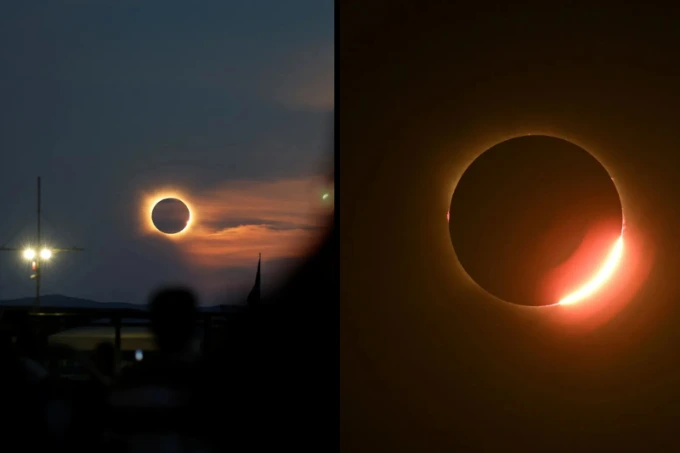

For the first time in over a century, Spain witnessed a total solar eclipse. The astronomical phenomenon, which was also seen partially in some areas of northern North America, much of Europe, and western Africa, offered an unusual and particularly photogenic spectacle thanks to the position of the Sun just above the horizon.
The path of totality crossed the northern hemisphere from west to east. It began in the Arctic Ocean, north of Greenland, continued west of Iceland, and crossed the North Atlantic. Then, exactly at 20:30 Central European Summer Time, the shadow of the Moon reached the Iberian Peninsula.
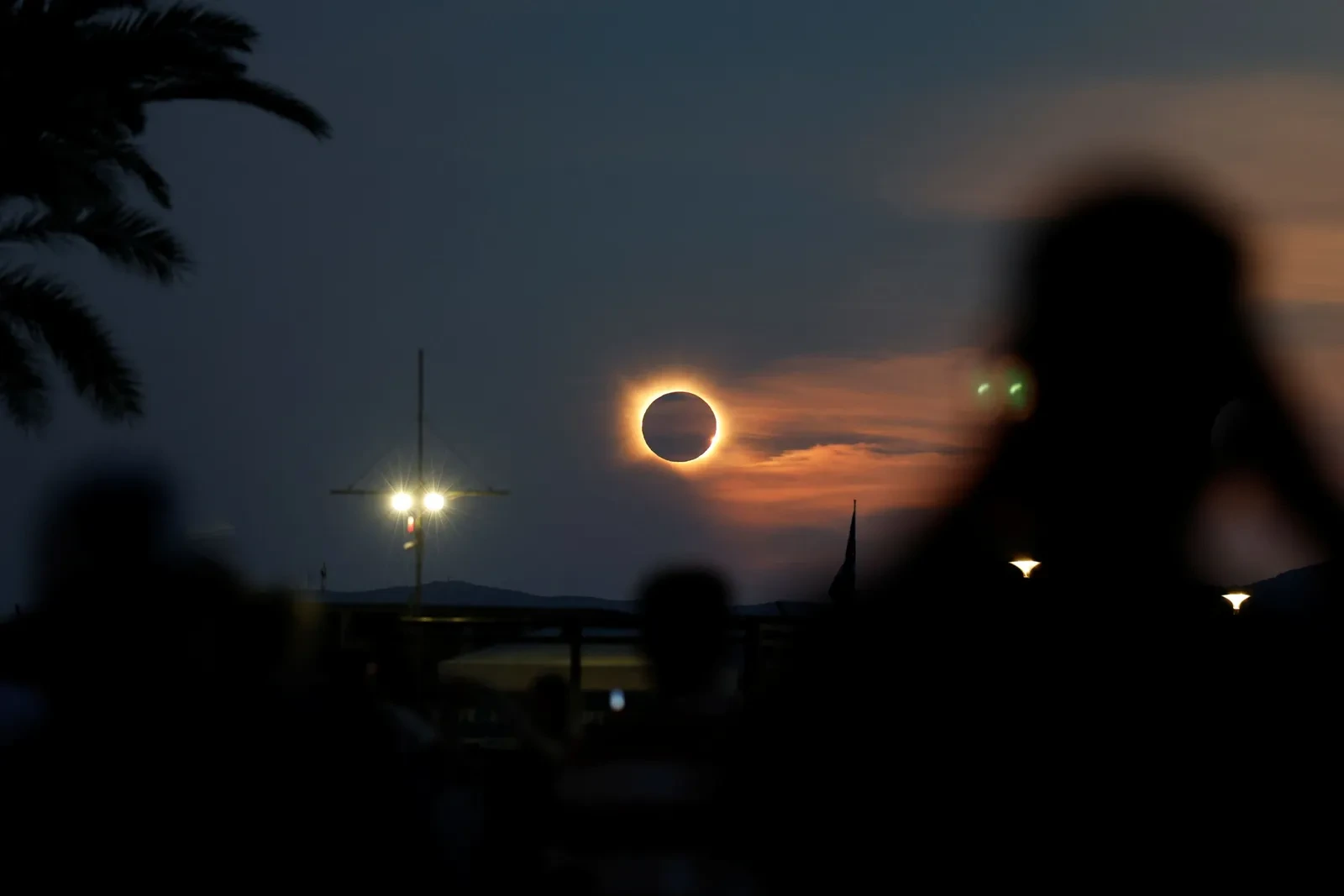
Regions such as Galicia, Asturias, Castilla y León, Madrid, Aragón, Catalonia, the Valencian Community, and the Balearic Islands experienced totality, while the rest of the country observed a partial eclipse. The complete event lasted about four and a half hours, although the total darkening of the sky lasted just under two minutes.
This brief interval allowed various space agencies to conduct scientific experiments along the path of totality. One of the most notable projects involved a NASA mission that followed the shadow of the Moon aboard a high-altitude research aircraft, the WB-57, which flew at 50,000 feet.
Experiments on the solar corona and atmosphere
A team of scientists sought to gather new data on the dynamics of the solar corona, the Sun's outermost atmosphere, which can only be studied in detail during total eclipses. The space agency also took students from several universities in the United States to Iceland and Spain to launch scientific balloons before, during, and after the phenomenon.
The goal was to analyze how the temporary darkening of the sky caused by the eclipse modifies the conditions of the Earth's atmosphere. This information will help to better understand the effects of these astronomical events on the environment.
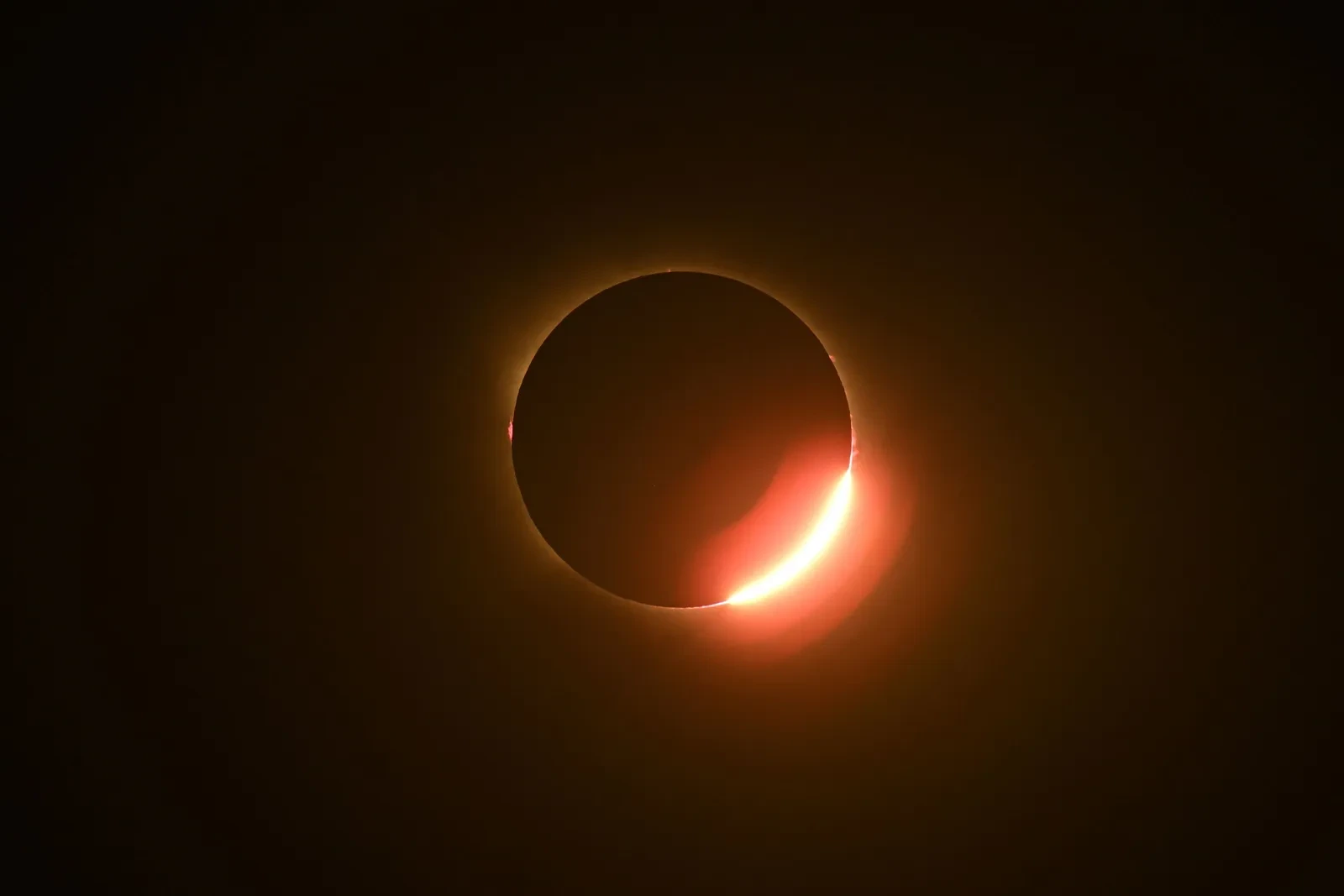
Later this month, a partial lunar eclipse will be visible in the Americas, opening new opportunities to investigate the cosmos. Meanwhile, the images from Wednesday's solar spectacle allow us to pause and look closely at what occurred.
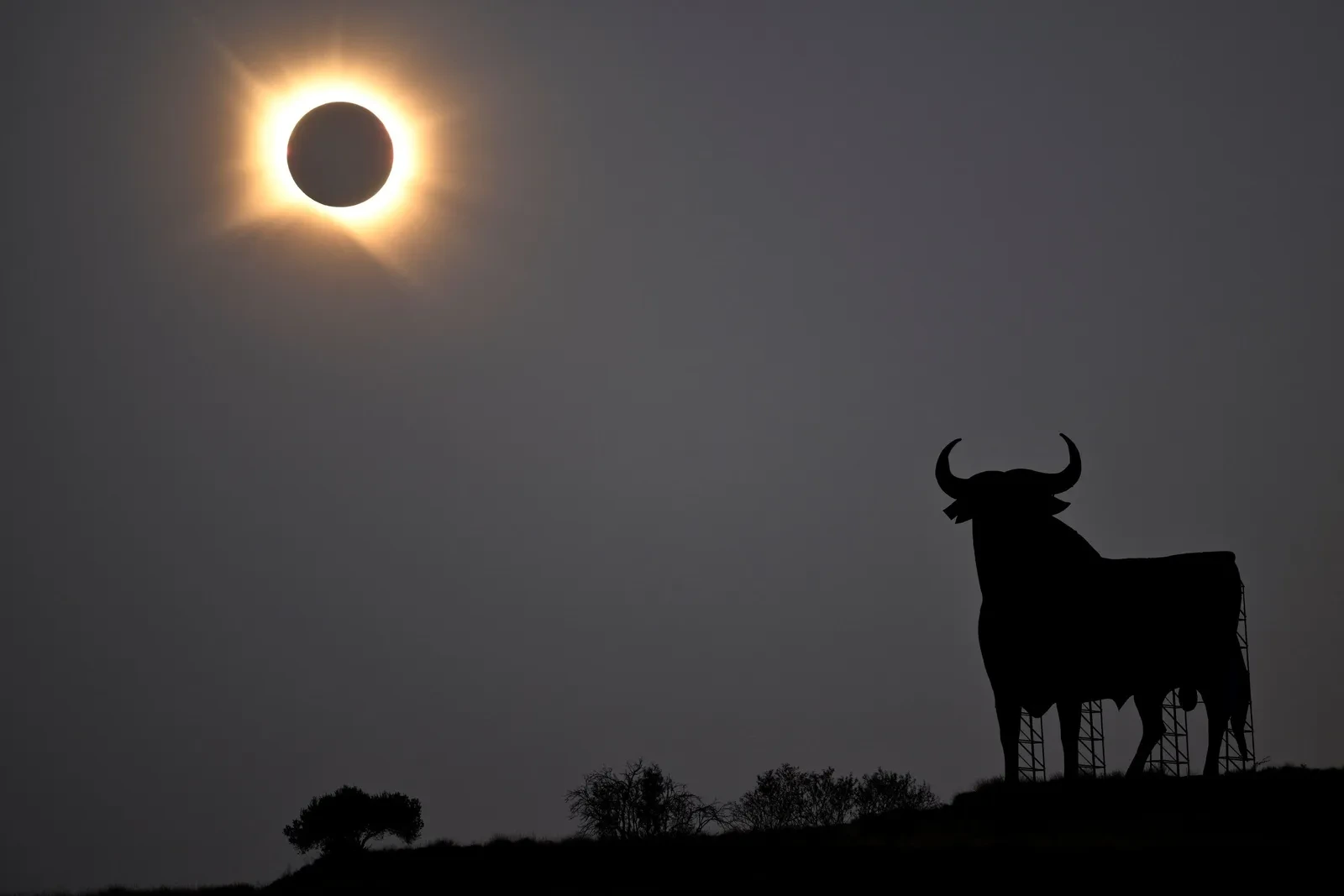
The low position of the Sun near the horizon gave the eclipse a particular visual character, with tones and contrasts that photographers took advantage of along the entire path of the shadow. From northern Spain to the islands, the sky transformed fleetingly but intensely.
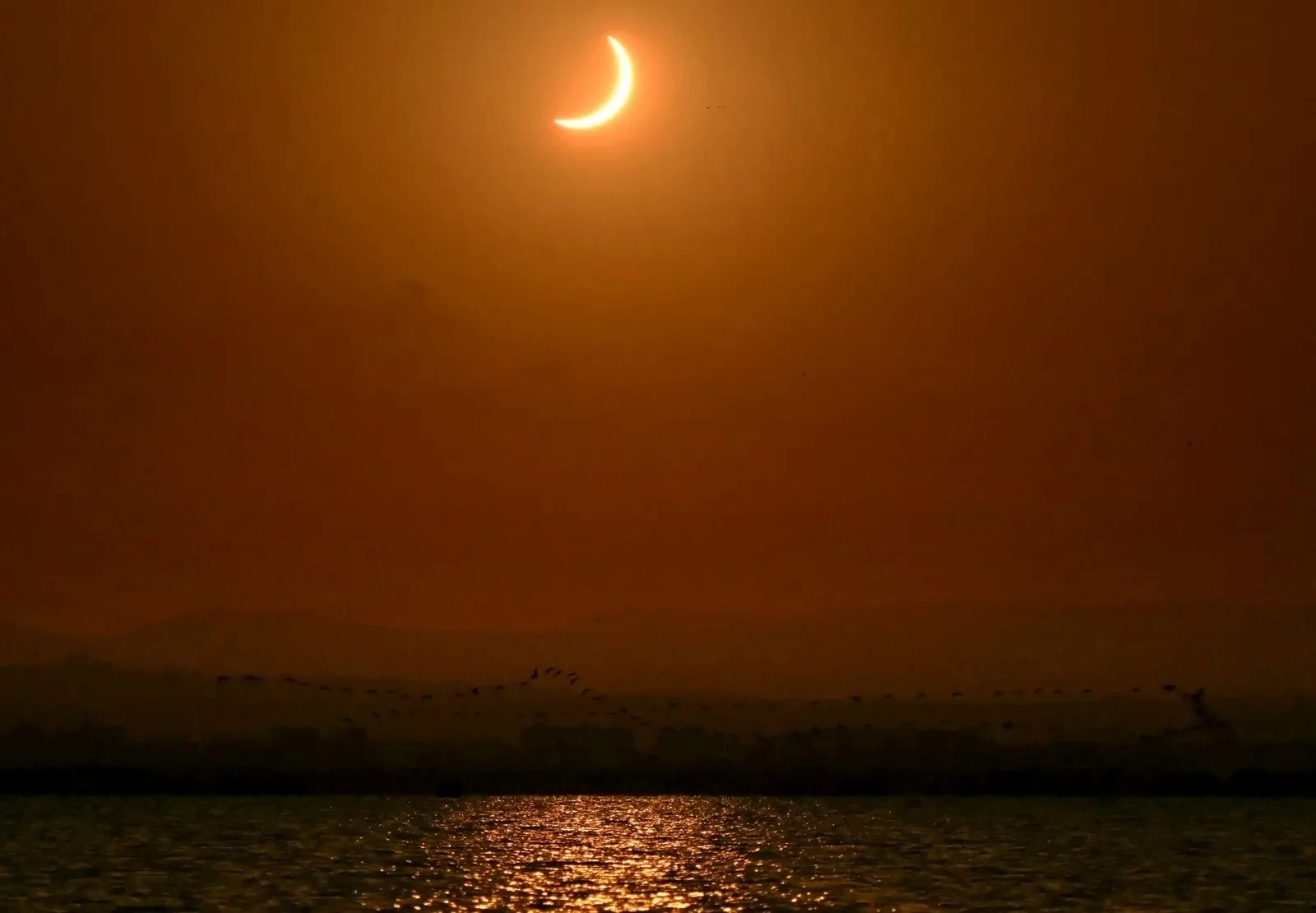
A phenomenon not seen in over a hundred years
The fact that the Iberian Peninsula was once again completely under the shadow of the Moon marks a milestone for those who follow these events. The last time something similar happened was over a century ago, so entire generations had not had the chance to experience it on Spanish territory.
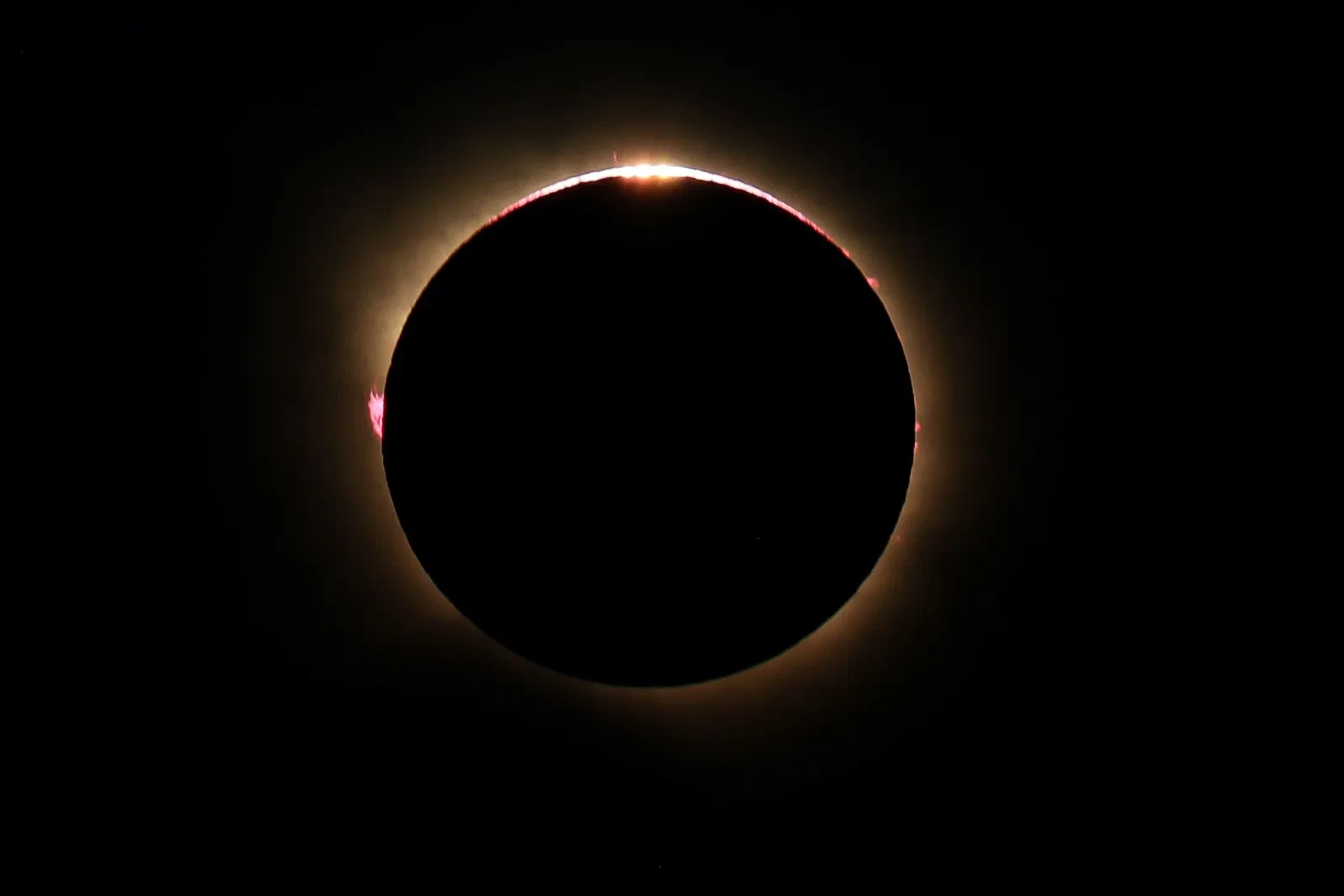
The areas of totality allowed not only for observation with the proper precautions but also for the photographic recording of a unique moment. The captured images show everything from the ring of light around the lunar disk to the landscape enveloped in an unusual twilight at that time of day.