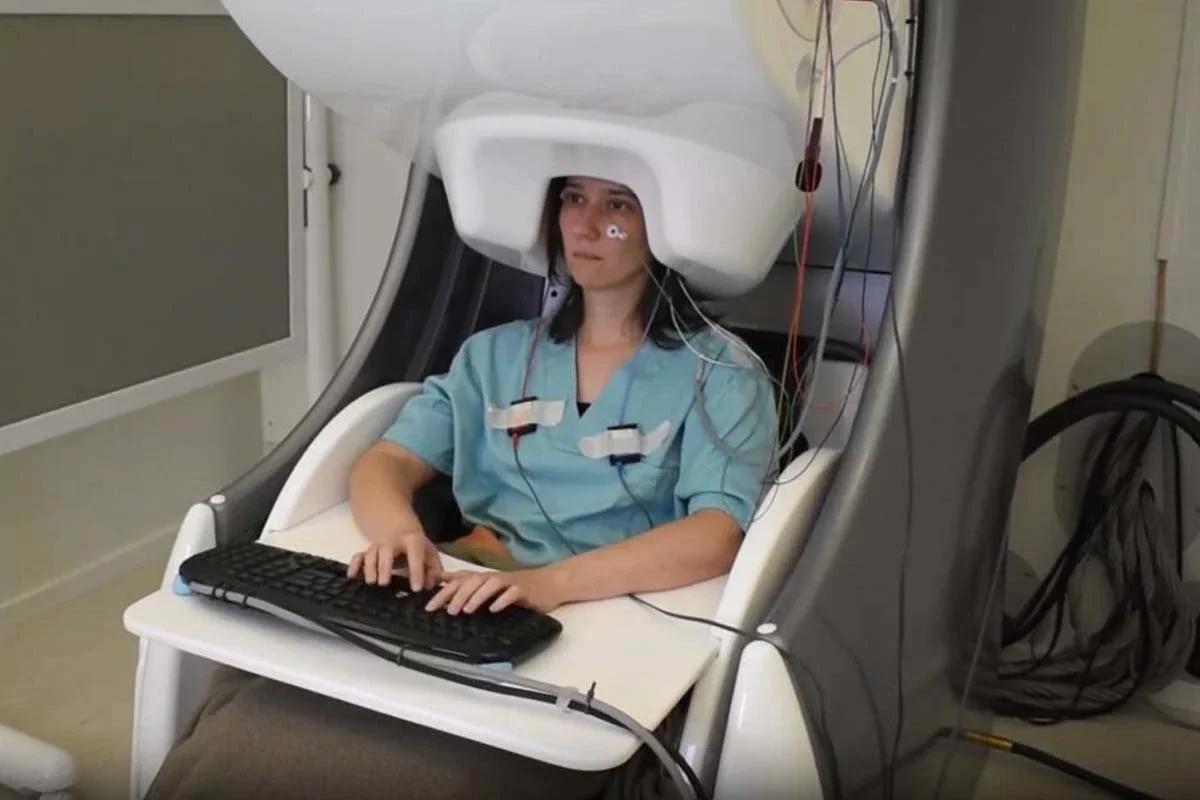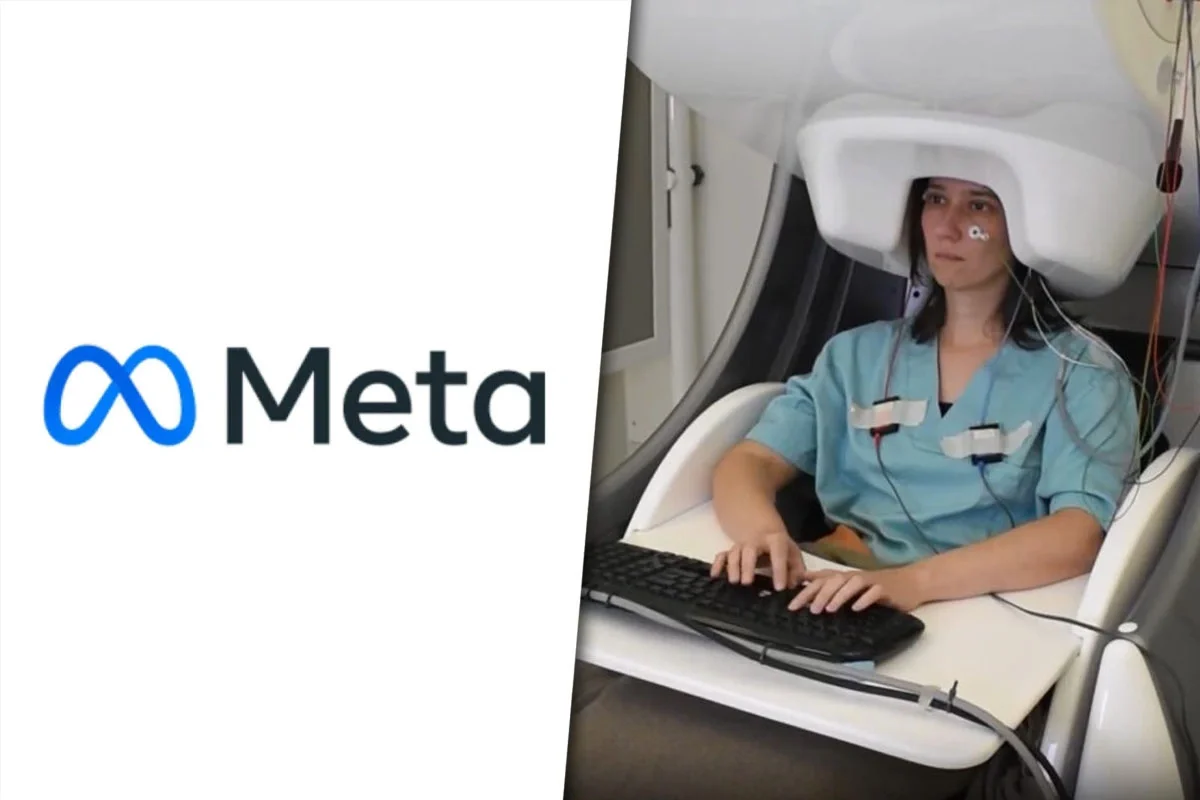

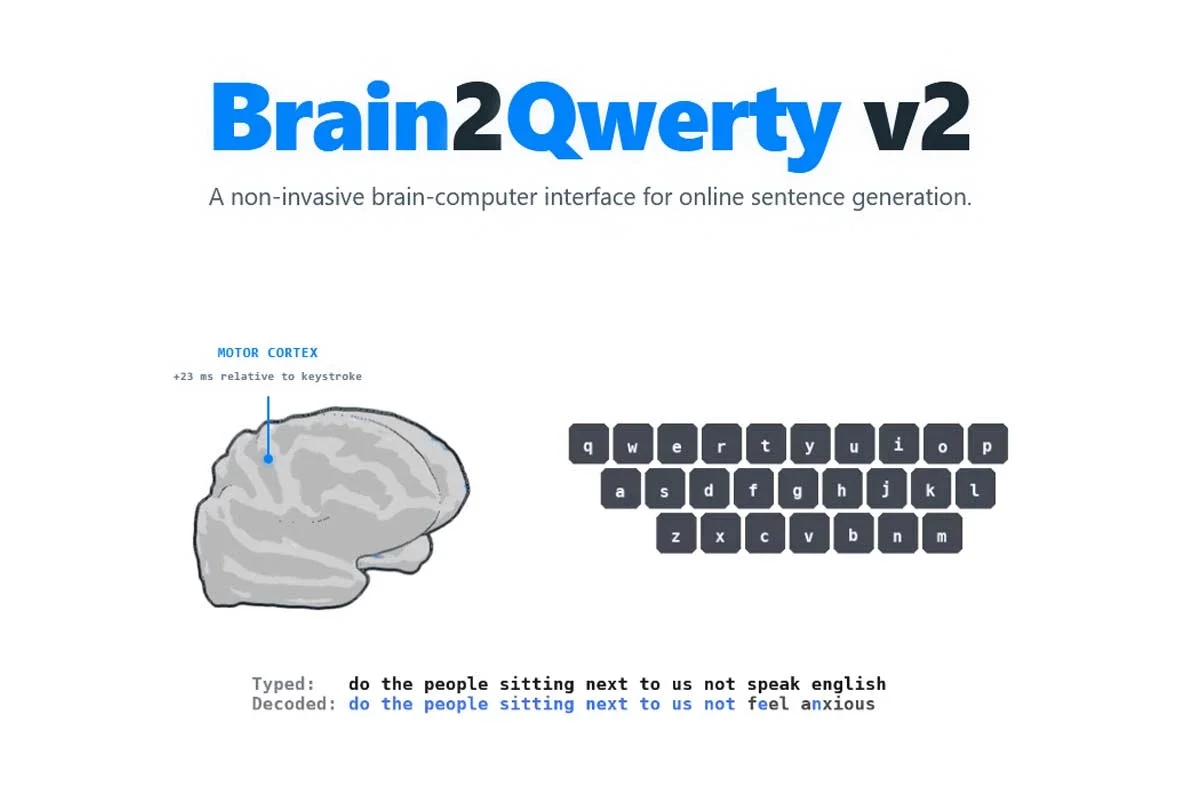
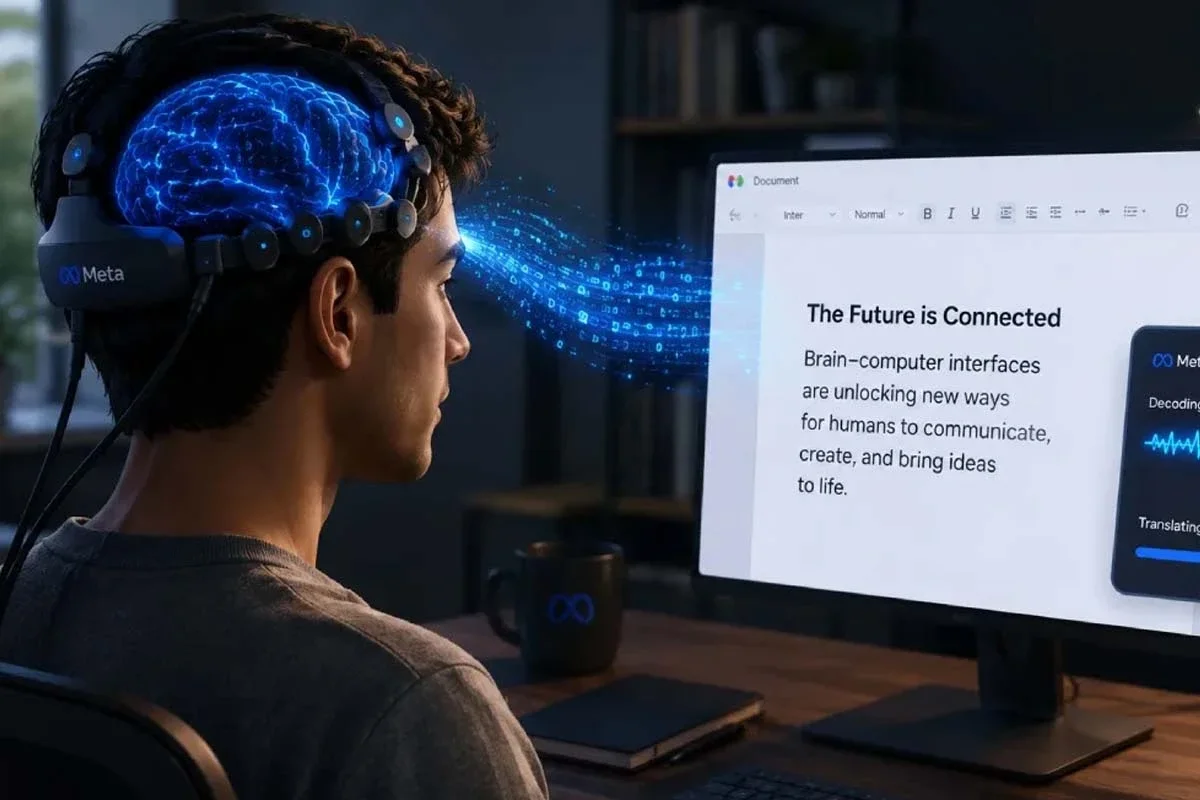
Meta introduced Brain2Qwerty v2, a new artificial intelligence system capable of converting brain activity into complete sentences using non-invasive recordings. The advancement aims to provide an alternative for people who have lost their speech to communicate again without the need for brain implants.
The model uses recordings obtained through magnetoencephalography (MEG) and represents an evolution from the first version of Brain2Qwerty. According to the company, the system can now generate complete phrases directly from continuous brain activity.
What is Brain2Qwerty, the new AI presented by Meta
Brain2Qwerty v2 is a model developed by Meta to decode language from brain signals recorded using MEG, a technique that does not require surgery.
The initiative is aimed at individuals who have lost the ability to speak after a stroke, trauma, or brain disorder.
Until now, this type of communication could only be restored through neuroprosthetics implanted in the motor cortex, a procedure that requires surgical intervention.
How Brain2Qwerty v2 works
The new version is based on the architecture of Brain2Qwerty v1, published last year and recently accepted by the journal Nature Neuroscience.
The first version was capable of predicting keystrokes from patterns of brain activity but needed to know the exact moment of each keystroke, making it unsuitable for real-time use.
Brain2Qwerty v2 eliminates that limitation and directly generates sentences from a continuous recording of brain activity.