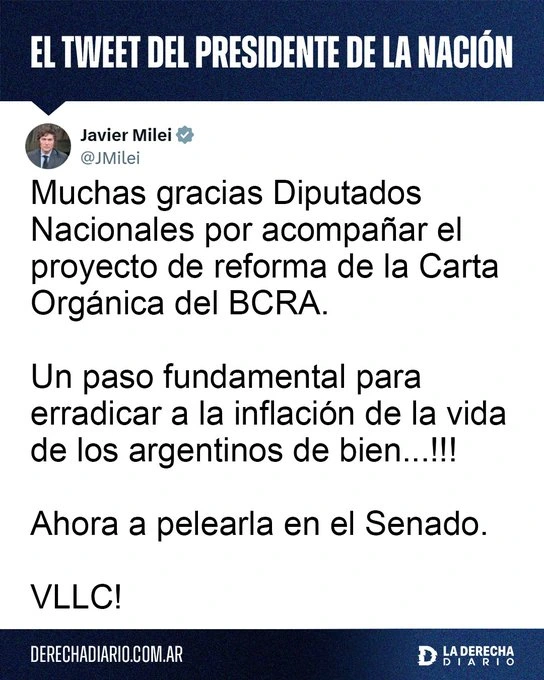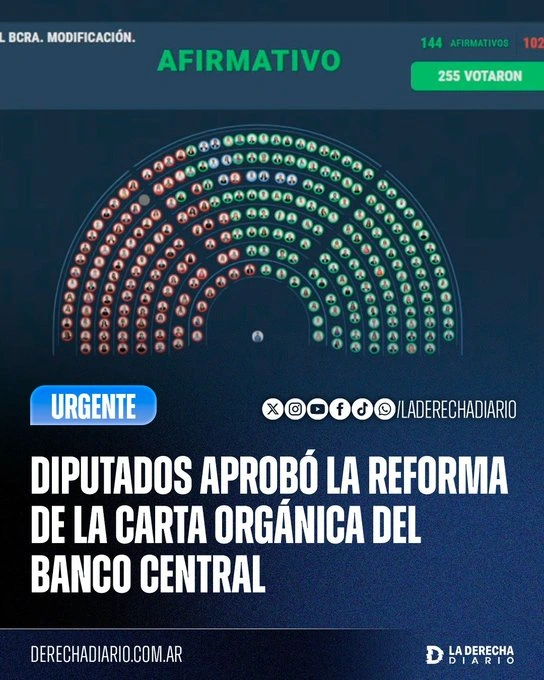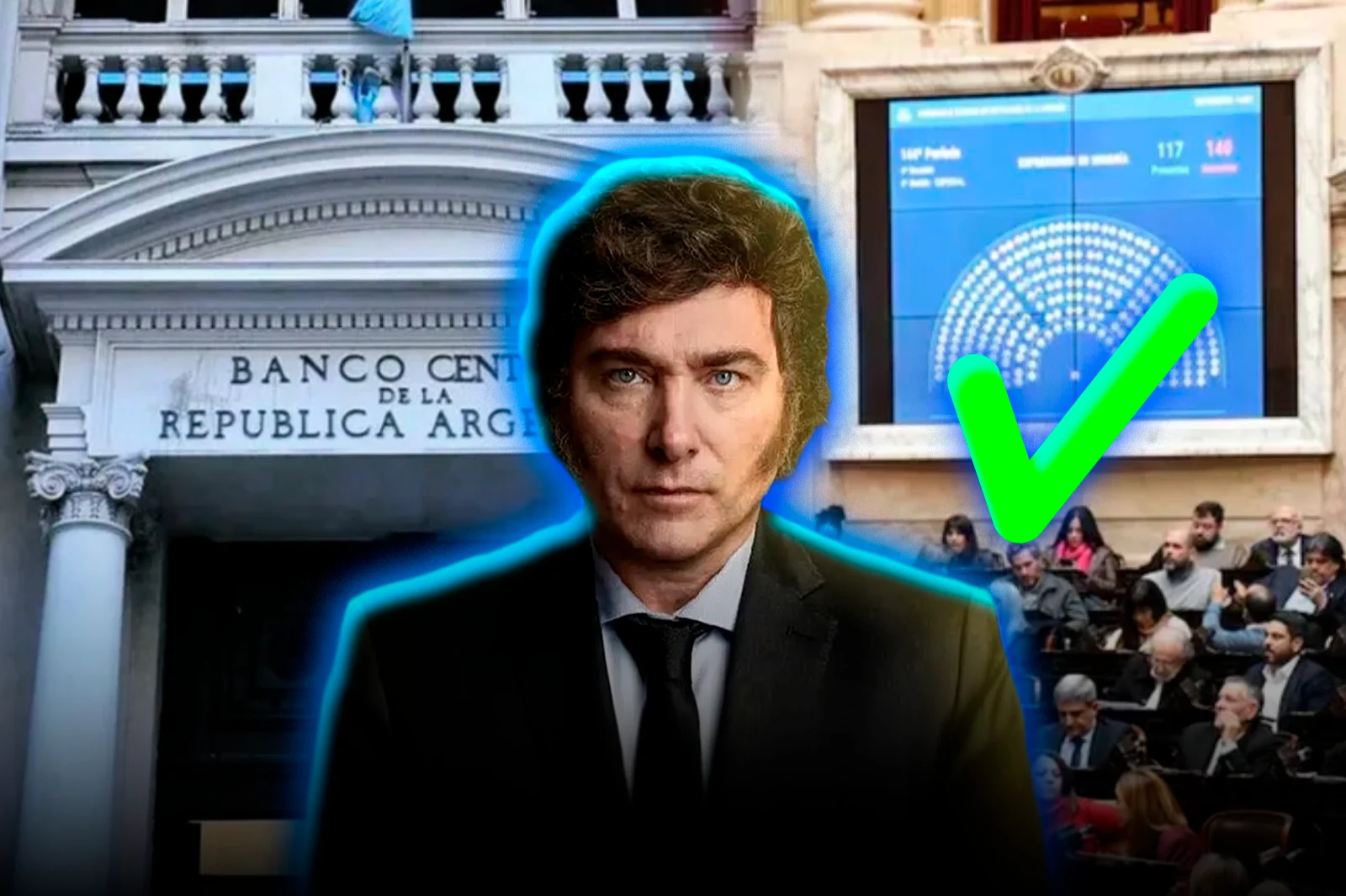










With the new regulation promoted by the ruling party, the institution now led by Santiago Bausili and Vladimir Werning will regain its technical north, establishing that it will have a single and sacred priority mandate: "preserve the value of the currency".
Specifically, the reform introduces ironclad locks to prevent politics from looting taxpayers' pockets again.
The law establishes in a decisive manner the "explicit prohibition of direct or indirect financing of the Treasury". Consequently, the BCRA will be disabled from making "temporary advances", the mechanism that historically financed the fiscal deficit of successive governments through uncontrolled issuance of pesos. Likewise, the highest monetary authority will not be able to "directly purchase public securities in the primary market".
Finally, the law consolidates the legal security of the authorities of the Central Bank. To remove the president or any member of its board, a "serious cause" must be transparently accredited, which will require validation by a two-thirds majority in the Chamber of Deputies and in the Senate.
As a sign of willingness for federal dialogue, the ruling party is considering addressing the proposal from various allied governors aimed at "federalizing the board of the Central Bank" by incorporating directors who represent the provinces "by regions".