The federal prosecutor filed a complaint regarding the disastrous activity planned at the Faculty of Social Sciences and requested that it be suspended until the Justice system analyzes whether it could constitute an apology for terrorism
In a strong demonstration of institutional protection against the provocation of the left, the federal judiciary intervened decisively to stop the reprehensible tribute to the war criminal and terrorist leader of the People's Revolutionary Army (ERP), Mario Roberto Santucho. Following the severe warnings issued by the Executive Power led by President Javier Milei, the Prosecutor's Office headed by Carlos Stornelli took legal action to prevent the facilities of the University of Buenos Aires (UBA) from being used as an ideological hideout to glorify armed terrorism.
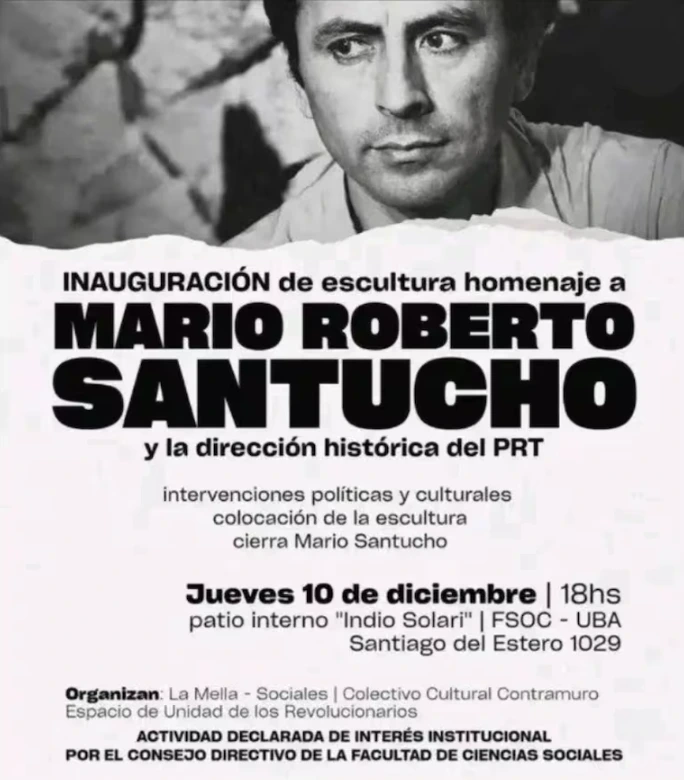
The filing directly challenges the resolution of the Faculty of Social Sciences, scheduled for December 10, requesting the immediate halt of the events and the prosecution of any potential crimes by the involved authorities. The measure promoted by prosecutor Carlos Stornelli aims to cut off the glorification of political violence at the UBA. In his legal document, Carlos Stornelli filed a formal complaint to investigate the possible commission of crimes and demanded the urgent adoption of a preventive measure of non-innovation with the explicit purpose of stopping both the event and the installation of a monument to the leader of the ERP.
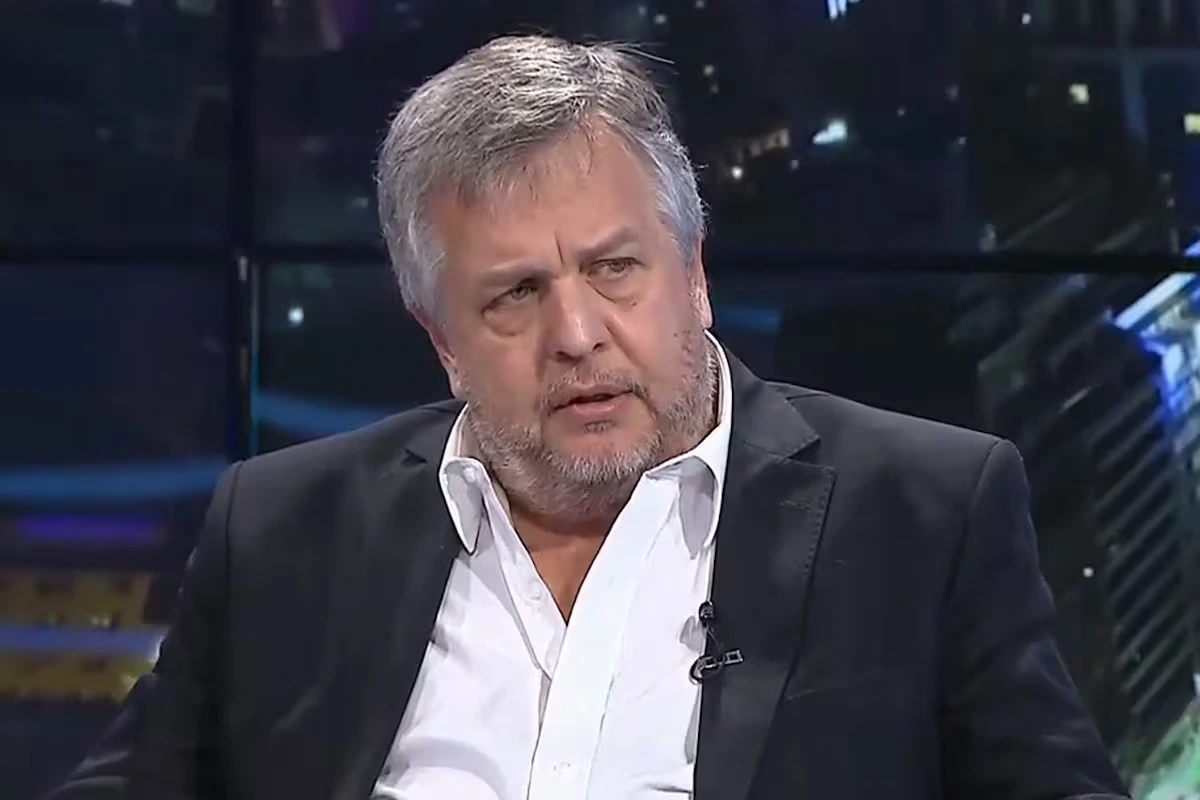
Carlos Stornelli
The prosecutor emphasized in his request the urgent need for the precautionary measure: "It is requested that you urgently order a precautionary measure of non-innovation, ordering the provisional suspension of the referred act and the installation of the sculpture".
The criminal action initiated by Carlos Stornelli establishes that the public exaltation of a terrorist responsible for murders, kidnappings, and attacks committed between 1973 and 1976 openly violates the legal framework, constituting probable behaviors classified as apology for crime and failure to comply with public official duties by those who enabled the use of state resources and facilities.
In addition to demanding the provisional suspension of activities at the university headquarters in the Buenos Aires neighborhood of Constitución, Carlos Stornelli opened a thorough line of investigation into the financing and logistics of the event. The judiciary requested the seizure and incorporation into the case file of all administrative documentation related to the allocation of spaces and funds.
In detail, Carlos Stornelli requested an audit of:
Donations received for the creation, transportation, or installation of the bust.
Contract agreements signed by the faculty authorities.
Invoices and payment orders issued in the context of the organization.
Any other accounting record certifying the allocation of public or private resources.
Tribute to Mario Santucho
With these measures, the prosecutor seeks to examine the actions of each of the officials of the Faculty of Social Sciences —led by the Kirchnerist dean Ana Josefina Arias— who participated in the various administrative stages that allowed the initiative proposed by the militant groups La Mella, the Contramuro Cultural Collective, the Bonavena Chair of Professor Pablo Bonavena, and the Space for the Unity of Revolutionaries.
The complaint by Carlos Stornelli directly converges with the formal letter sent to the rector Ricardo Gelpi by the undersecretary of University Policies, Alejandro Álvarez, under the jurisdiction of the Ministry of Human Capital led by Minister Sandra Pettovello. In that document, the national government warned that the use of public resources to honor someone who sought to impose a totalitarian regime by force carries criminal and administrative responsibilities.
The judicial action reinforces the rejection of the block of senators from La Libertad Avanza and the pain expressed by the victims of the ERP, such as Arturo Larrabure, son of Colonel Argentino del Valle Larrabure, murdered in 1975 after 372 days of captivity.
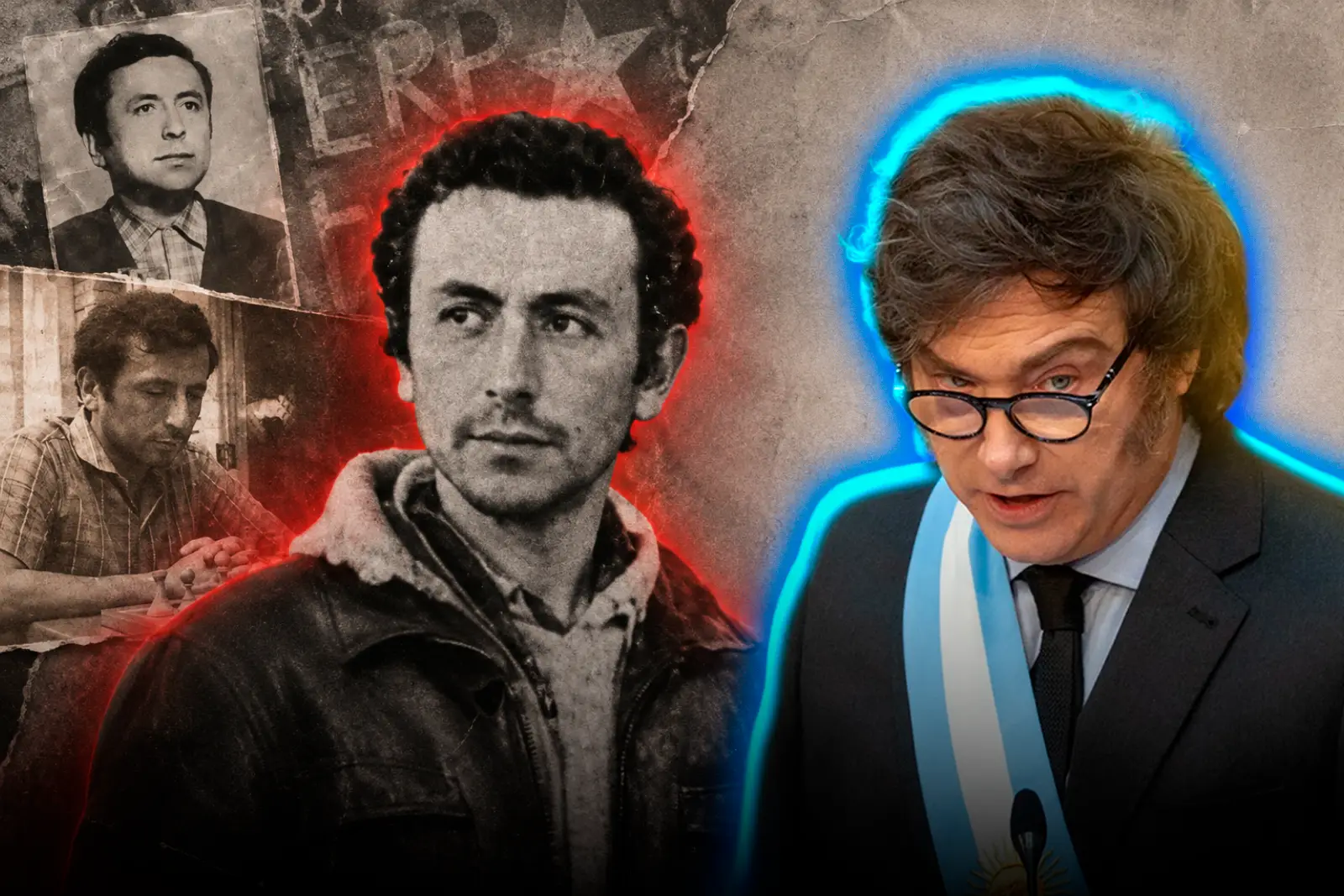
The president, Javier Milei.
Furthermore, the judicial and political pressure aligned the university leadership itself: the vice-rector Emiliano Yacobitti condemned the tribute to the terrorist Mario Santucho for attacking democracy between 1973 and 1976, announcing a project before the Higher Council for the session on November 25 to officially reject the activity.
The judicial onslaught by prosecutor Carlos Stornelli, in perfect sync with the cultural and institutional battle of the government of Javier Milei, marks a milestone in the defense of the rule of law. The intention of the university Kirchnerism to pay tribute to the founder of the PRT and the ERP —an organization responsible for murders such as those of Oberdán Sallustro, Captain Humberto Viola and his daughter, and armed assaults like those in Azul (1974) or Monte Chingolo (1975)— now finds an insurmountable halt in the courts. The judiciary and the Executive Power have made it clear that the classrooms of the public university cannot be used for political violence or for the glorification of terrorism.