
Trump backed Jensen Huang and warned about Chinese espionage behind the scandal that shook Nvidia

Trump backed Jensen Huang and warned about Chinese espionage behind the scandal that shook Nvidia

The U.S. president defended the businessman and urged Nvidia to consider his return to the helm of the company

Share:

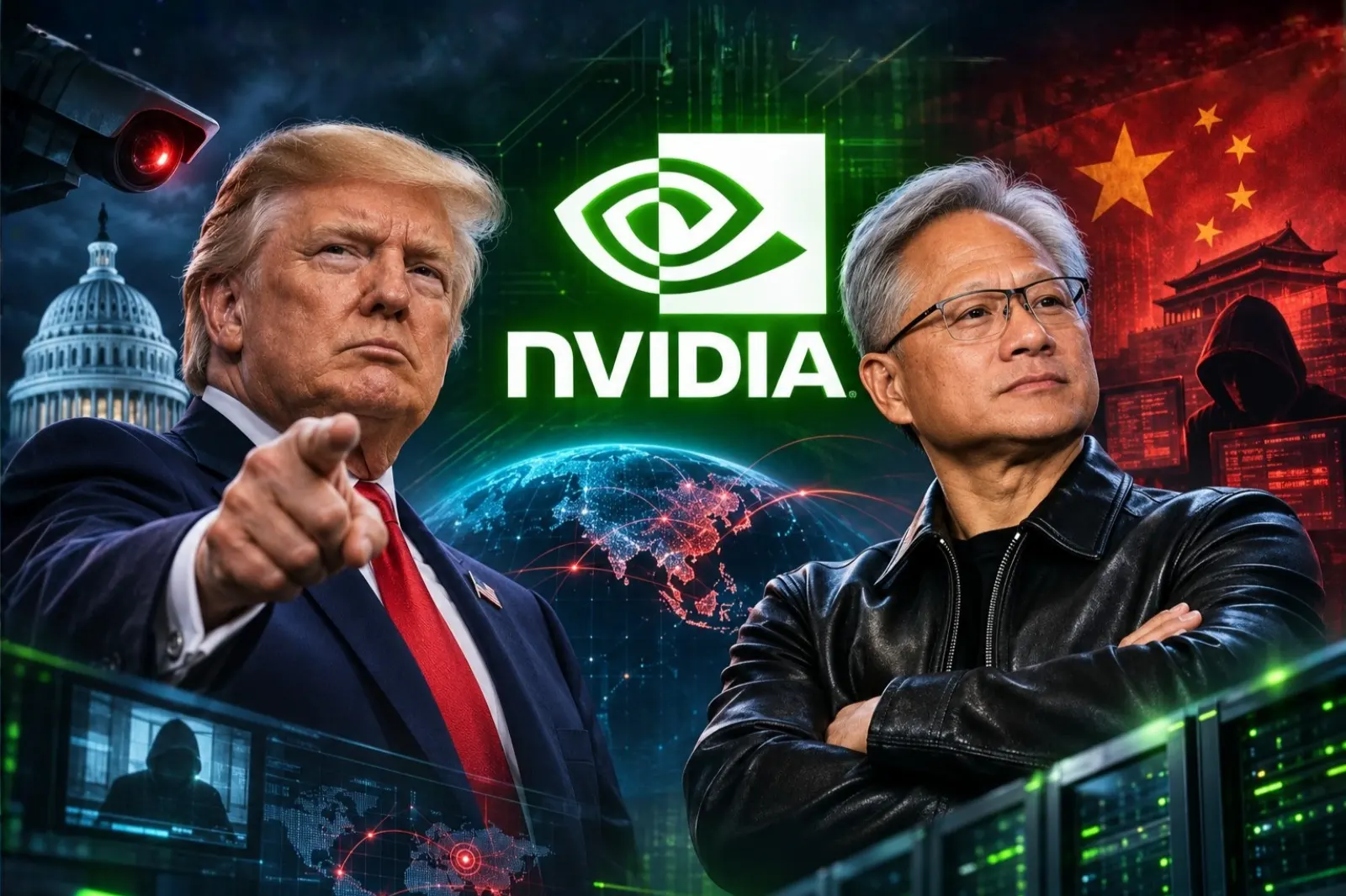
The President of the United States, Donald Trump, came to the defense of Jensen Huang, the historic leader of Nvidia, amid the scandal linking him to an alleged intelligence operation of the Chinese regime. The president stated that the businessman is too important a figure for the U.S. tech industry and questioned why he had to step down from leading the company over a plot involving Alice Huang, a woman being investigated for her contacts with Beijing's espionage services.

The latest information on the case deepened the suspicions of U.S. intelligence agencies. According to sources familiar with classified reports cited by The New York Times, Alice Huang had contacts with an official from the Ministry of State Security (MSE), China's main intelligence agency, for over a year, between the spring of 2025 and the fall of 2026.

This period partially coincides with the romantic relationship she had with Jensen Huang, who initially presented their meetings as business interactions with a client. The investigation also detected alleged links between Kang Wei, Alice Huang's business partner and presented by her as her husband, with the same Chinese intelligence agency.

The case revealed a possible operation much broader than a personal scandal: the use of business relationships, corporate networks, and personal contacts to facilitate the Chinese regime's access to U.S. strategic technology.

Trump defended Jensen Huang and called for Nvidia to reinstate him

Trump questioned why Jensen Huang was out of the leadership of Nvidia and considered that the United States must protect its top tech talents from foreign intelligence operations.

"We have to protect our brilliant people. Jensen is one of them," the president stated during a press conference at the White House.
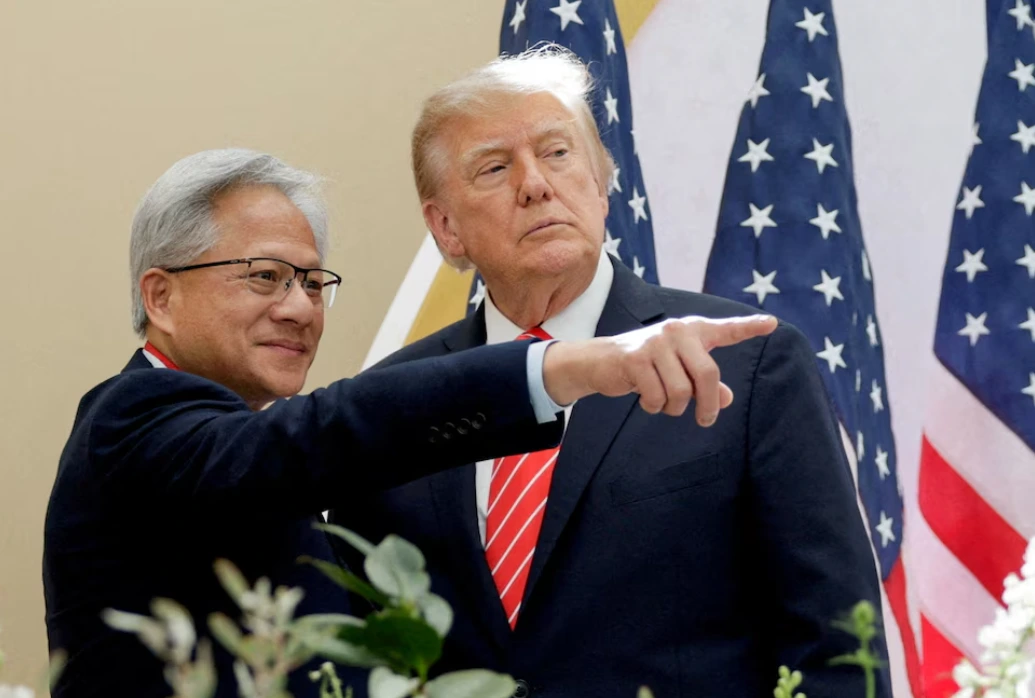
Trump defended Jensen Huang and asked that Nvidia reinstate him

The president even suggested that Nvidia's board should reconsider its decision and allow the businessman to return. "I think the company, if they were smart, would accept an apology and let him come back to work," he said.

The presidential defense also responds to Nvidia's strategic importance to the United States. The company occupies a central position in the development of advanced semiconductors, computing infrastructure, and processors used to train artificial intelligence models.

Trump believes that Jensen Huang is a relevant ally in maintaining U.S. technological leadership against China, at a time when the competition for next-generation chips has become one of the main fronts of dispute between Washington and Beijing.

The president also clarified that he had no confirmation that Alice Huang was indeed a spy. However, new data about her contacts with the MSE show that the suspicions of U.S. agencies did not arise solely after the scandal became public.

The investigation points to an intelligence operation to access Nvidia chips

One of the most delicate aspects of the case is the relationship between Alice Huang's contacts with Chinese espionage and the business operations of Megaspeed International, a Singapore-based company that acquired significant amounts of advanced processors from Nvidia.

U.S. authorities are investigating whether this business structure was used to divert semiconductors to China, circumventing the export restrictions imposed by Washington. Some of the equipment acquired may have ended up in data centers in Southeast Asia that provided services to Chinese tech companies, including Alibaba.
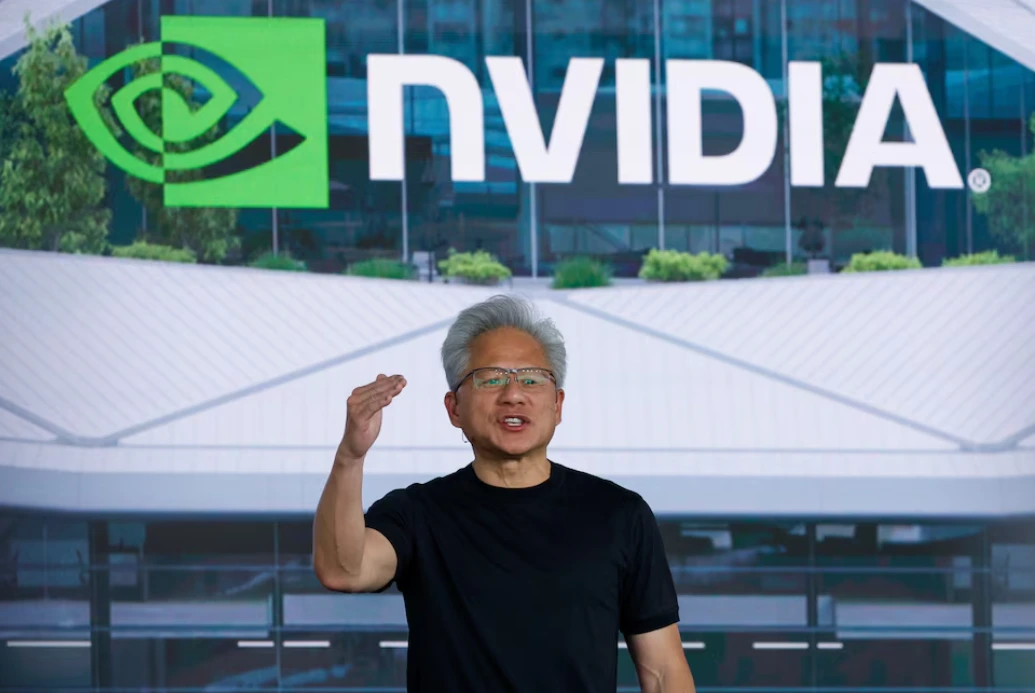
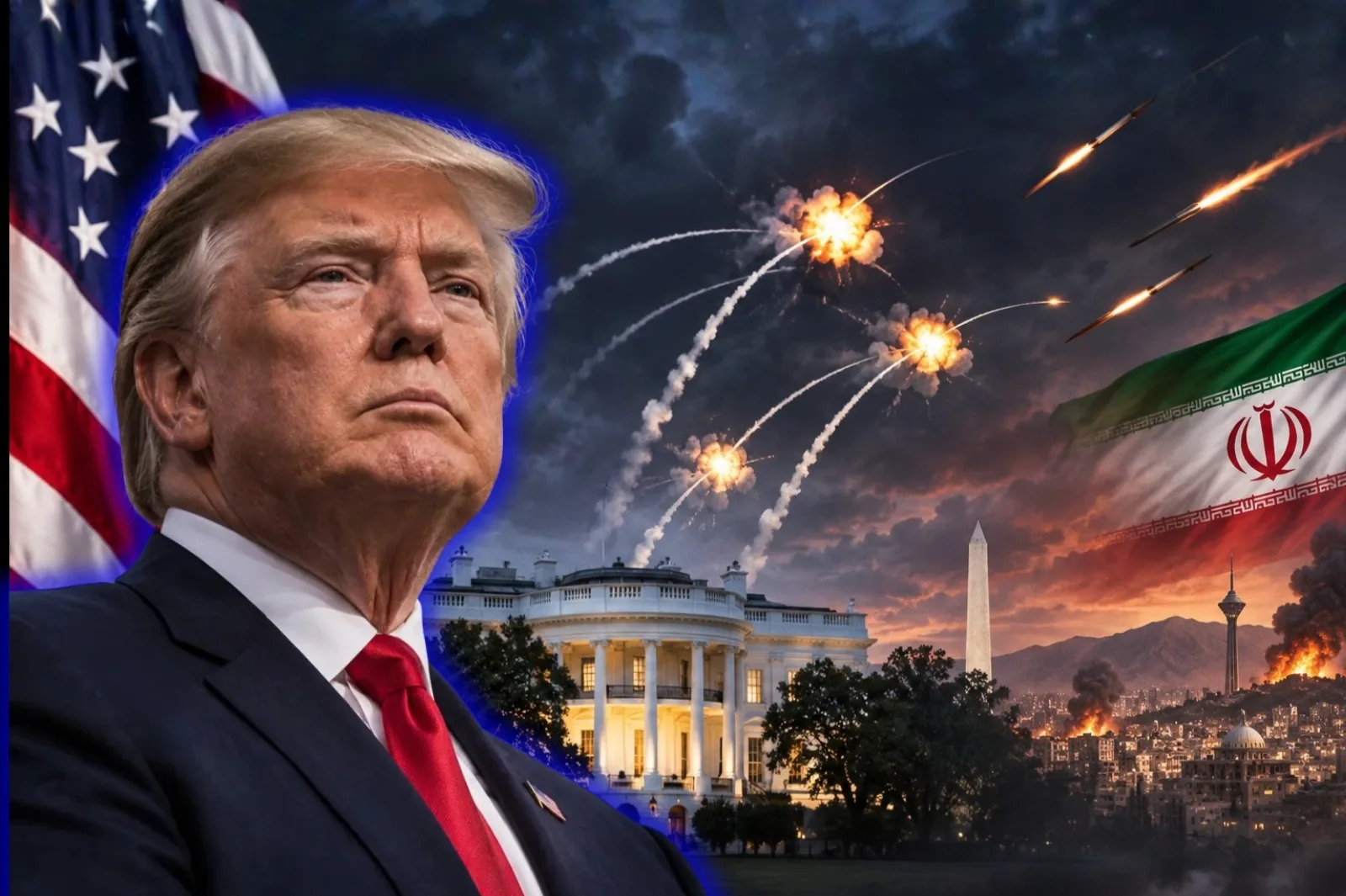
Washington's concern is not minor. Nvidia processors are essential for training advanced artificial intelligence models and developing computing systems with military applications. Their transfer to the Chinese regime could strengthen the technological capabilities of the People's Liberation Army and reduce the U.S. strategic advantage.

The Department of Commerce and the Department of Justice confirmed that the investigation into Megaspeed began in 2024 for possible violations of export controls. In May 2025, they requested information from Nvidia about business operations with the company and, a month later, added it to their list of companies with which sales should not be made.

The investigation points to an intelligence operation to access Nvidia chips

In June 2025, U.S. investigators and Singapore authorities conducted an on-site inspection at Megaspeed's facilities and interrogated Alice Huang. Subsequently, the Department of Justice took over the leadership of the criminal investigation.

The U.S. government stated that it will use all available legal tools against anyone responsible for any potential semiconductor smuggling. According to the official statement, during the Trump administration, 17 individuals were already charged in six different investigations related to chip smuggling.

Chinese espionage turned artificial intelligence into a strategic target

The new data also helps to understand why U.S. agencies believe that the case far exceeds the personal circumstances of Jensen Huang.

Matt Pottinger, former Deputy National Security Advisor during Trump's first term, stated that the business network under investigation aligns with the objectives that the Chinese Ministry of State Security itself incorporated into its intelligence strategy.

The Chinese official Chen Yixin had announced an expansion of the agency's priorities to include overcoming international technological restrictions and developing its own capabilities in artificial intelligence.

"To assume that the MSE was not at the center of this operation would be to assume they are incompetent," Pottinger warned.

The investigation also examines Alice Huang's contacts with officials from the Chinese Ministry of Public Security and the possible links of her family and business environment with state defense contractors.

For now, U.S. agencies continue to determine the scope of the operation. The contacts with the MSE and the suspicions about the business network do not, by themselves, constitute definitive judicial evidence of espionage, although they represent a central element of national security investigations.

The case again puts under scrutiny the Chinese Communist Party's strategy to acquire Western technology and accelerate its own developments in artificial intelligence. For Washington, preventing Beijing from illegally accessing the most advanced semiconductors is a matter of economic, technological, and military security.

In this context, Trump again marked a distinction between Jensen Huang's individual responsibility and the importance of preserving U.S. technological talent. His message was clear: the United States needs to protect those who contribute to maintaining its industrial leadership while investigating and combating foreign intelligence operations that seek to take advantage of its companies.