The former Colombian chancellor Álvaro Leyva Durán published a very harsh public letter against Gustavo Petro, following the results of the runoff between Abelardo de la Espriella and Iván Cepeda, and asked that the family and closest friends of the president surround him in what he described as a situation of “total despair.”
Leyva, who was the Minister of Foreign Affairs in Petro's own government, stated that for months he sent three public letters to the President to warn him about what he defined as a life marked by “licentiousness and excess.” He explained that his intention was always for the country to be above the president's personal problems and for Colombia to continue its democratic path without being subjected to the “excesses” of the person in the Presidency.
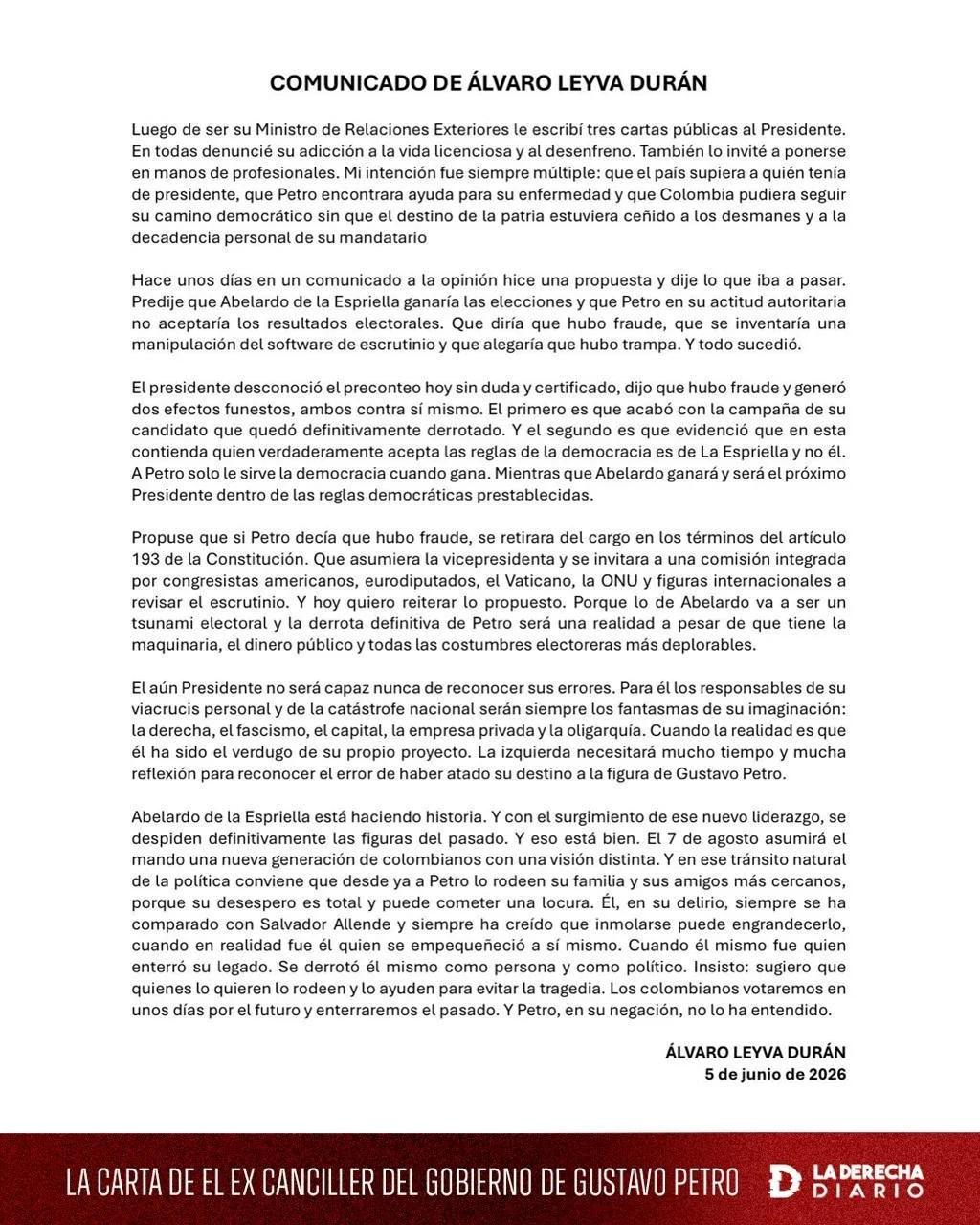
The statement from the former chancellor.
In the statement dated June 5, 2026, the former official claimed that he had already anticipated Petro's reaction to a possible victory for Abelardo de la Espriella. Leyva asserted that the president would not accept the results, would talk about fraud, would point fingers at the scrutiny system, and would seek to install the idea of an electoral trap.
According to the former chancellor, that ultimately happened. In his letter, he accused Petro of disregarding the pre-count and generating two negative political effects for his own space: having undermined the campaign of his candidate, Iván Cepeda, and having demonstrated that in the contest, it is De la Espriella who truly accepts the democratic rules.
Leyva also stated that for Petro, “democracy only serves him when he wins,” a particularly strong accusation coming from someone who was part of his own cabinet. In that sense, he suggested that Abelardo de la Espriella will end up becoming the next president within the established institutional rules.
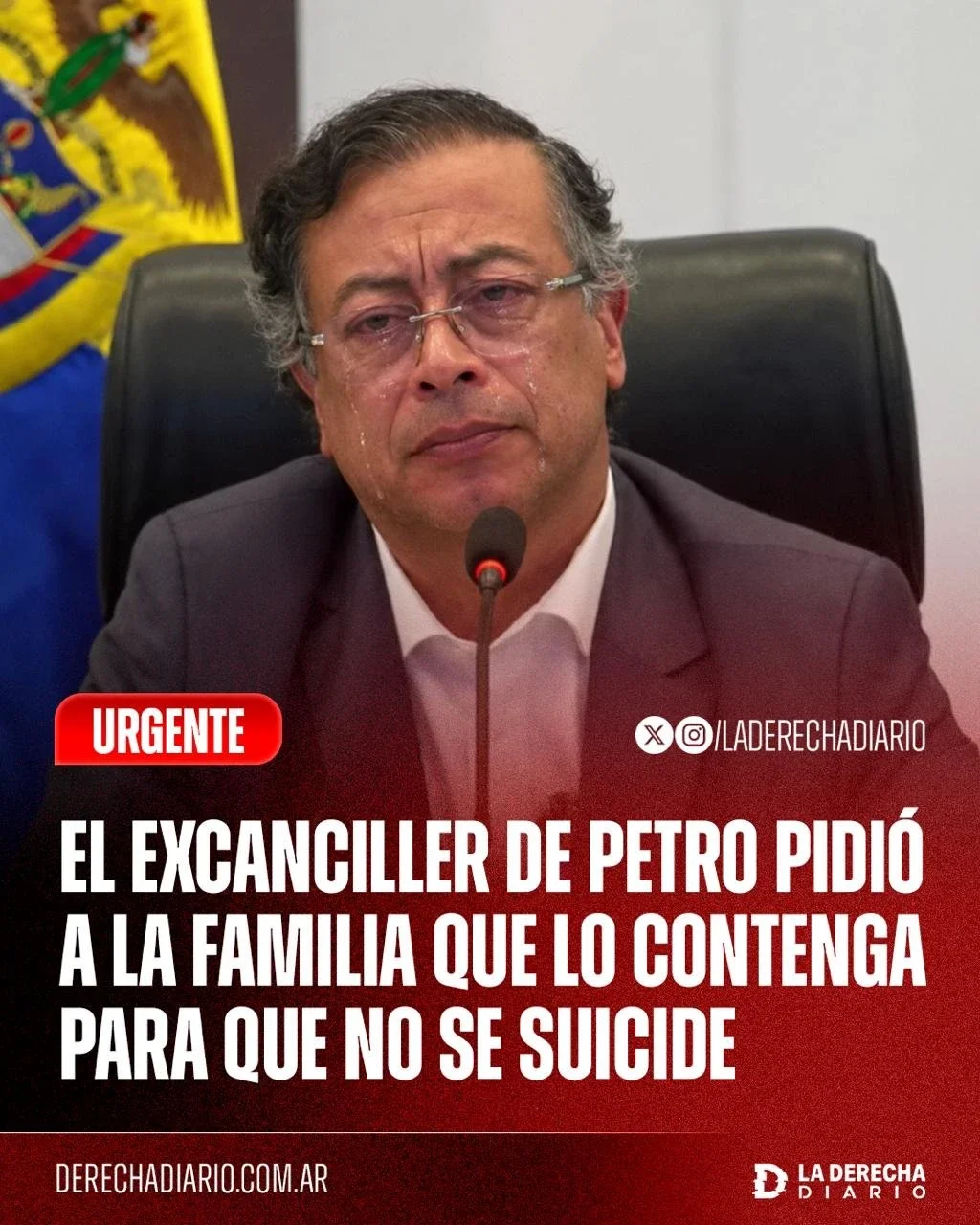
Leyva put the suicide hypothesis on the table.
Leyva maintained that Petro will not be able to recognize his mistakes and will seek to blame “the right, fascism, capital, private enterprise, and the oligarchy.” For the former chancellor, the Colombian left will need a long time to bear the cost of having tied its political destiny to the figure of Gustavo Petro.
Finally, the former minister stated that Abelardo de la Espriella is making history and that his eventual rise to power will represent the emergence of a new political generation in Colombia. In this context, he asked those who care for Petro to accompany him to avoid a personal tragedy, noting that the president is going through a stage of denial and desperation.