
Europe is currently on its knees before the consequences of decades of failed energy policies that have left its population vulnerable to the so-called silent killer. What the political elite presents as a climatic fatality is, in reality, the result of a lack of coherent environmental and climate transition, which has led the region directly to disaster.
According to data from the World Health Organization (WHO), since June 21, more than 1,300 additional deaths have been recorded on the continent linked to this heat spike. The organization's director general, Tedros Adhanom Ghebreyesus, has confirmed that “150 million people are living under extreme heat... and the power grids are collapsing”.
The most scandalous failure of this model is being experienced in Germany. Over the past 15 years, the social-democratic environmental management proceeded to shut down all nuclear power plants and discontinue the use of coal, recklessly betting exclusively on wind turbines and solar panels.
After nearly two decades of compulsive "green" investments, the model has shown its inability to meet the national electricity demand. The dependence on cheap Russian gas acted as an artificial respirator until 2022, when geopolitics put an end to that energy source, leaving the country exposed to the reality of its own negligence.
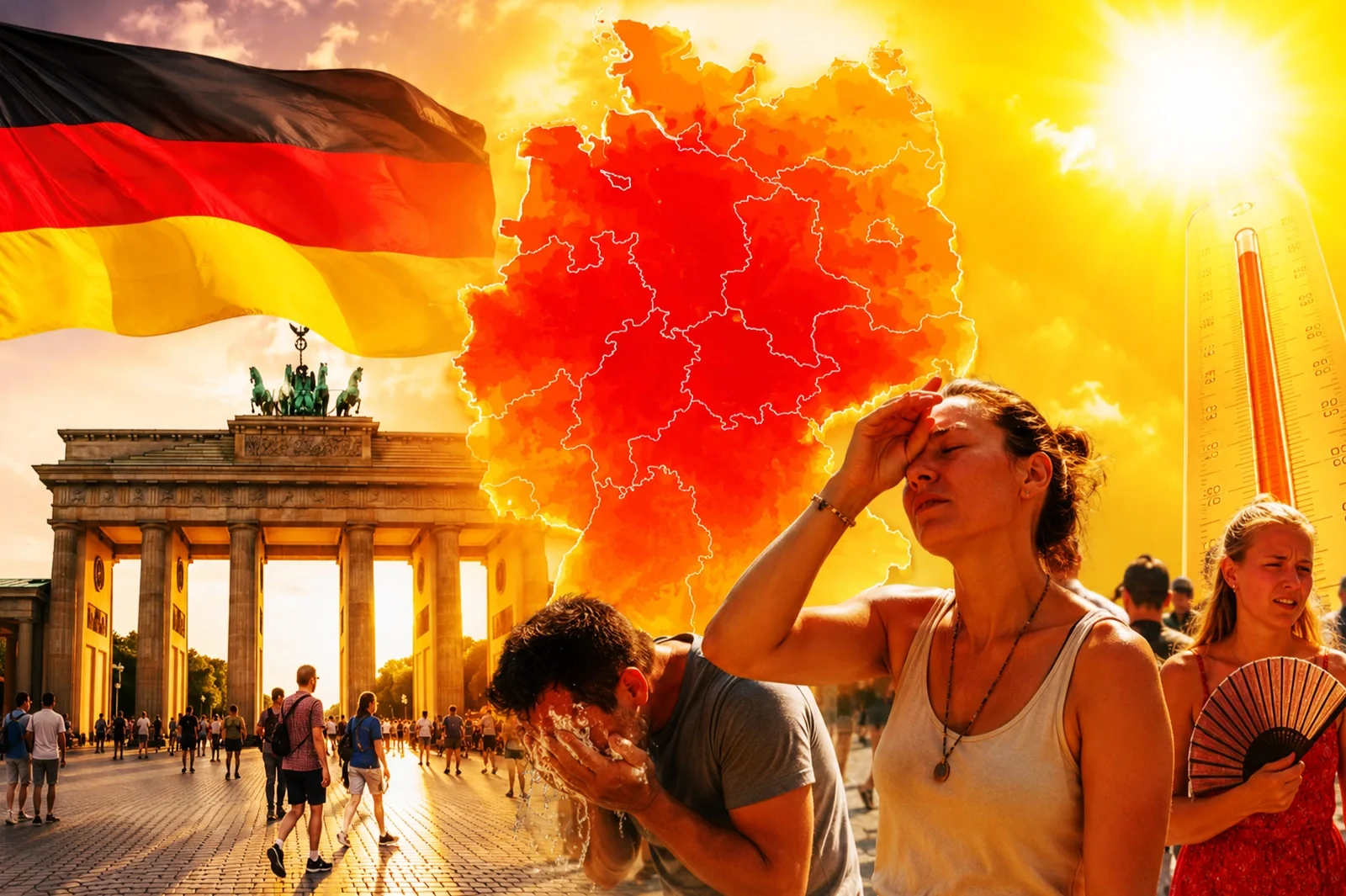
Today, with the heat wave hitting with records of 41.7 °C in Coschen and 41.5 °C in Möckern-Drewitz, Germany does not have enough energy for its citizens to turn on the air conditioning.
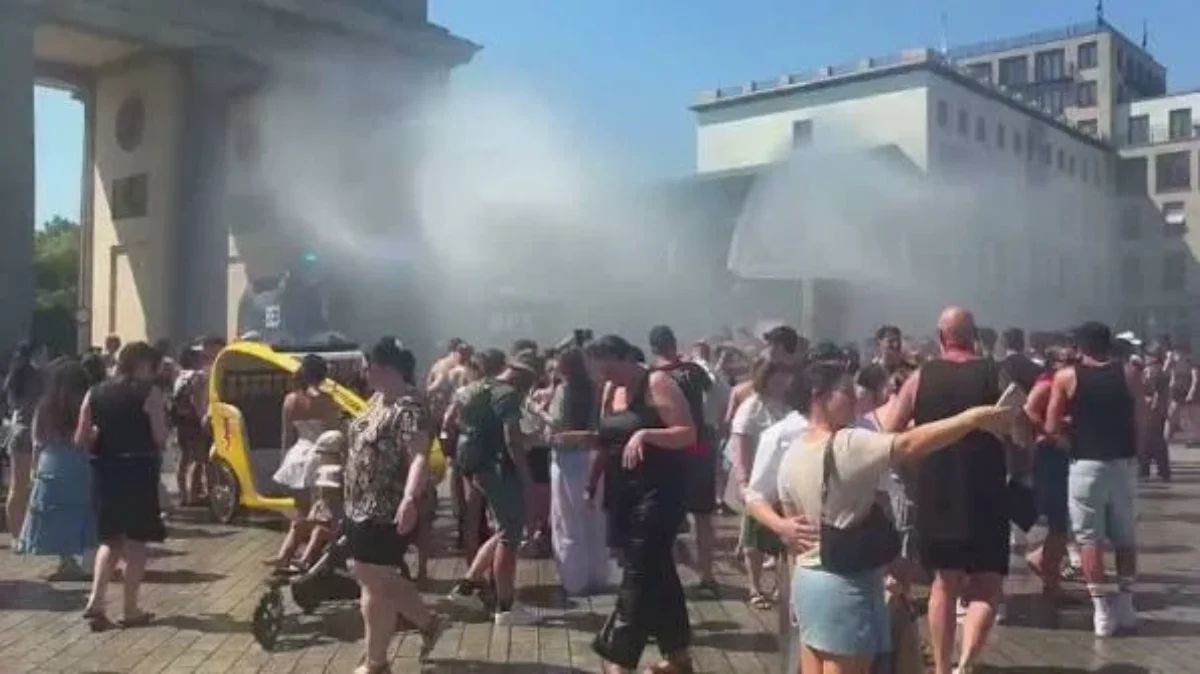
In an act of desperation that borders on the ridiculous for an industrial power, the government is deploying water trucks in the streets and asking people to go out and get wet in public to avoid mass blackouts that the electrical system could not withstand.
This management crisis extends across the entire European territory, affecting the basic infrastructure that the state has failed to maintain or adapt: