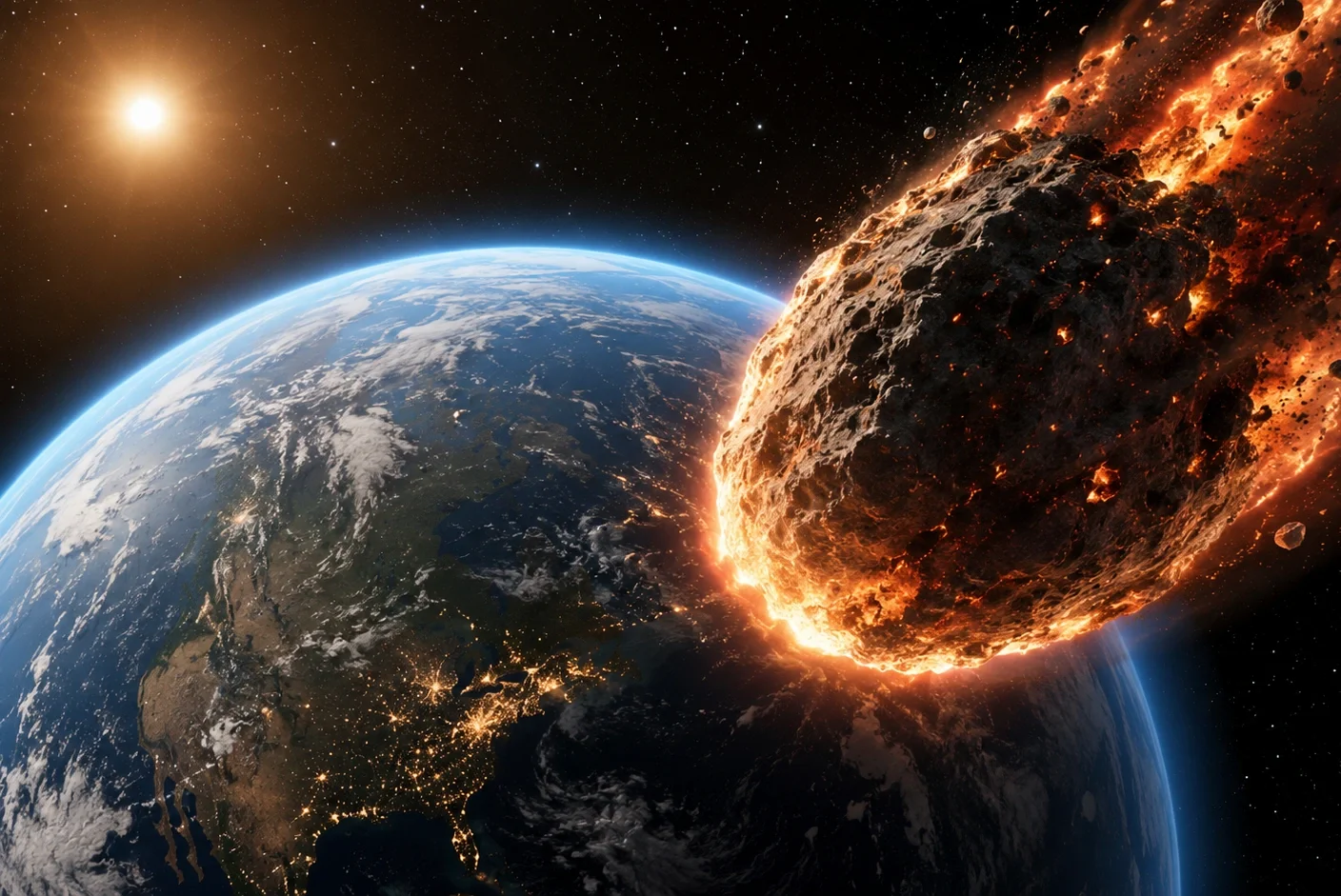
An asteroid about 160 meters wide crashed into the bottom of the North Sea between 43 and 46 million years ago, generating a tsunami over 100 meters high. Scientists from Heriot-Watt University confirmed this origin of the mysterious Silverpit crater, resolving a debate that lasted more than two decades.
The finding transforms the understanding of this geological site hidden about 700 meters beneath the seabed, 80 miles off the coast of Yorkshire. The main crater measures around three kilometers in diameter and is surrounded by a ring of circular faults extending about 20 kilometers.
Since its discovery in 2002, geologists debated whether it was an asteroid impact, a salt collapse, or volcanic activity. In 2009, they even voted, and the majority rejected the impact hypothesis. Now, new evidence confirms it conclusively.
Evidence that settles the debate
The team led by Dr. Uisdean Nicholson used advanced seismic imaging, microscopic analysis of rock samples, and computer simulations. They found "shocked" minerals like quartz and feldspar, which only form under extreme pressures from a hypervelocity impact.
"The new seismic images gave us an unprecedented view of the crater," Nicholson explained. These samples, obtained from a nearby oil exploration well, were key: "We proved the impact hypothesis beyond any doubt."
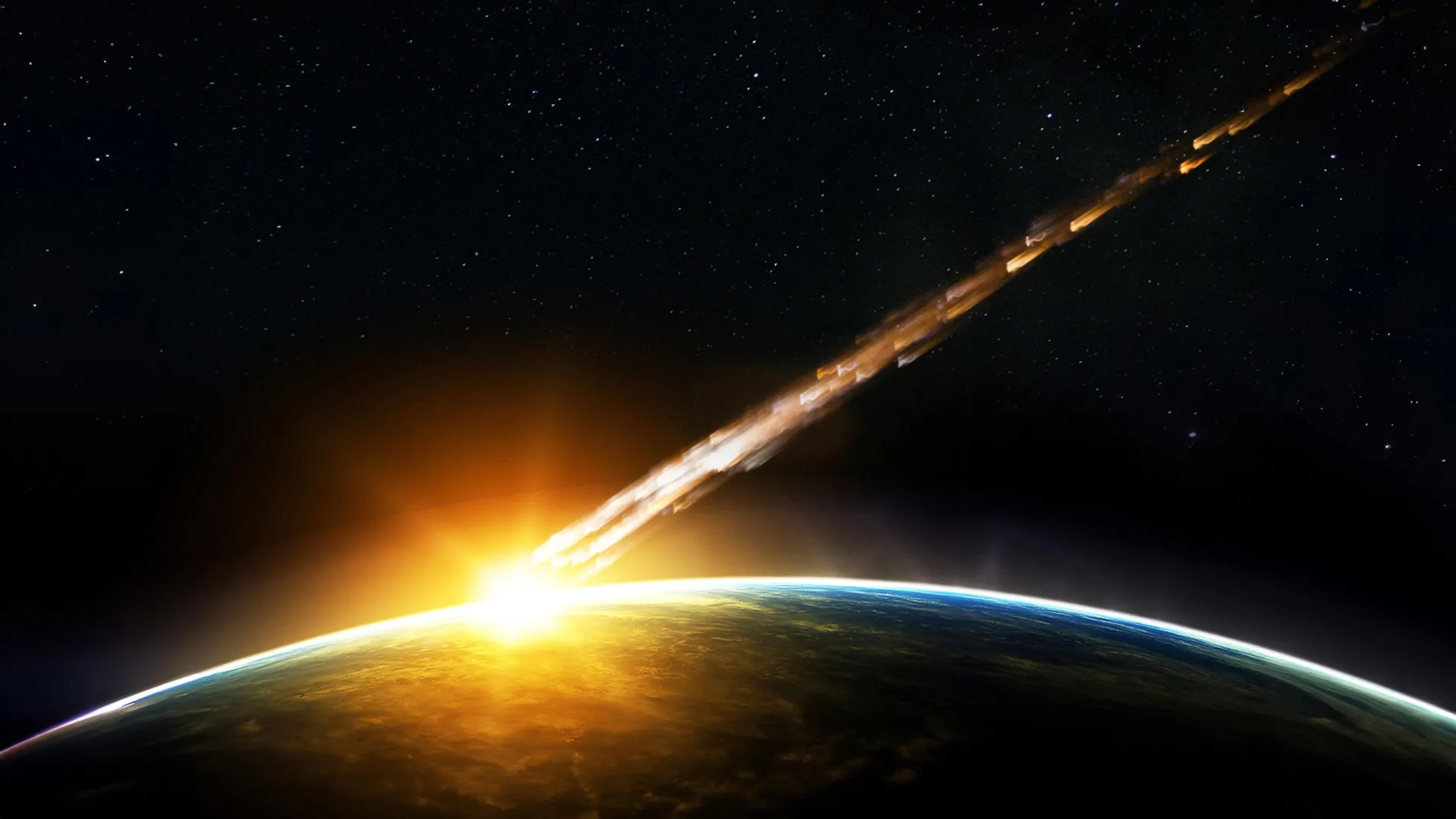
The asteroid came from the west at a low angle. Within minutes, it lifted a curtain of rock and water 1.5 kilometers high that, upon collapsing, triggered the massive tsunami over 100 meters. This event excavated the crater instantly and expelled huge volumes of material into the air.
Professor Gareth Collins from Imperial College London, who participated in the 2009 debate, developed the numerical models. "I always thought that impact was the simplest and most consistent explanation," he noted. Now, with the "silver bullet" found, they can advance in studying how these events shape planets.
Why impact craters are so rare
Despite the number of asteroids and comets that have struck Earth throughout its history, few craters survive. Erosion, plate tectonics, and other dynamic processes of the planet erase almost all traces over time.
Silverpit is one of the few preserved under the ocean. Worldwide, there are about 200 confirmed craters on land and only around 33 under the sea. This makes it an exceptional natural laboratory for understanding the effects of impacts.
The crater adds to famous sites like Chicxulub in Mexico, linked to the extinction of the dinosaurs, and Nadir off West Africa. Researchers emphasize that these findings help not only to reconstruct Earth's history but also to prepare for potential future threats.
The study, published in Nature Communications and funded by the Natural Environment Research Council, marks a turning point. Scientists will now be able to explore in more detail how impacts shape the Earth's surface and subsurface.