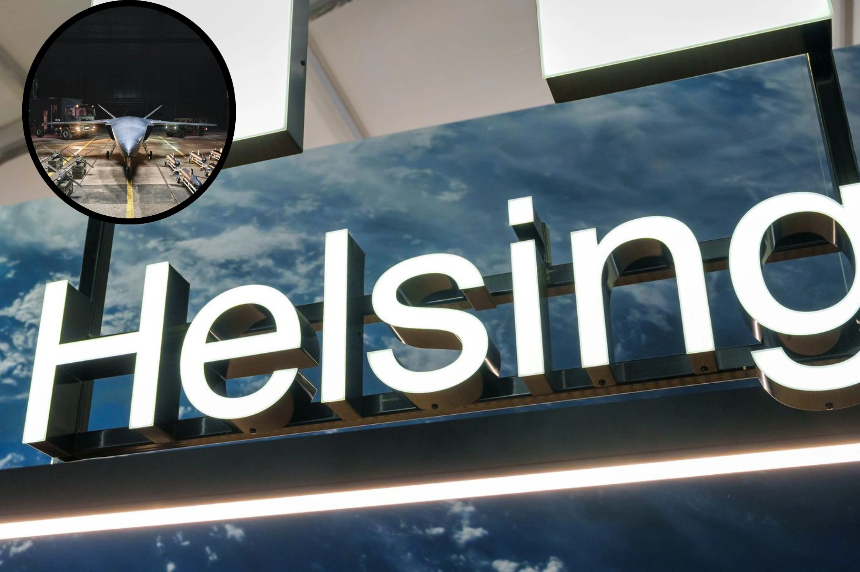
The European startup Helsing, specialized in military drones and autonomous defense technologies, is about to close an investment round of $1.2 billion that would value it at around $18 billion. With just five years of existence, the company is establishing itself as one of the most promising in the defense sector on the Old Continent.
According to reports, the round would be led by Dragoneer and would include Lightspeed, an existing investor. This move represents a significant leap from its previous funding.
Helsing had raised about 600 million euros in June 2025, at a valuation of around 12 billion euros (approximately $14 billion), with the backing of Spotify founder Daniel Ek.
This new agreement not only increases the amount but also the company's valuation, highlighting it among other European startups in the field.

The Landscape of Autonomous Defenses in Europe
While it is not the only unicorn in defense technology on the continent, Helsing is the one receiving the highest valuation from investors. For example, the German company Quantum Systems raised 180 million euros in November with a valuation exceeding 3 billion euros. Meanwhile, the Portuguese Tekever secured 400 million pounds at over 1 billion valuation a year ago.
The current context plays in favor of these companies. The ongoing war between Russia and Ukraine has become a real laboratory for testing new autonomous and drone technologies. This has attracted the attention of venture capital looking for opportunities in the defense sector.
Investors see Helsing as a key player in the development of autonomous systems for military uses, capable of operating in complex and changing scenarios.
The company focuses on creating solutions that combine artificial intelligence with drone hardware, offering advanced capabilities for reconnaissance, surveillance, and possibly attack missions.
Accelerated Growth in a Booming Market
Founded five years ago, Helsing has shown rapid growth. Its ability to attract increasingly larger rounds in short timeframes reflects market confidence in its technology and the team behind the company.
Dragoneer and Lightspeed, along with the previous backing of Daniel Ek, provide not only capital but also experience in scaling technology companies globally. This positions Helsing to expand its operations and develop new products.
In the current geopolitical scenario, with rising tensions in Eastern Europe, governments on the continent are looking to strengthen their defensive capabilities. Autonomous solutions like those from Helsing represent an efficient and modern alternative to traditional systems.
While representatives from Helsing, Dragoneer, and Lightspeed did not make immediate comments, the progress of negotiations indicates that the agreement is very close to being finalized.
This type of massive investment in defense startups marks a clear trend: the private sector is playing an increasingly important role in the development of technologies that were once the exclusive domain of states. Helsing is shaping up to be a leader in this new European ecosystem.