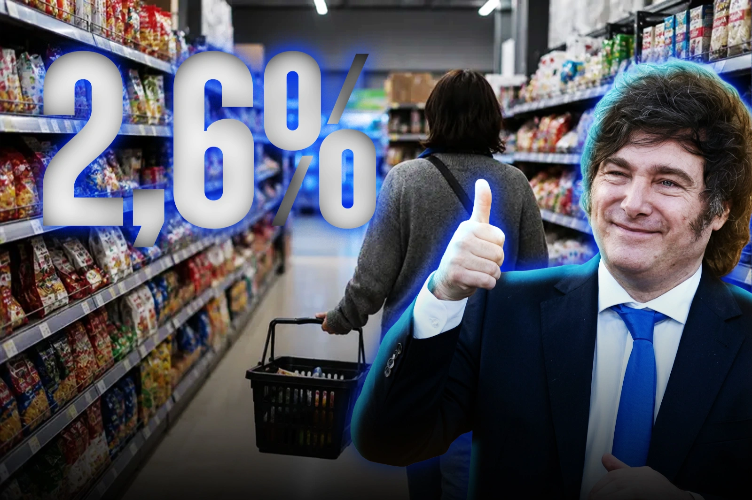

The April inflation was at 2.6%, according to the National Institute of Statistics and Censuses (Indec), which represented a drop of almost one percentage point compared to the 3.4% recorded in March.
This figure marked a strong change in trend, as it interrupted a streak of ten consecutive months of acceleration in the Consumer Price Index (CPI), due to the electoral uncertainty of 2025 and the risk generated by Kirchnerism.
With this result, the year-on-year variation reached 32.4%, while the accumulated figure for the year so far stood at 12.3%. The April record aligned with the forecasts of both the economic team of Javier Milei and private consulting firms, which projected a monthly inflation in a range between 2.4% and 2.8%.
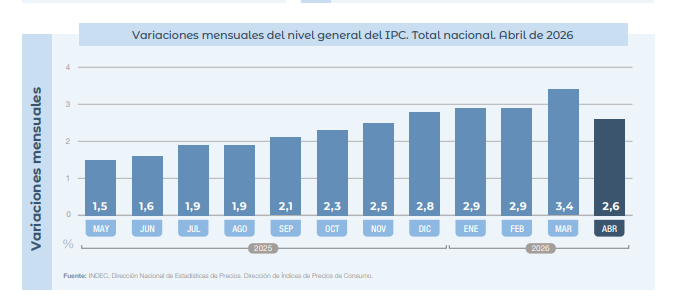
If 2020 is excluded, heavily influenced by the temporary increase in money demand during the pandemic, inflation was the lowest for an April month in the entire historical series starting in 2017, reflecting the success of the Government's program.
The April Inflation
In the breakdown by categories, Regulated prices led the increases with a rise of 4.7%, mainly driven by increases in transportation and electricity.
In second place was the core CPI, which advanced 2.3%, influenced by increases in rents, housing-related services, and spending in restaurants and dining out.