The main private consulting firms cut their inflation projections for August during the last week and now estimate that the Consumer Price Index (CPI) could be between 1.6% and 1.9%.
If this scenario is confirmed, inflation would show a significant slowdown compared to the 2.1% recorded in July and could return to levels similar to those of mid-2025.
The change in expectations was mainly driven by the lower increase in food and beverage prices, as well as a moderation of the seasonal components that had exerted pressure during July.
Consultants anticipate lower inflation
Among the private surveys reflecting the change in trend is that of Eco Go, which projected a monthly inflation of 1.6% for August.
The consulting firm recorded a variation of just 0.3% in food during the second week of the month, a behavior that contributed to reducing the estimate for the general index.
Another relevant measurement was that of Analytica, which recorded a rise of 0.5% in food and beverages during the third week of August. The average for the last four weeks stood at 1.7%.
Within that survey, vegetables showed an increase of 4.8%, while bread and cereals rose 2.2%. In contrast, fruits recorded an increase of 0.9% and meats and derivatives only 0.7%.
Consultants anticipate lower inflation
The highest estimate is 1.9%
On the other end is EconViews, which maintains a forecast of 1.9% for August, although it does not rule out that the final figure could be a tenth lower.
“We have 1.9% for August with a risk that it could be a tenth lower,” explained Alejandro Giacoia, an economist at the consulting firm.
According to the specialist, the food survey shows a variation close to 2% for the last four weeks, so he finds it difficult for the general CPI to be significantly below that level.
However, Giacoia highlighted that seasonal prices could work in favor during August, especially those related to tourism, which had recorded significant increases during the winter holidays.
Inflation could return to mid-2025 levels
The scenario that analysts are considering implies a possible reduction of 0.5 percentage points compared to July, when the CPI reached 2.1%.
The slowdown would allow monthly inflation to return to levels similar to those recorded in June 2025, reinforcing the moderation trend that the Government has been highlighting.
In July, part of the acceleration had been linked to transitory factors, including the winter holidays and price increases in sectors such as recreation, culture, restaurants, and hotels.
For August, however, those effects would lose strength and allow for a more moderate evolution of the index.
Inflation could return to levels seen in mid-2025
Bausili anticipates inflation lower than in July
The economic team also maintains an optimistic view on price developments.
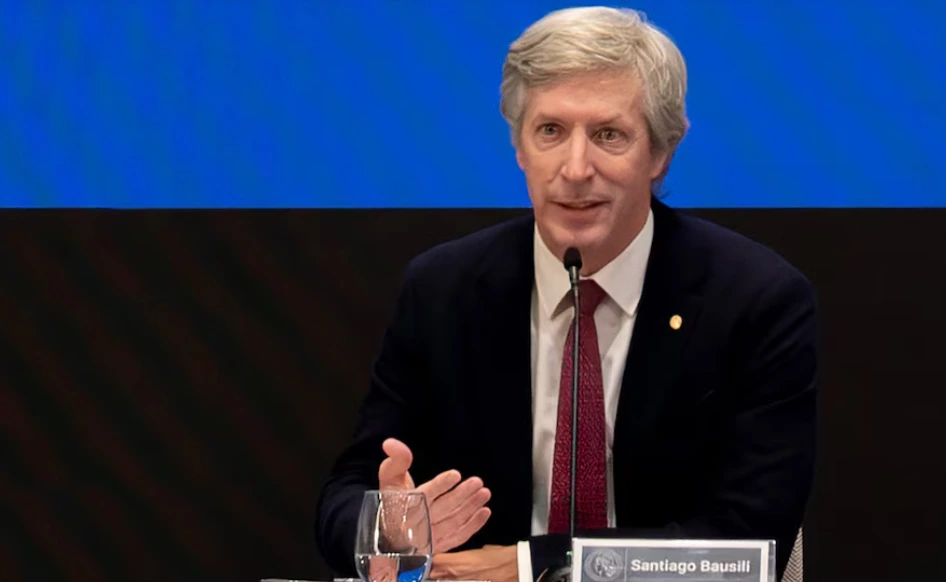
The president of the Central Bank of the Argentine Republic (BCRA), Santiago Bausili, stated that the high-frequency measurements known during August are promising and anticipated inflation lower than that recorded in July.
“We continue to see a reduction in inflation,” Bausili stated during the FIEL Premium Meeting, adding that the available indicators point to a rate lower than that of July and probably also lower than that of June.
The official also highlighted that the inflation recorded between April and June showed a reduction compared to the period from October to March.
Regarding expectations, Bausili noted that market projections contemplate an inflation of 30% for 2026 and 20% for 2027.
The wholesale data also anticipates moderation
Another indicator that adds positive signals for the price dynamics is wholesale inflation.
The Wholesale Internal Price Index (IPIM) recorded an increase of 0.8% in July, a figure that was celebrated by President Javier Milei because it aligns with his expectation of inflation starting with zero by mid-year.
The wholesale data can serve as a leading signal for the evolution of retail prices, although it does not include services, so its behavior does not necessarily translate completely to the CPI.
With private measurements placing the CPI for August between 1.6% and 1.9%, the market's baseline scenario points to a new slowdown.
The official data will be key to confirming whether inflation manages to consolidate this trend and whether the Government can deepen the price stabilization process it has been promoting since the beginning of its administration.