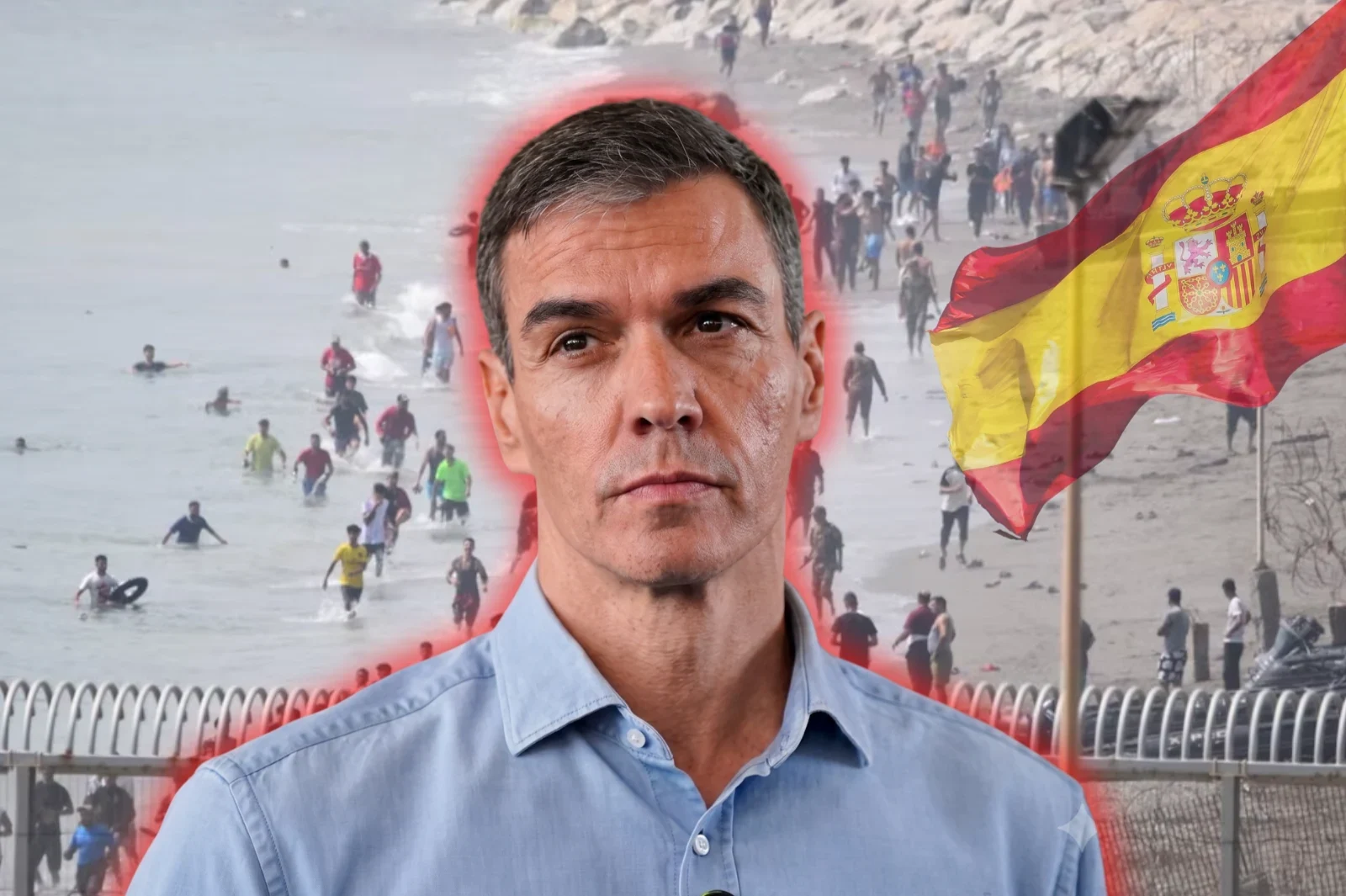
Italy has decided to temporarily suspend the application of the Schengen agreement with Spain in response to the migration crisis affecting Ceuta, where there has been a irregular entry of about 60,000 Moroccans.
The measure was adopted by the Italian Ministry of the Interior and establishes the closure of maritime and air borders between the two countries for a period of one month.
The decision was formalized after a meeting of the Immigration and Border Security Analysis Committee, led by Minister Matteo Piantedosi.
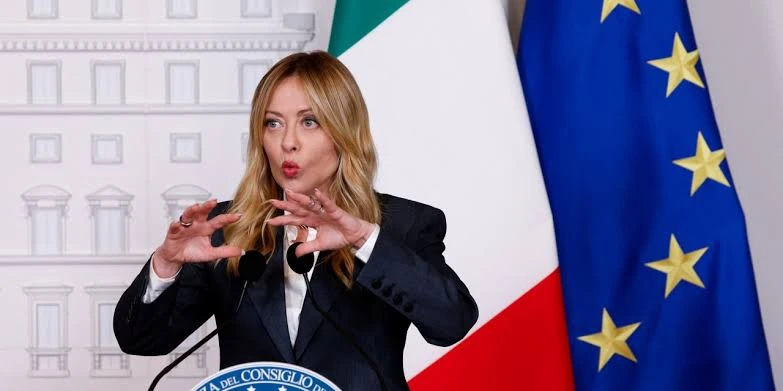
Giorgia Meloni
According to the Ansa agency, the official also had a phone conversation with his French counterpart, Laurent Nuñez, with the aim of strengthening controls along the land border between Italy and France.
From the Italian Ministry of the Interior, known as Viminale, it was detailed that “selective checks will be carried out by border police on citizens of third countries to ensure they have the proper documentation to travel within the Schengen area.” At the same time, authorities clarified that for Italian citizens traveling to Spain “nothing will change.”
The measure was supported by Italian Prime Minister Giorgia Meloni, who described it as an “extraordinary measure, adopted to safeguard national security and prevent possible repercussions” in the country. Through a message posted on the social network X, the leader indicated that the suspension will be temporary.
“The measure will remain in effect only for as long as necessary, with special attention to limiting any impact on summer tourist flows,” Meloni stated, referring to the limited duration of the border closure.
Pedro Sánchez
In parallel, the Italian government expressed its willingness to collaborate at the European level regarding the situation. “At the same time, Italy is ready to support any European initiative to assist Spanish institutions that is necessary to restore full control of the Union's external borders and to face the ongoing situation with determination,” it stated.
And it concluded: "Defending the borders means defending the safety of citizens, combating irregular immigration, and striking at the criminal networks that traffic in human beings.”
The partial suspension of the free movement regime occurs in a context of increasing migratory pressure in southern Europe, particularly impacting Ceuta, where the volume of irregular entries has generated political reactions at both national and regional levels.
With this decision, Italy introduces an exceptional restriction within the Schengen system, while evaluations continue regarding the evolution of the crisis and its possible implications for the entire European Union.