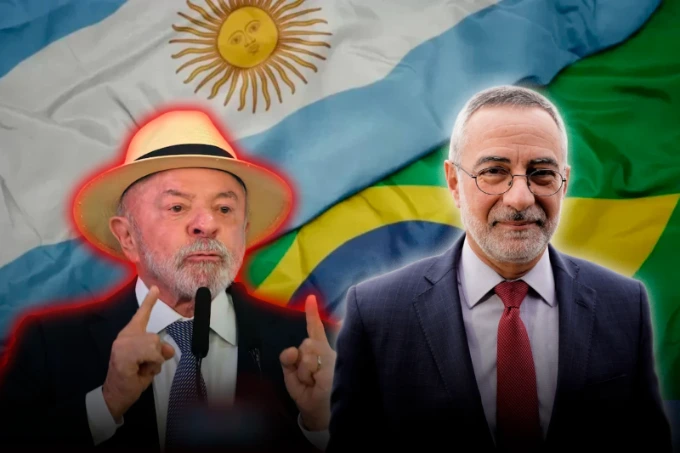
The regime of Luiz Inácio Lula da Silva deepened diplomatic tension with Argentina and decided that its ambassador in Buenos Aires, Julio Bitelli, will not return to the country. The Brazilian representation will be reduced to the level of chargé d'affaires, after Javier Milei reaffirmed his criticisms against the communist leader and recalled his recent history of corruption.
The decision was communicated to the Argentine ambassador in Brasilia, Daniel Raimondi, whose continuity will now depend on the response defined by Casa Rosada. The measure does not imply a formal break in relations, but it does reduce the political rank of the Brazilian representation and constitutes a new escalation driven by Lula.
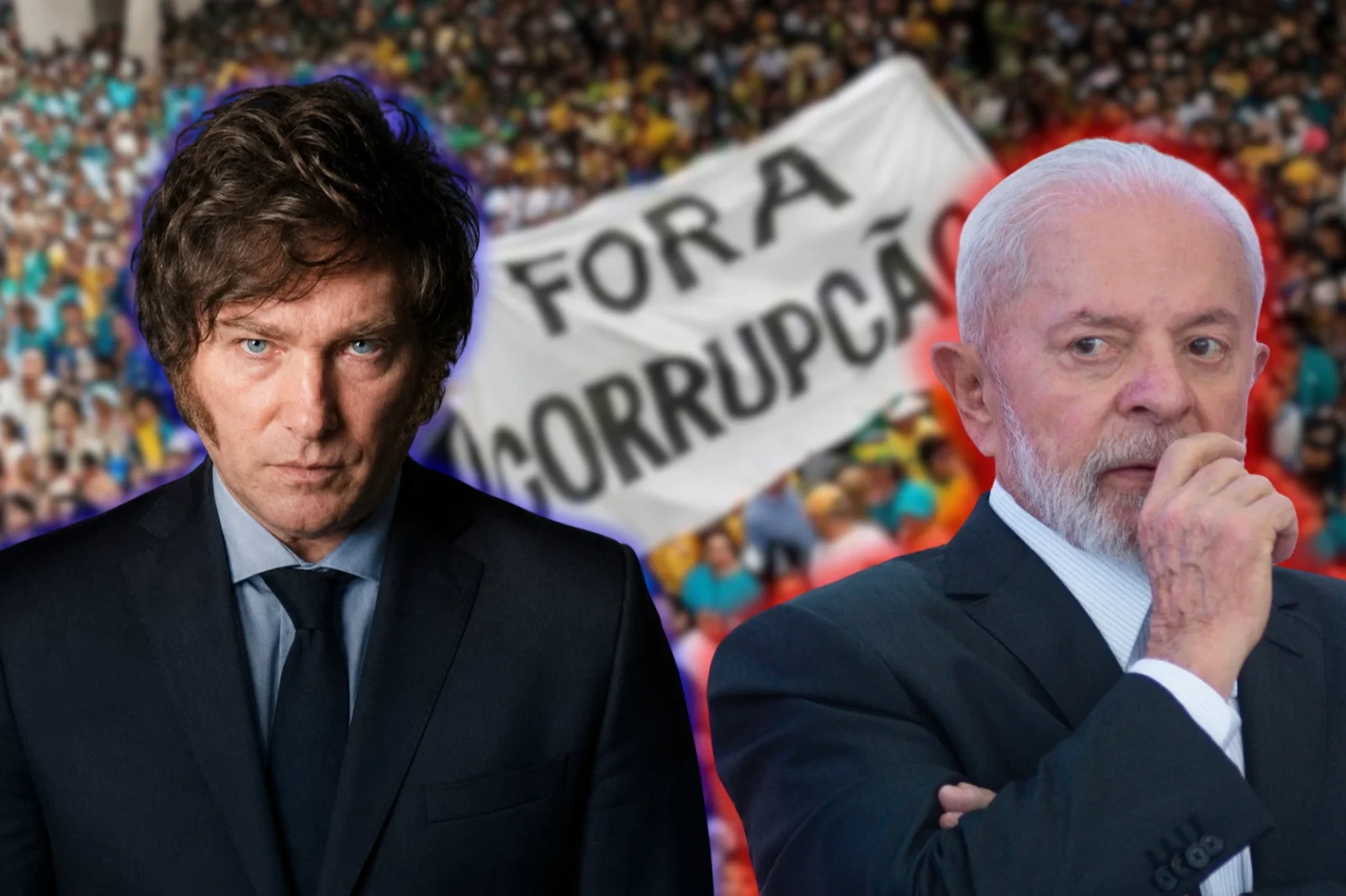
Javier Milei mentioned Lula's history of corruption; the dictator exploded in response to the verifiable facts.
From Brasilia, the decision was attributed to the statements made by Milei during an interview with Luis Majul on LN+, where he again labeled the Brazilian as a “thief,” “corrupt,” and “prisoner.” However, the Argentine President did not present these expressions as mere insults, but rather linked them directly to the verifiable judicial background of the leader of the Workers' Party.
“He was convicted. He was imprisoned, so it is true that he is a prisoner. He was released due to an administrative error, not because he is innocent,” Milei stated. He also questioned the double standard applied in response to attacks from foreign leaders: “When they insult me, it’s fine. Now, if I respond, it’s wrong.”
Lula was imprisoned for corruption and money laundering
Lula was convicted in 2017 and 2019 for corruption and money laundering in cases related to Operation Lava Jato. He remained incarcerated for 580 days, from April 2018 to November 2019.
In March 2021, the judge of the Supreme Federal Court Edson Fachin annulled the convictions, considering that the Curitiba court did not have territorial jurisdiction to judge the cases. The resolution, later ratified by the Brazilian court, did not declare Lula innocent nor did it analyze the substance of the accusations, but invalidated the sentences on jurisdictional grounds. Later, other judicial decisions affected the validity of the evidence gathered during the investigation.
Bitelli had been urgently summoned after Milei traveled to São Paulo to support the right-wing Flávio Bolsonaro and questioned both Lula and the judge Alexandre de Moraes. Over the weekend, statements from Argentine Foreign Minister Pablo Quirno had opened the possibility of a détente, but the Brazilian government ultimately chose to keep the diplomat out of Buenos Aires.
Lula da Silva
Lula's reaction seeks to present as a diplomatic aggression what Milei defended as a description of public facts. While Brazil demands "moderation" from the Argentine government, it avoids responding to the content of the criticisms and focuses its offensive on the words used by the President.
Now Argentina must determine whether to keep Raimondi in Brasilia or respond with an equivalent reduction of its representation. The crisis is thus marked by two opposing positions: Lula demands diplomatic silence, while Milei insists that he will not stop pointing out the judicial past and the authoritarian advance of the Brazilian left.