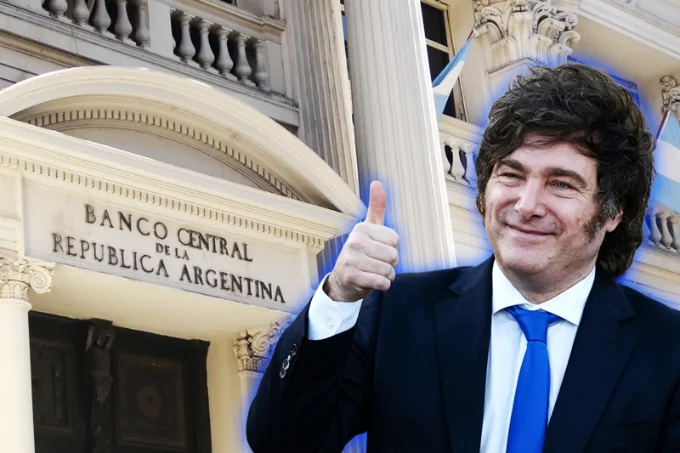
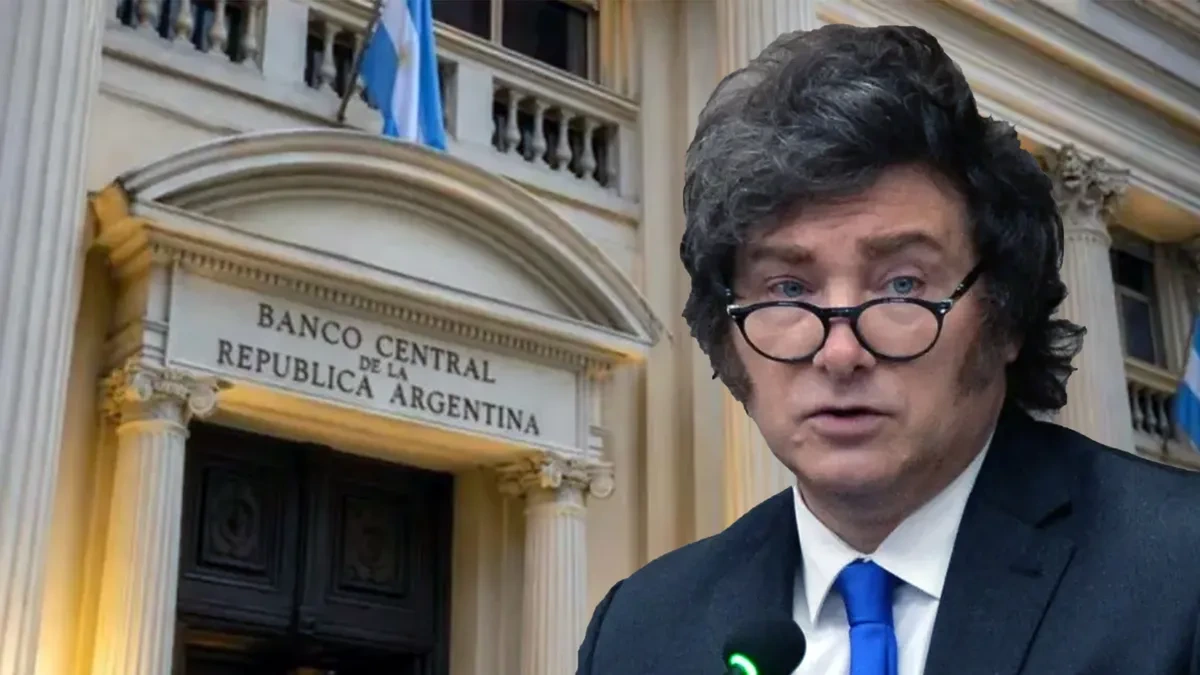
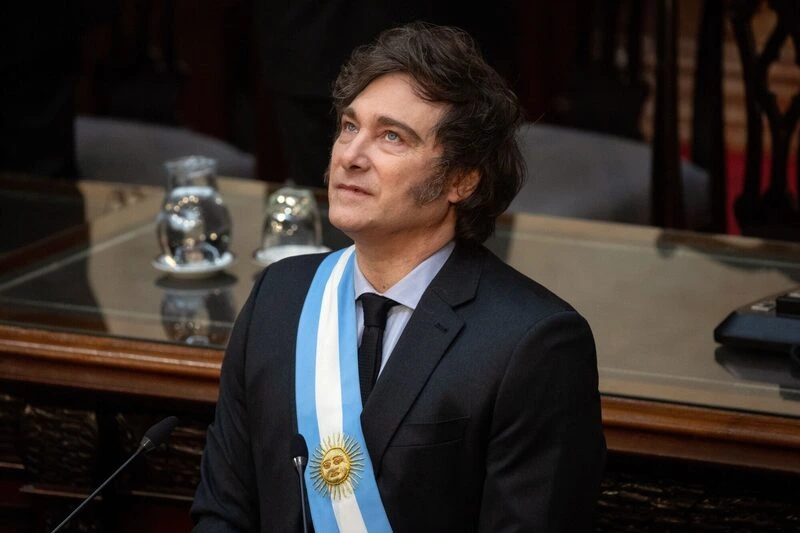
The president Javier Milei published a column in Clarín in which he defended the reform of the Organic Charter of the Central Bank of the Argentine Republic (BCRA) and criticized the historical functioning of the monetary authority.
In the text, the president stated that the inflation accumulated since the creation of the agency in 1935 amounts to “12,819,532,788,614,400,000%”, a figure he used to justify the need for fundamental changes.
He argued that the BCRA was conceived with the aim of preserving the value of the currency, but its performance has been far from fulfilling that function.
In this regard, he stated that “not only did it fail to meet its objective, but the obscenity of the record makes the debate unavoidable about whether a Central Bank should exist or not and if its existence is decided, under what rules it should operate.”
President Javier Milei
In his analysis, Milei developed an explanation about the role of money in the economy and questioned the state management of monetary policy. “It is clear that the state provision of this service has been deplorable,” he stated, referring to the provision of liquidity.
Additionally, he harshly criticized sectors that defend state intervention: “the left that sighs for statolatry and a hypocritical political corporation” that maintain a scheme based on issuance.
The President also targeted the mechanisms of state financing through monetary expansion. In this context, he stated that “the theft is not caused by the inflation tax (…) but rather it is given by seigniorage (issuance without backing),” which he linked to processes of indirect expropriation and distortions in the economy.
Reviewing the historical evolution, Milei compared different economic periods and highlighted the deterioration of inflation after the creation of the BCRA. He indicated that before its existence, the annual inflation was 1.03%, while in the ten years following it rose to 6.05%. He also noted that after its nationalization during the government of Juan Domingo Perón, the average inflation until 2025 reached 63.2% annually.
President Javier Milei
Regarding the most recent reforms, the president was particularly critical of the modification of the Organic Charter in 2012. He stated that this change “brought the levels of political brutality to a paroxysm” and argued that it was designed to “justify the theft of USD 10 billion.” He also questioned the multiplicity of objectives assigned to the BCRA, considering that it transformed into a functional instrument of politics.
Milei's reform
In this context, Milei presented the central axes of his reform proposal. Among them, he emphasized that the Central Bank will again have as its main objective “preserving the value of the currency” and that “the financing of the State will be categorically prohibited.”
He also pointed out that seigniorage “is nothing more than a counterfeiting of money,” while proposing to strengthen the autonomy of the authorities of the agency to avoid political pressures.
The plan also includes restrictions on the use of resources generated by the entity and the elimination of instruments such as Non-Transferable Bills. As he explained, these measures aim to end practices that contributed to economic deterioration.
Finally, the President stated that the reform of the BCRA will be complemented by other economic initiatives. In this sense, he affirmed that the set of measures “will put an end to 91 years of looting, expropriation, impunity, and decay that will allow us to make Argentina great again.”
The column is part of the Government's strategy to advance structural changes in the monetary and financial system, with the aim of redefining the role of the Central Bank and ensuring that inflation ceases to be a historical problem for the country.