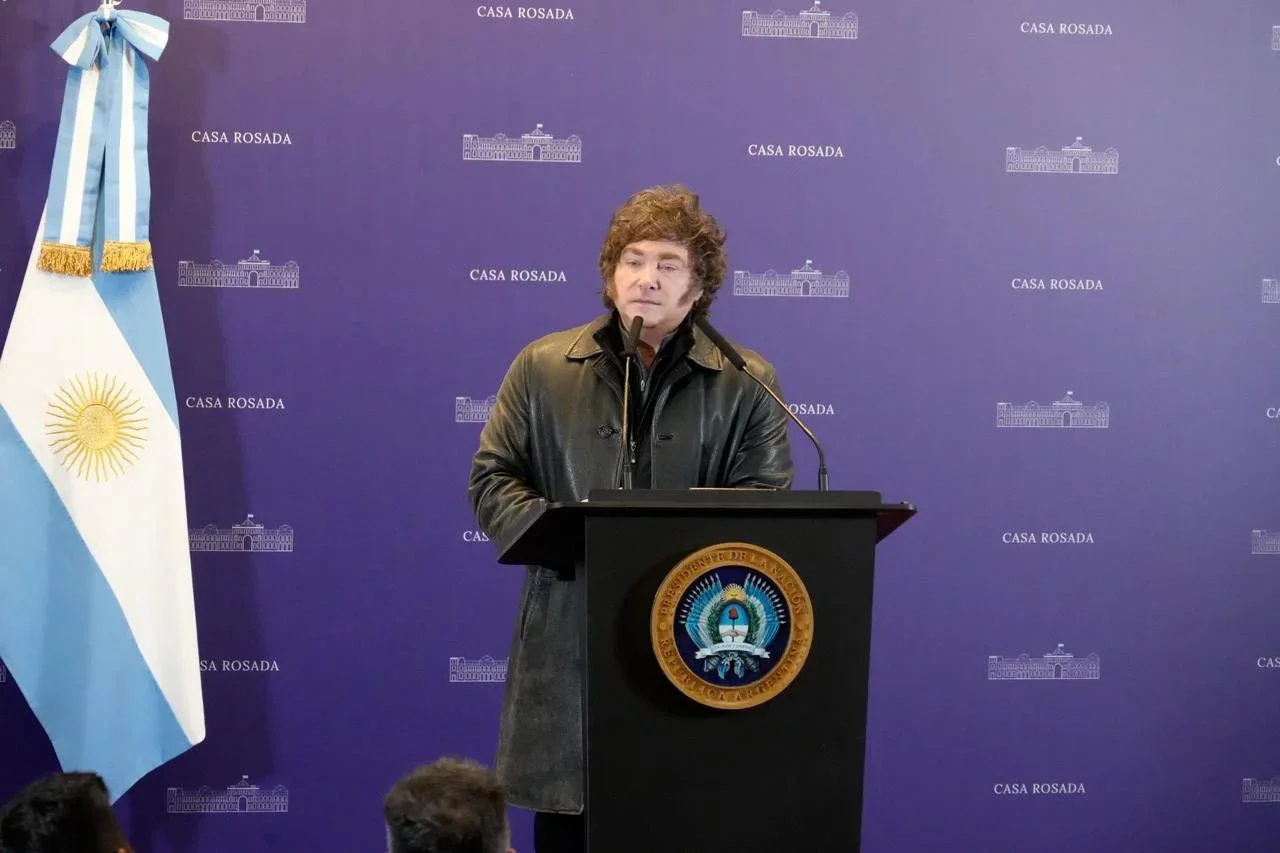
President Javier Milei strongly defended the reform of the Central Bank's Organic Charter and targeted two former heads of the entity who questioned the government's initiative. They are Mercedes Marcó del Pont and Miguel Pesce, both linked to disastrous Kirchnerist administrations and responsible for monetary issuance, currency controls, inflation, and loss of purchasing power.
Milei's response came after both former officials warned about supposed risks of modifying the BCRA regulations and indicated that the project would respond to a request from the International Monetary Fund. Milei rejected that interpretation and stated that the criticisms from those who led the Central Bank during Kirchnerist governments are, in fact, a positive signal for the direction his administration seeks to take.
Javier Milei presented his intention to reform the Organic Charter of the Central Bank
“If these two economic illiterates are complaining, it’s a good sign, since given the disaster they have caused, doing the opposite is a good intuition,” the President wrote on his X account, sharing an article that included the criticisms from Marcó del Pont and Pesce.
The discussion revolved around the 2012 reform, promoted during the government of the convicted Cristina Kirchner, which modified the Central Bank's Organic Charter and diverted the entity's objectives. For Milei, that change was one of the most serious errors in monetary policy, as it turned the BCRA into a tool for financing the Treasury and an expansive economic policy that ultimately deepened the imbalances.
In his post, the President explained that, according to Tinbergen's principle, to achieve an economic policy objective, at least one independent instrument is needed. In that context, he criticized that the Kirchnerist Organic Charter assigned multiple objectives to monetary policy, something that reflects a “declaration of ignorance” in technical terms.
The Central Bank of the Argentine Republic
The President maintained that the central objective must return to preserving the value of the currency. For the libertarian administration, that change is essential to consolidate the stabilization process, end monetary financing of the deficit, and definitively close the door to the mechanisms that Kirchnerism used to sustain public spending through issuance.
In closing his message, Milei stated that the discussion will not be limited to a partial adjustment of the current regulations. “The reform is not exhausted in what is mentioned in this post. We will go even deeper,” he anticipated, in a direct signal that the government will seek to advance with structural changes in the Argentine monetary regime.