The implementation requires companies, accounting firms, and Human Resources departments to adapt their payroll systems. In this process, larger companies and technology providers have begun to advance more quickly, while many SMEs are also adjusting their internal mechanisms to incorporate the new scheme in an orderly manner.
Since July, more companies are starting to implement the new salary driven by the National Government, a reform that achieves a simple transparency regarding the real cost of each registered job in Argentina and the burden that falls on employers.
The measure, regulated through Decree 407/2026, modifies the traditional way in which workers receive information about their earnings. Until now, the receipt allowed for viewing gross salary, deductions, and net salary, but did not clearly show the total labor cost that the employer faces or the weight of the charges applied to each employment relationship.
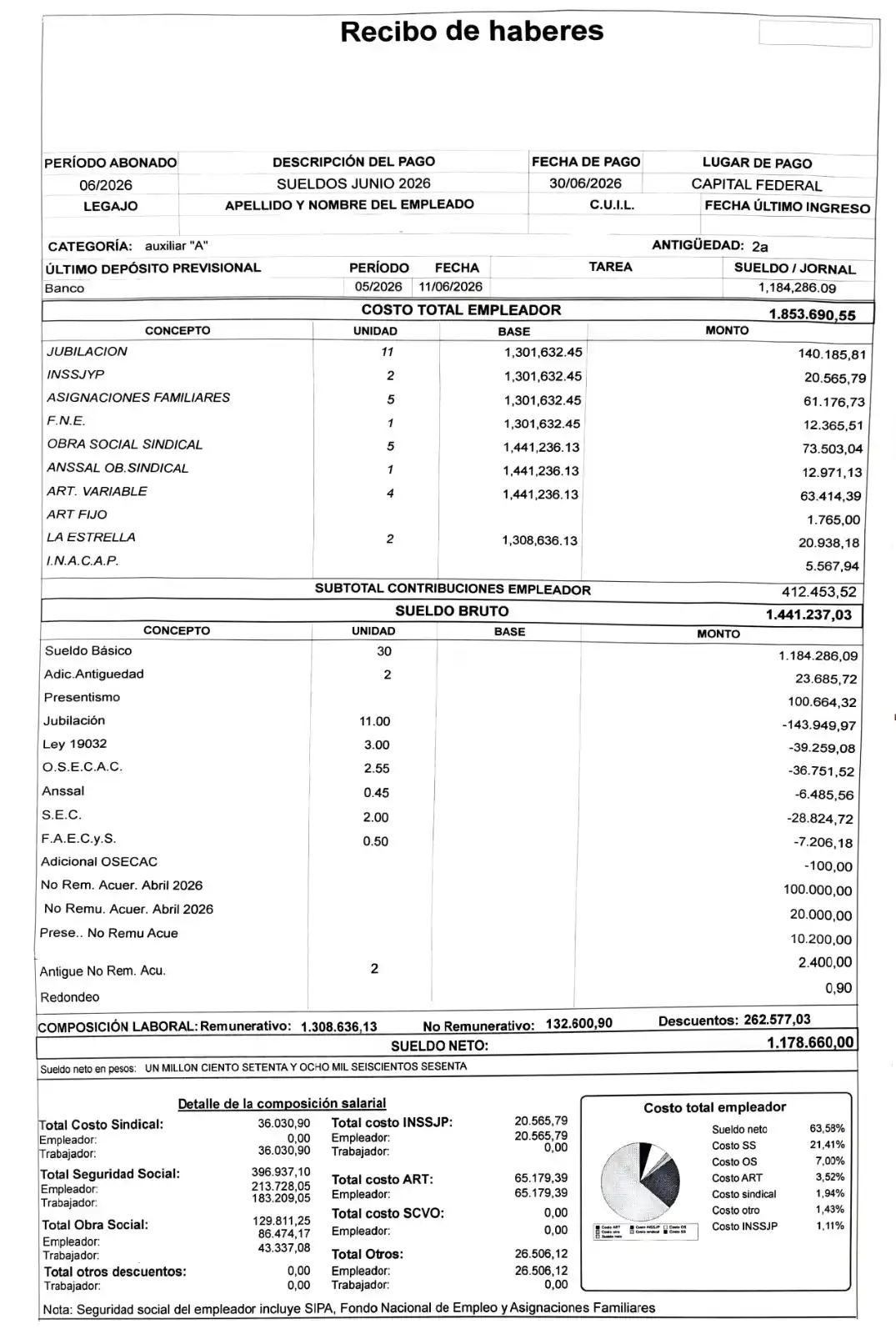
The example of a real receipt issued in July
With the new format, the employee will be able to see in a single document not only how much they take home, but also how much money is allocated to retirement, health insurance, PAMI, ART, family allowances, the National Employment Fund, union contributions, business chambers, and other concepts related to the labor relationship. The receipt ceases to be just a proof of payment and becomes an overview of the Argentine labor cost.
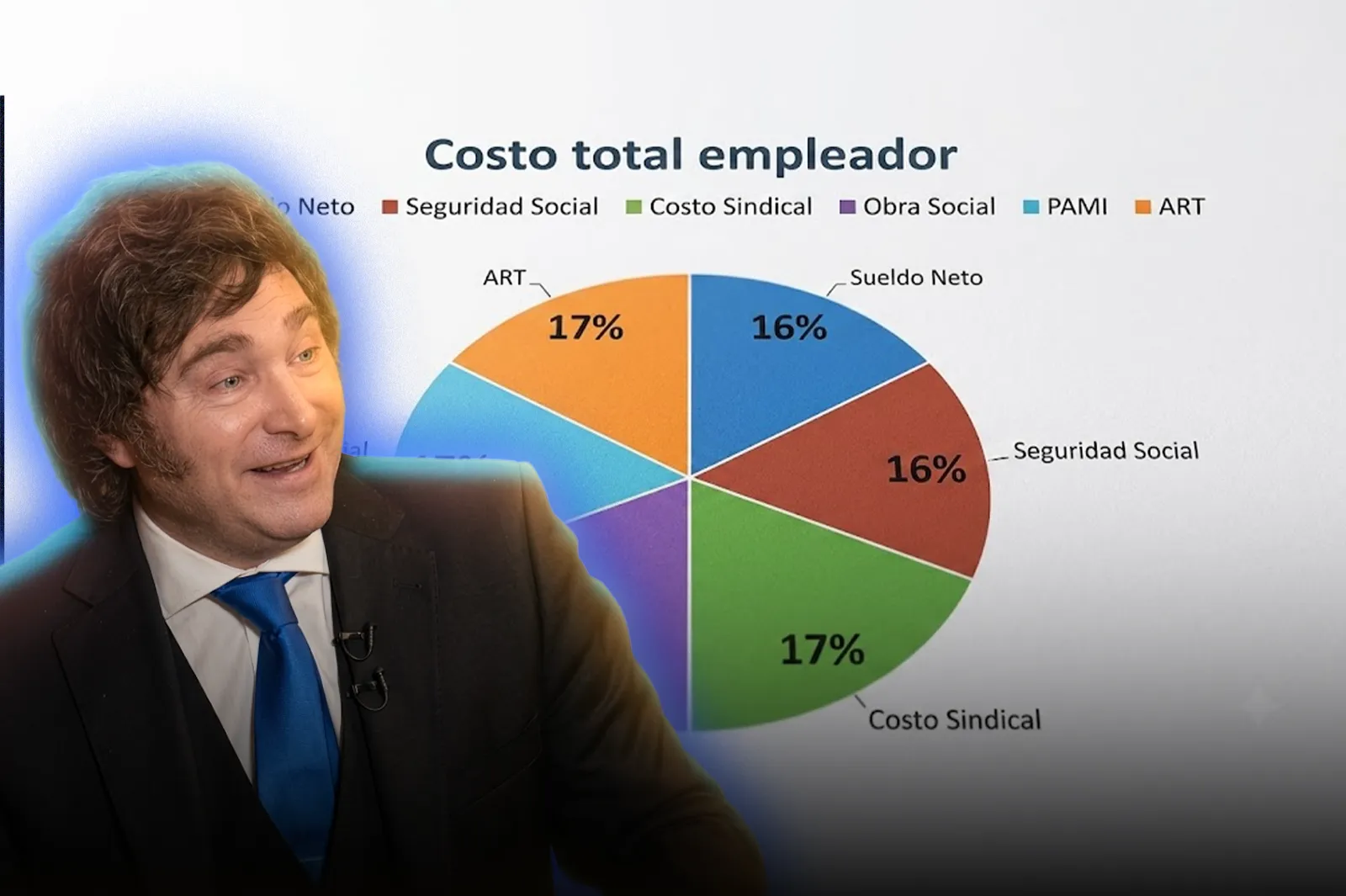
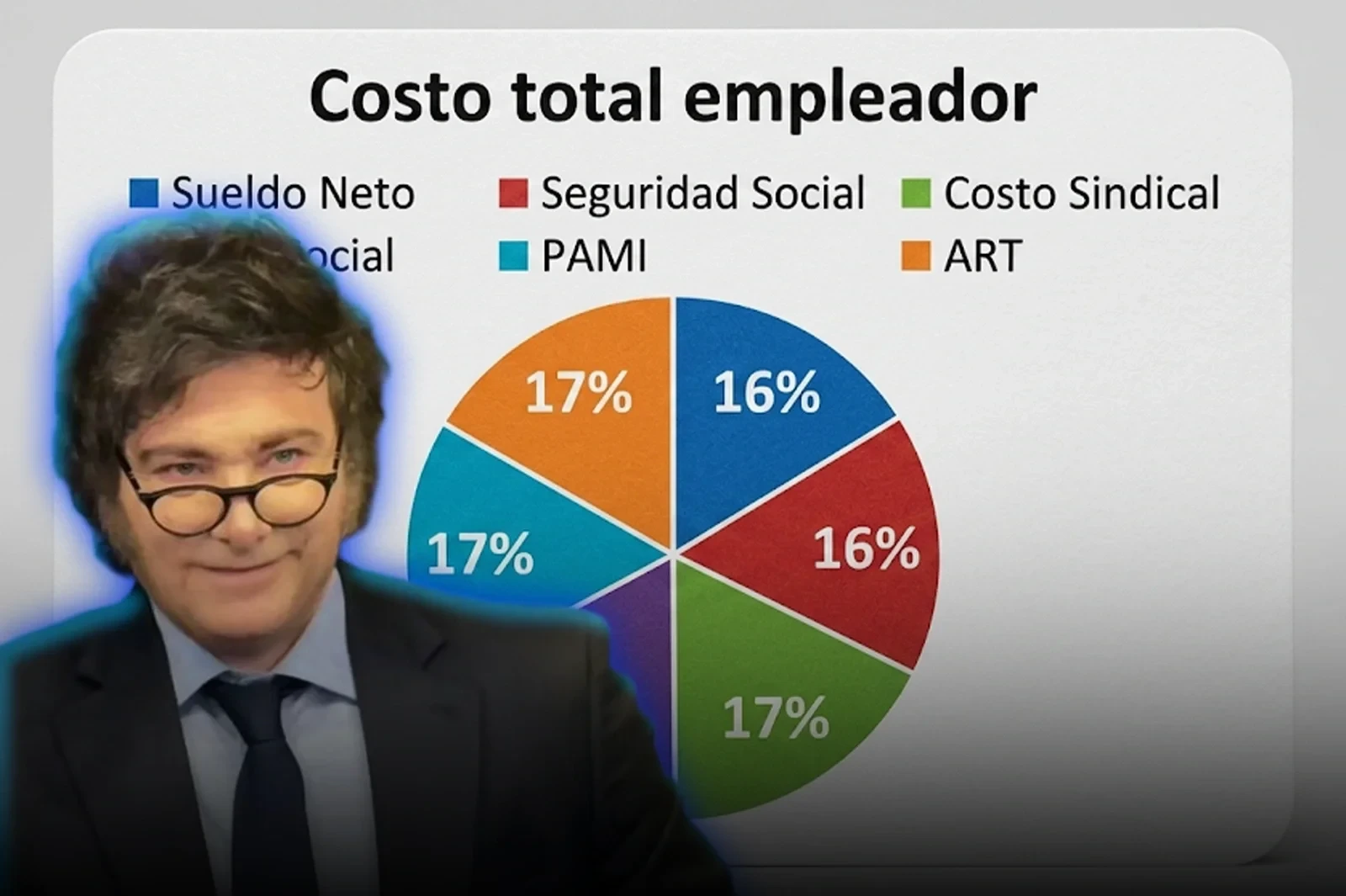
One of the most striking changes is the inclusion of a specific section with the contributions paid by the employer. This detail must appear before the usual breakdown of gross salary, deductions, and net remuneration. Additionally, the model adds a visual summary with a pie chart that allows for direct observation of how the total cost is distributed between the salary received by the worker and the charges applied to that employment.
The reform aims to eliminate one of the major gray areas of the Argentine labor market: the lack of clear information about who takes each part of the salary. For decades, millions of workers only saw the final amount deposited into their accounts, without a clear explanation of the weight that the state and union organizations had on their efforts.
The Government modified the pay slips to expose the costs that fall on salaries
The Government of Javier Milei claims that this change is part of a broader agenda for labor modernization, reduction of bureaucratic obstacles, and greater transparency in labor relations. To discuss salaries, registered employment, and competitiveness, one must first know who the actors involved in their generation are.
The new receipt will allow each employee to know more precisely how their remuneration is composed and what portion of the total cost ends up being absorbed by various legal, social security, and conventional charges.