
During the early presidencies of Juan Domingo Perón, the Argentine educational system underwent a process of strong state intervention that included the persecution, dismissal, and displacement of opposing teachers, within the framework of a policy aimed at consolidating political control over universities and schools.
From the beginning of his administration, the Peronist government promoted a scheme of centralization and control that focused not only on academic training but also on the “vocation” and ideological loyalty of teachers. This process resulted in a system where job security was conditioned by adherence to Peronist doctrine.
In this context, numerous teachers and professors were denounced, summoned, or directly fired for not aligning with Peronism or for expressing critical positions.
Daily photo.
The control of universities
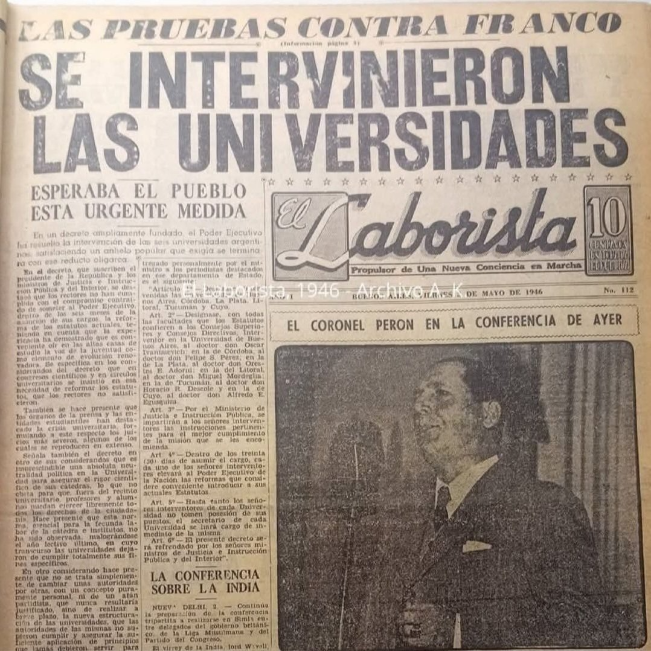
The advance over universities was even more explicit. In 1947, the well-known Guardo Law was enacted, which consolidated the control of the National Executive Power over educational institutions.
Under this regulation, the government was empowered to appoint rectors and professors, which practically meant the elimination of university autonomy, one of the central principles of the University Reform.
Universities came to be considered centers of political opposition, which deepened state intervention. This process included the displacement of reformist authorities, the direct intervention of institutions, and the dismissal of teachers who did not adhere to the official Peronist line.
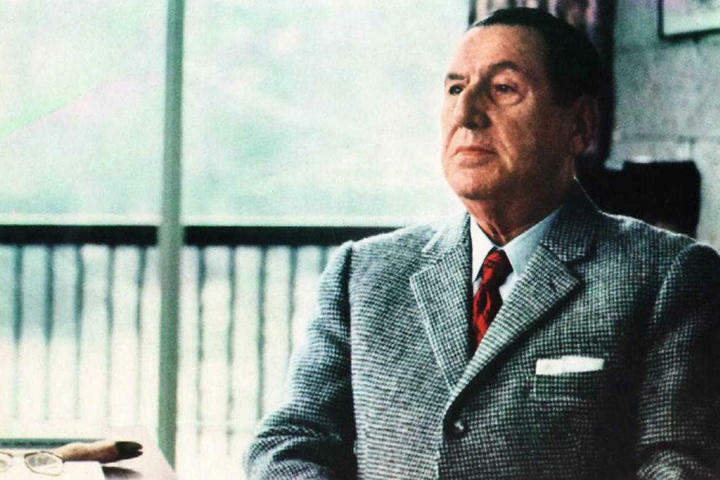
Juan Domingo Perón.
The model of persecution
The mechanisms of persecution were multiple. Administrative denunciations, disciplinary sanctions, forced transfers, and early retirements were used as tools to purify the educational system.
By 1947 and 1948, the idea of combating “overpopulation” of teachers was even promoted, under the argument of eliminating those who did not have a “true vocation,” a definition that translated into the exclusion of opponents.
The role of unions was also complicit in this scheme. The Argentine Teacher's Association (ADA), aligned with Perón, actively participated in the denunciation and request for the removal of teachers considered opponents, reinforcing political control within the educational sphere.
Resistance to these policies did not take long to manifest, but the responses were decisive. Sectors of education that opposed the government faced sanctions and reprisals, especially during the years of greatest political tension, such as the period leading up to 1955.
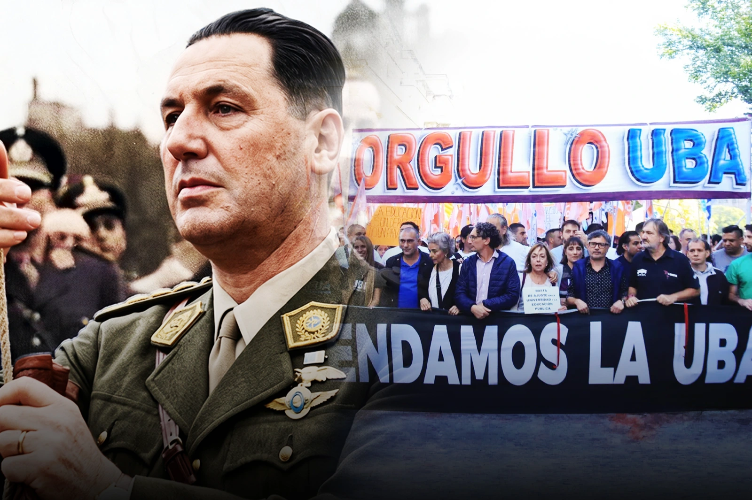
This historical period also highlights a current contradiction in the ongoing debate. The Kirchnerists who today advocate for the defense of “university autonomy” hold a position that contrasts with the history of their own movement, as during Perón's government, the opposite was precisely advanced.