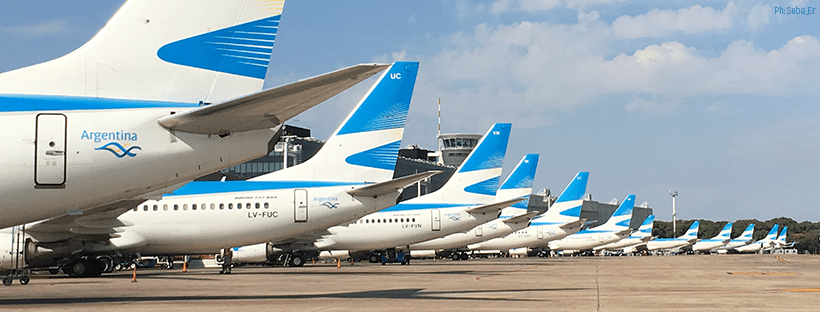

The Argentine air transport activity closed the first four months of 2026 with historic results and a strong expansion of air connectivity throughout the country, under the successful management of Javier Milei. According to the latest data released by the National Administration of Civil Aviation (ANAC), between January and April, the national airport system mobilized 17,897,992 passengers, exceeding the previous record set in 2025 by 5%.
The growth was also reflected in the number of air operations. During the first four months of the year, 138,369 movements were made, establishing a new historical maximum and marking an increase of 2% compared to the previous year. The numbers consolidate the sector at unprecedented levels since official records exist.

The Minister of Economy, Luis Caputo, celebrated the results through his X account and highlighted that “2026 recorded the best first four months in history for air transport activity”.
Additionally, he emphasized that “the indicators achieved between January and April reflect the continuity of sustained growth in activity, driven by greater connectivity, the incorporation of new routes and operators, and the expansion of air transport offerings throughout the country”.
In April, the international segment again showed record figures. Flights abroad mobilized 1,324,891 passengers, 3% above the historical maximum recorded in 2018. In parallel, international operations reached 8,770 movements, representing a 1% increase compared to the previous record for that month, also corresponding to 2018.
In total, during April, Argentine airports received 3,906,057 passengers, establishing a new monthly peak and consolidating the expansive trend that began last year.
One of the most notable factors behind this growth was the deepening of federal connectivity. During April, 196,745 passengers traveled from interior airports to international destinations without passing through Buenos Aires. According to ANAC, this represented an increase of 35% compared to 2025, 81% compared to 2024, and 114% compared to 2023.