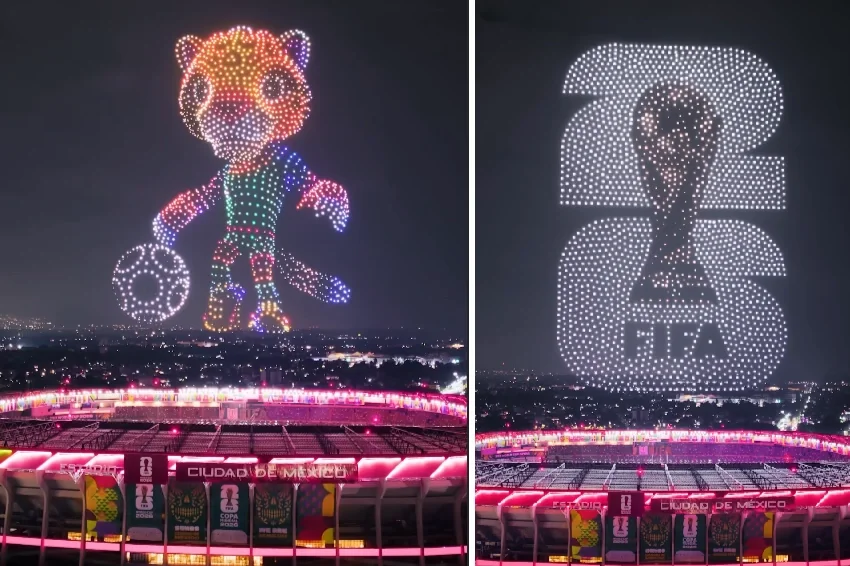
With 48 selections, unexpected debutants, generational gaps of over 25 years, and more than 1,200 players, the World Cup being held in the United States, Mexico, and Canada comes packed with data that surprises the audience
The 2026 World Cup is already underway and is shaping up to be a historic edition. Organized for the first time by three countries —the United States, Mexico, and Canada— the tournament breaks several records and brings surprises that few know about.
This World Cup not only expands the number of teams but also brings together legendary figures with young promises, generating fascinating contrasts.
One of the most striking facts is that Lionel Messi, Cristiano Ronaldo, and Guillermo Ochoa will become the first players to compete in six World Cups. A longevity mark that seemed impossible not long ago.
Moreover, it will be the largest tournament of all time: 48 teams will participate, 104 matches will be played, and 1,248 footballers will compete. Never before has anything like this been seen.
Debutants and generational contrasts
Among the participants, there are four teams making their debut at the highest level: Cape Verde, Curacao, Jordan, and Uzbekistan. The latter represents a milestone for Central Asia since the dissolution of the Soviet Union.
In terms of ages, Mexican Gilberto Mora, at just 17 years old, is the youngest player in the tournament. At the other end is Scottish goalkeeper Craig Gordon, who at 43 years old continues to demonstrate that experience is invaluable in elite football.
The difference between the youngest and the oldest exceeds 25 years and 280 days, one of the widest generational gaps in recent times.
The Ivory Coast team has the youngest squad, with an average age of just over 25 years, while Panama arrives with the highest average, close to 30 years.
Stadiums, physiques, and new faces
Estadio Azteca will experience a unique moment: it will be the first venue to host matches from three different World Cups (1970, 1986, and 2026). Additionally, the opening match will be played there.
The physical differences are also surprising. Austrian goalkeeper Florian Wiegele, at 2.05 meters, is the tallest, while Panamanian César Yanis, at 1.60 meters, is the shortest. There is a 45-centimeter difference between them.
Of the 1,248 registered players, 891 will be playing in their first World Cup. This sets a record driven by the expansion of the tournament, although there will still be room for established stars like Messi, Ronaldo, or Modric.
These curiosities showcase the enormous diversity that characterizes the 2026 World Cup. Generations, countries, and different realities intersect in a single event that is already historic for its magnitude.
African football, for example, shows its renewal with young squads, while Central American teams bet on experience. All this in a context where the size of the tournament allows for more stories and surprises.
From the opening match at Azteca to the grand final, this Cup promises emotions and facts that will continue to fuel conversations among fans. On July 19, we will know the champion, but the records are already written.