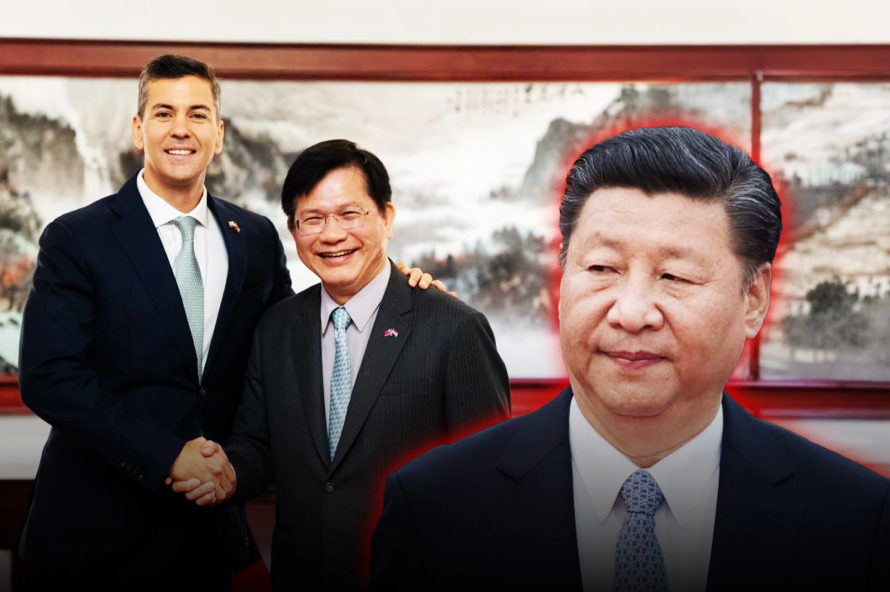
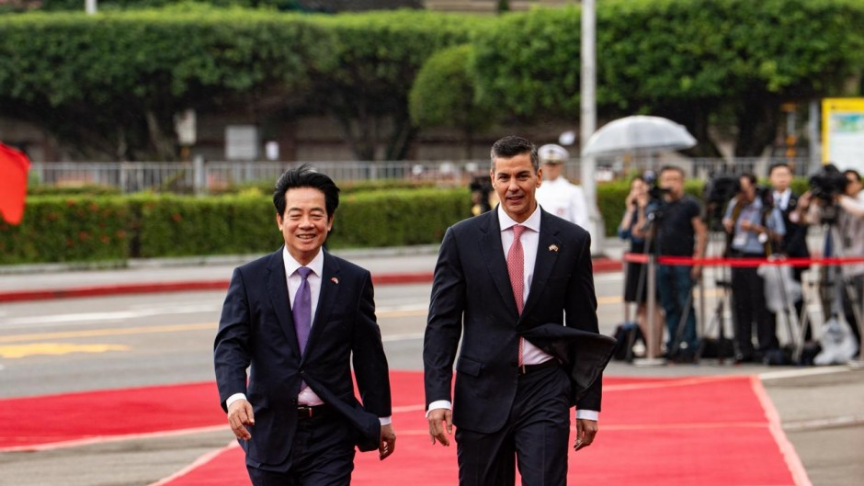
China raised the tone of its diplomatic confrontation with Paraguay this week following President Santiago Peña's visit to Taiwan, where he met with President Lai Ching-te and signed cooperation agreements in areas such as advanced technology, semiconductors, artificial intelligence, and cybersecurity. The trip was considered by Beijing as a direct provocation and resulted in new accusations against Asunción for maintaining relations with the island, which China considers part of its territory.
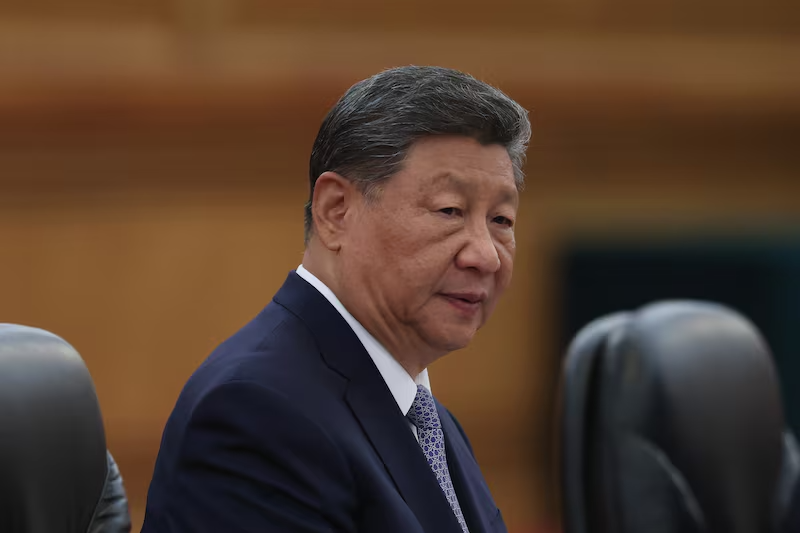
The spokesperson for the Chinese Foreign Ministry, Guo Jiakun, stated that the Paraguayan president and other leaders from his country act as ''pawns of Taiwan's independence forces'', in one of the harshest statements recently issued by Chinese diplomacy towards a Latin American country.
The official also claimed that Paraguay would be ignoring the interests of its own population by maintaining official ties with Taipei and asserted that it should ''change course as soon as possible'' to establish diplomatic relations with Beijing.
The president of Paraguay made a visit to Taiwan, and Xi Jinping's regime strongly criticized him.
Guo also insisted that the supposed desire of the Paraguayan population would favor a rapprochement with China, citing surveys without detailing their origin or methodology. According to the spokesperson, more than 90% of Paraguayans would support the establishment of relations with Beijing, although he did not present verifiable evidence. These claims have been questioned by international analysts due to the lack of public data supporting such figures.
The statements are part of a blatant diplomatic pressure campaign that China has intensified in recent years to reduce the number of countries that officially recognize Taiwan. Currently, Paraguay is the only country in South America and one of only a dozen in the world that maintains formal relations with the island. For Beijing, such ties pose a direct challenge to its ''one China'' policy.
During his visit to Taiwan, which took place from May 7 to 10, President Santiago Peña defended the continuity of the bilateral relationship and emphasized that it is based on shared values such as democracy and freedom. The president traveled with a delegation of more than 40 Paraguayan entrepreneurs and participated in the signing of agreements aimed at boosting technological cooperation, including a joint project to establish an artificial intelligence computing center.
The Xi Jinping regime presented dubious evidence regarding the alleged stance of the Paraguayan people towards China's position on Taiwan.
Peña also highlighted the economic complementarities between both countries, emphasizing Taiwan's experience in semiconductor production and Paraguay's potential in renewable energy. In this context, he described the bilateral relationship as an alliance between ''two brother countries'', reaffirming his commitment to the diplomatic link despite the pressure exerted by China.
Beijing reacted particularly harshly to this rapprochement. In addition to labeling the visit as an action ''in support of separatist forces'', the Chinese government reiterated its call for Paraguay to sever relations with Taiwan and align with what it calls the ''right side of history''. According to the Chinese Foreign Ministry, maintaining these ties would not only lack significant economic benefits but would also go against the long-term strategic interests of the South American country.
Paraguay, for its part, has not issued an official response to the latest accusations. However, the government has repeatedly defended its sovereign right to maintain diplomatic relations with Taiwan, rejecting external pressures to change its foreign policy.
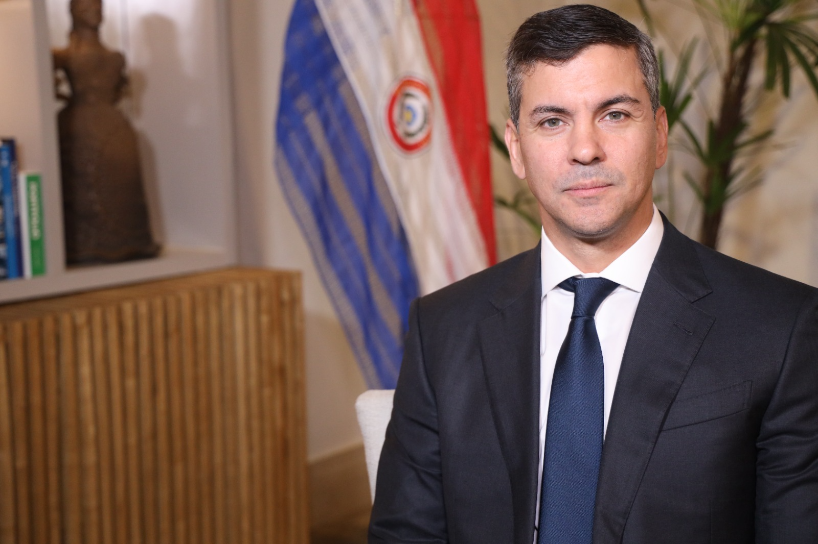
The Paraguayan president is one of the only South American countries that maintains relations with Taiwan and has signed numerous agreements with the Asian country.