
The RIGI begins to rebuild the Argentina that scared off capital

The RIGI begins to rebuild the Argentina that scared off capital

Most read in Argentina

The Chinese Communist Party records historic purges as Xi Jinping strengthens his grip on power

  1. María Ibarzabal Murphy highlighted in IDEA the legal certainty as a key element of the reforms to boost investment

  2. El Gordo Dan told how he caught two criminals: "Stay cool and nothing will happen to you"

  3. The Senate approved a new investment incentive regime to complement the RIGI

  4. HERO: Fat Dan arrested two criminals who were escaping from the police

Imagen de Editorial Team
porEditorial Team
Argentina

Stability, rules, and legal security are once again an advantage for Argentina after decades of punishing those who invested

Add La Derecha Diario on
Share:

There are countries that need to convince entrepreneurs to invest. Argentina spent too much time doing something even worse: convincing them that investing could be a sophisticated way to voluntarily place themselves in the hands of the State. Tax changes, currency controls, restrictions, new regulations, and rules modified when capital was already sunk transformed a normal economic activity into a political gamble.

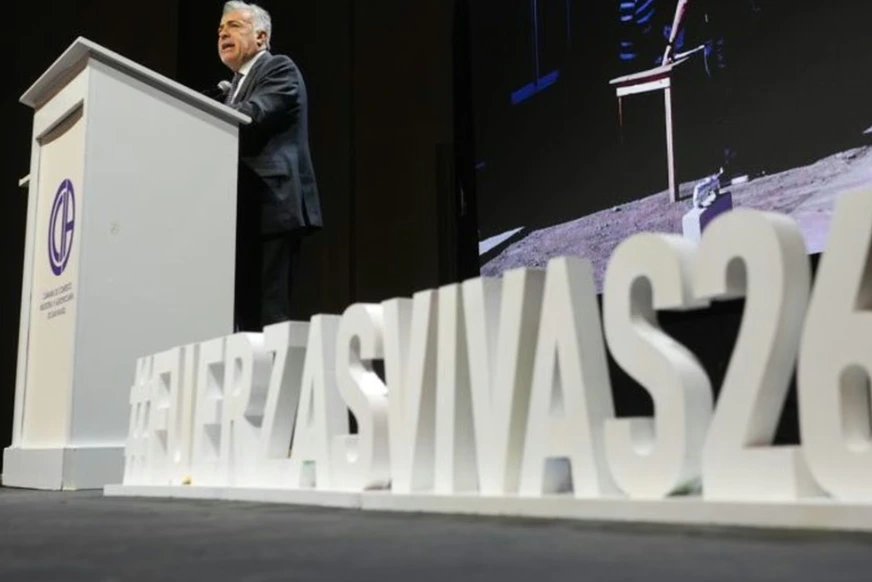
The RIGI was born precisely to start breaking with that history. The first Business Round held this week in Rosario brought together 43 large companies and organized more than 2,100 business meetings, while the Government reported that more than 1,200 suppliers are already linked to projects approved under the regime. But the truly interesting fact is not how many companies entered a hall, but why they are now willing to put in capital.

Fiscal stability, currency predictability, clear customs rules, legal security, and sufficiently long horizons to recover investments that take years to mature. Capital does not need a government official to congratulate it for investing or speeches about business patriotism. It needs to know what taxes it will pay, if it can import a machine, what will happen to the dollars it generates, and if a contract signed today will still mean the same thing in ten years.

That should be normal. In Argentina, it has stopped being so.

The absurdity was evident for decades: a country desperate for dollars simultaneously built a system dedicated to punishing those who could bring them in. Investments were demanded while controls multiplied; exports were requested while withholdings and restrictions appeared; production was required while each administration reserved the right to rewrite the conditions once the entrepreneur had already put in the money. The Argentine problem was never a lack of entrepreneurs. There are plenty of reasons why many have preferred not to invest.

Here lies the true political significance of the RIGI. The regime does not create entrepreneurs nor does it replace private decision-making. It attempts to remove part of the risk that the Argentine State itself had created. And when that risk decreases, something occurs that decades of dirigisme seemed incapable of understanding: capital finds for itself where opportunities exist.

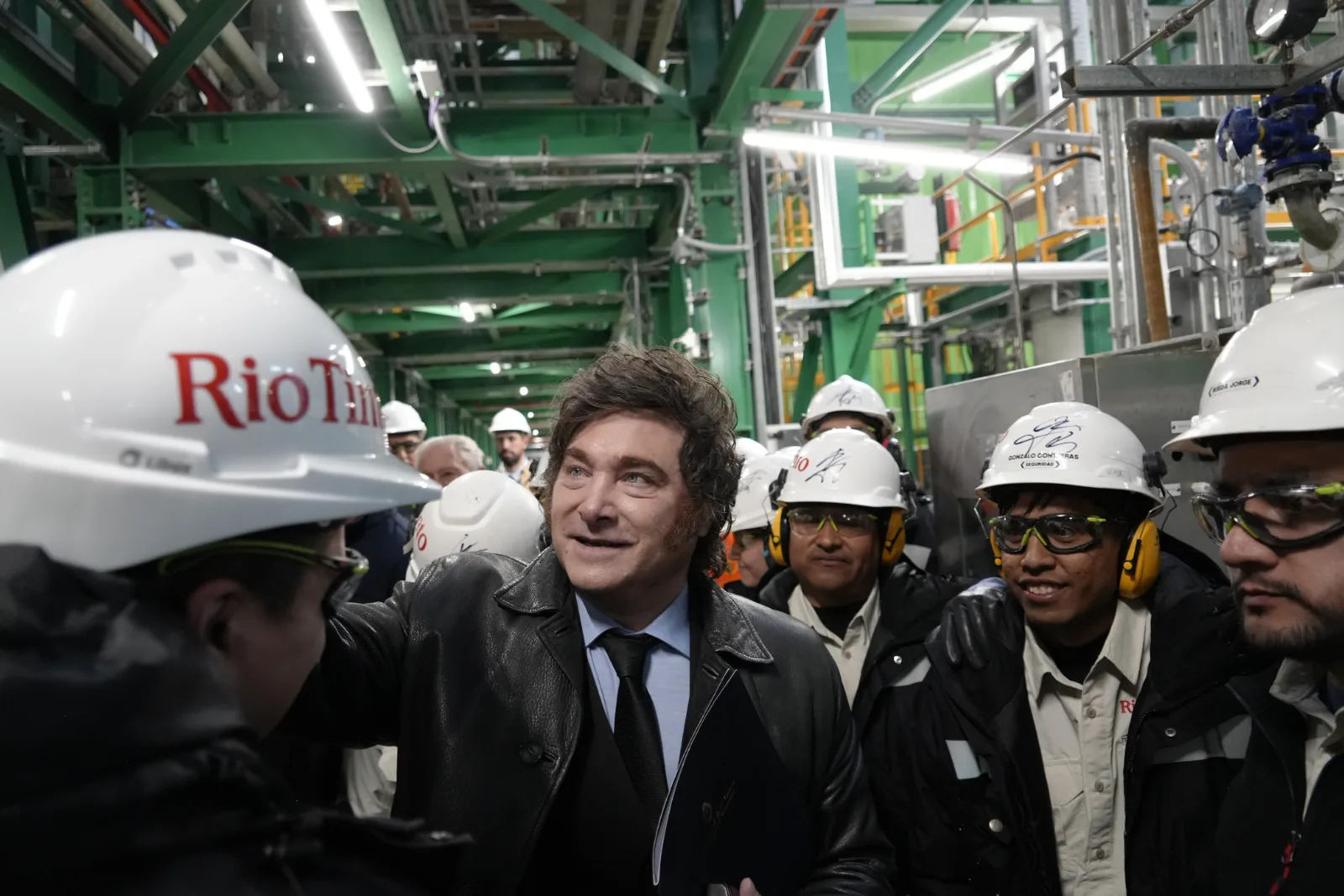
Projects are starting to show the magnitude of that process. In Catamarca, Milei inaugurated new facilities related to Rio Tinto's Fénix project, whose expansion involves investments of hundreds of millions of dollars. He also highlighted that 411 of its 413 suppliers are Argentine. This fact helps dismantle another reflection of old politics: believing that attracting large capital means benefiting a few companies isolated from the rest of the economy. A mine, a gas pipeline, or an industrial plant require metallurgy, transportation, engineering, software, maintenance, energy, and hundreds of contracts around the main project.

The so-called “trickle-down” has nothing magical about it: it is a chain of people producing, exchanging, and contracting.

Here also appears the most interesting flank of the RIGI itself. Old politics believed for years that development consisted of a bureaucrat choosing sectors, distributing subsidies, and deciding which activities deserved to grow. The RIGI does not yet represent the liberal ideal of completely general rules, because it offers a specific regime for certain investments. But precisely that reveals how much damage Argentina has accumulated: it was necessary to build a special framework to restore predictability where it should exist as a norm.

That is why it is advisable to understand the RIGI as a bridge. It does not demonstrate that some investments deserve privileges, but that the general regime still needs to move towards more capital-friendly conditions. Its true merit lies in showing what happens when arbitrariness, fiscal uncertainty, and regulatory risk are reduced.

The standard for the future should be even more demanding: that these principles of stability, predictability, and legal security extend more and more throughout the entire economy. Towards the metallurgy that wants to expand a plant, the SME that needs to buy a machine, and the Argentine who risks the savings of their life to open a business.

This explains why the discussion about the RIGI is much deeper than a list of tax benefits. What is at stake is what relationship Argentina wants to have with capital. For too long, it treated it as suspicious, captive, or an available source to cover fiscal needs. Milei is trying to return it to a much more elemental function: to be the tool with which someone risks present resources to produce more in the future.

Reconstruction, then, does not consist solely of attracting investments in lithium, oil, gas, or copper. It consists of making investing once again a business decision and no longer seem like a permanent negotiation with political power.

Because Argentina does not need the State to discover where to invest. It needs it to stop destroying the reasons to do so.

The true success of the RIGI will not be measured solely by the billions it manages to attract. It will be measured by how much it contributes to making rules, legal security, and respect for capital the new Argentine normality.


La Derecha Diario on X

  1. AHORA — HEROICO: EL GORDO DAN DETUVO A DOS DELINCUENTES QUE ESCAPABAN DE LA POLICÍA EN CABA Según información obtenida por La Derecha Diario, el conductor de La Misa interceptó a uno de los criminales con "el tackle de Máximo a Néstor" y lo redujo junto a un policía mientras esperaban la llegada de refuerzos.

    15 hours ago

  2. DELIRIO PROGRESISTA: Los demócratas del condado de Cobb "honraron" a los nativos americanos llevando a un afroamericano con un disfraz tribal que aseguraba identificarse como una “persona indígena”.

    34 min ago

  3. ESCÁNDALO: LA MUSULMANA ILHAN OMAR BAJO LA LUPA POR 30 MILLONES DE DÓLARES Y UNA BODEGA SIN VINO La congresista demócrata musulmana enfrenta nuevas acusaciones sobre el origen de su fortuna familiar, que habría pasado de apenas 1.000 a 30 millones de dólares antes de registrar llamativas correcciones. Además, los denunciantes cuestionan que la firma de inversiones de su marido operara desde un WeWork, sin registros ante la SEC, mientras que su supuesta bodega millonaria no tendría ni una sola botella de vino, ni barriles, ni producción acreditada.

    49 min ago

  4. "LA ALTA VELOCIDAD ERA EL ORGULLO DE ESPAÑA Y HOY DA MIEDO SUBIRSE A UN TREN": Pablo Motos explotó contra la corrupción de Pedro Sánchez y exigió explicaciones sobre los 160.000 millones de euros que la Unión Europea entregó al Gobierno del PSOE para modernizar las infraestructuras españolas. “Nos han engañado. Nos están intentando engañar. [...] La alta velocidad era el orgullo de España. El orgullo de España en el mundo entero. Y hoy da miedo subirse a un tren. ¿Dónde está el dinero? Basta de mentiras. Necesitamos, y sobre todo las víctimas, necesitan respuestas”.

    1 hour ago

La Derecha Diario logo
TwitterInstagramYouTubeTikTokFacebook
Derecha Diario TV

Nosotros

  • Quienes Somos
  • Autores
  • Donar

Privacidad

  • Protección de datos
  • Canales
  • Sitemap
  • RSS

Contacto

  • info@derechadiario.com.ar
PUBLICIDAD
La Derecha Diario logo
ESX logoInstagram logoYouTube logoTikTok logoFacebook
ARGENTINAUNITED STATESECUADORISRAELMEXICOURUGUAY
DERECHA DIARIO TV
  • ES
    XInstagramYouTubeTikTokFacebook
  • DERECHA DIARIO TV
  • Sections
  • ARGENTINA
  • UNITED STATES
  • ECUADOR
  • ISRAEL
  • MEXICO
  • URUGUAY
  • Countries
  • La Derecha Diario logoLA DERECHA DIARIO
  • La Derecha Diario México logoLA DERECHA DIARIO MÉXICO
  • La Derecha Diario Uruguay logoLA DERECHA DIARIO URUGUAY
  • La Derecha Diario Ecuador logoLA DERECHA DIARIO ECUADOR
  • La Derecha Diario Israel logoLA DERECHA DIARIO ISRAEL
  • La Derecha Diario Estados Unidos logoLA DERECHA DIARIO ESTADOS UNIDOS
  • Topics
  • GUERRA EN IRÁN
  • The Newspaper
  • QUIENES SOMOS
  • AUTORES
  • PUBLICIDAD
  • DONAR

Related news

Alfredo Cornejo announced investments of over US$250 million to boost energy and production in San Rafael

Alfredo Cornejo announced investments of over US$250 million to boost energy and production in San Rafael

Raúl Jalil agreed on 10 weekly flights between Catamarca and Buenos Aires to boost tourism and mining

Raúl Jalil agreed on 10 weekly flights between Catamarca and Buenos Aires to boost tourism and mining

'Football Manager 27' can be played for free on Steam for a limited time

'Football Manager 27' can be played for free on Steam for a limited time

Epic Games Store confirmed the next free game: when it will be available to claim

Epic Games Store confirmed the next free game: when it will be available to claim

Samsung W27: how much does the luxury foldable phone that surpasses the iPhone Duo cost

Samsung W27: how much does the luxury foldable phone that surpasses the iPhone Duo cost

Transfers in November 2026: what amounts ARCA controls and what happens if you exceed them

Transfers in November 2026: what amounts ARCA controls and what happens if you exceed them