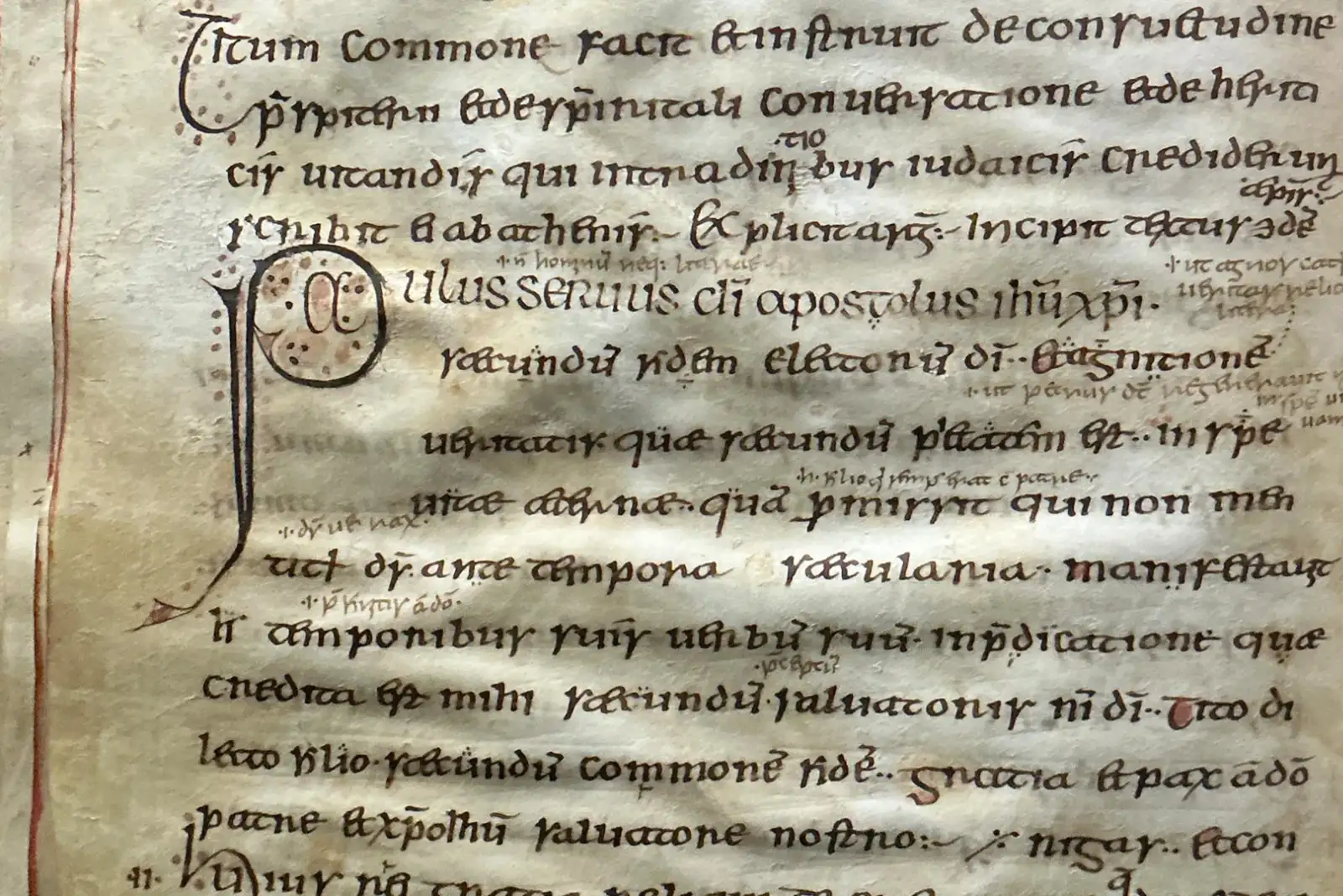
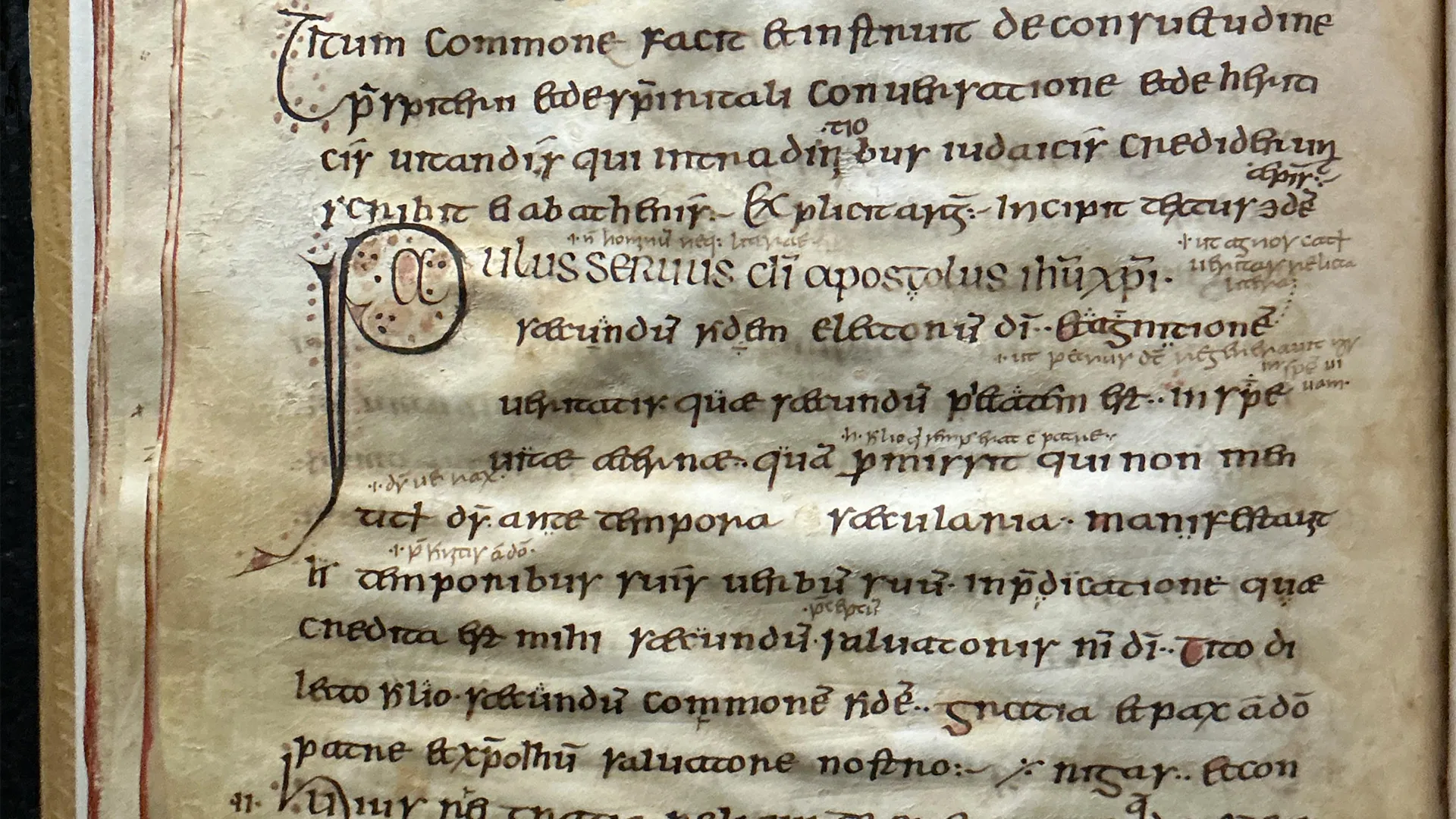
Analysis of medieval scrolls, including the York Gospels, reveals that sheep pox has been affecting cattle for more than 3700 years and has barely changed genetically
An international team of researchers led by University College Dublin discovered remnants of DNA from a highly contagious virus for sheep in European manuscripts over a thousand years old. The finding includes the York Gospels, one of the most valuable illuminated pieces from the early Anglo-Saxon period, and turns the parchment into an unexpected archive of ancient diseases.
The virus in question is sheep pox, a disease that can spread rapidly within a flock and cause high mortality rates, especially among young animals. In addition to deaths, it generates significant economic losses by affecting the production of wool, meat, and milk. Until now, little was known about its presence in Europe before modern times.
By analyzing material from various historical documents, scientists detected genetic sequences of the virus on multiple pages. This indicates that some of the skins used to make the parchment came from infected animals. The study, published in the journal Science Advances, reconstructs over 3,500 years of evolution of this pathogen.
Among the examined manuscripts are the Corpus Glossary of Cambridge, one of the oldest English dictionaries, and other pieces from Great Britain and the continent. The secret lies in the parchment itself: before the spread of paper, documents were made from prepared skins of sheep, goats, and cattle, capable of preserving biological traces of the animal at the time of its death.
Scientists find deadly virus DNA hidden in 1,000-year-old manuscripts
A virus that spans millennia
One of the most striking findings was the presence of viral DNA in parchments made from calf and goat skin. Since sheep pox primarily affects sheep, the researchers propose two possibilities: that the virus occasionally infected other species or that the material was contaminated during the parchment-making process.
To trace the history of the virus even further back, the team also analyzed sheep teeth from the Bronze Age recovered in shepherd settlements on the Eurasian steppe. Teeth tend to preserve genetic material for millennia better than other bone remains. There, they identified the oldest known genetic traces of this virus, which extend the presence of the disease to over 3,700 years.
By comparing these ancient sequences with genomes of current viruses, scientists estimate that the main branches of the capripoxvirus family—sheep pox, goat pox, and contagious nodular disease—diverged between 11,500 and 3,700 years ago. This period coincides with the domestication of livestock and the large movements of sheep from the steppe to Europe, factors that may have facilitated the transmission of the pathogen.
The most surprising result of the study is the genetic stability of the virus over several millennia. Unlike other pathogens, the genome of sheep pox appears to have changed very little despite its long history of infection in flocks. This stability could help identify the key mutations that allowed it to become an effective agent against sheep.
Archives that hold more than culture
Louis L’Hôte, a PhD candidate at UCD and the lead author of the work, explained that the record of ancient DNA from pathogens has transformed the understanding of past diseases and that now parchment can also preserve genetic material from animal diseases. According to the researcher, it is possible that archives and libraries around the world contain genetic traces of ancient outbreaks in livestock.
Dr. Kevin G. Daly, associate professor at the UCD School of Agriculture and Food Science and supervisor of the study, emphasized that parchment not only preserved cultural history for centuries but also the landscape of livestock diseases in the medieval period. The project brought together specialists in genetics, history, virology, protein chemistry, and conservation, an interdisciplinary approach that was key to the finding.
Sheep pox remains a current threat. There is an outbreak in Greece causing significant economic damage. L’Hôte noted that ancient genomes allow us to understand how the pathogens that still affect livestock production evolved. Unlike the human smallpox virus, the sheep virus has shown remarkable stability over the last millennia, suggesting that genetic changes prior to that period were decisive for its ability to infect the host.
The research was funded by Taighde Éireann-Research Ireland and the European Research Council. More than thirty institutions from Ireland and abroad participated. The work demonstrates that materials preserved for cultural reasons can hide valuable clues about the emergence, spread, and evolution of diseases that continue to affect the modern world.