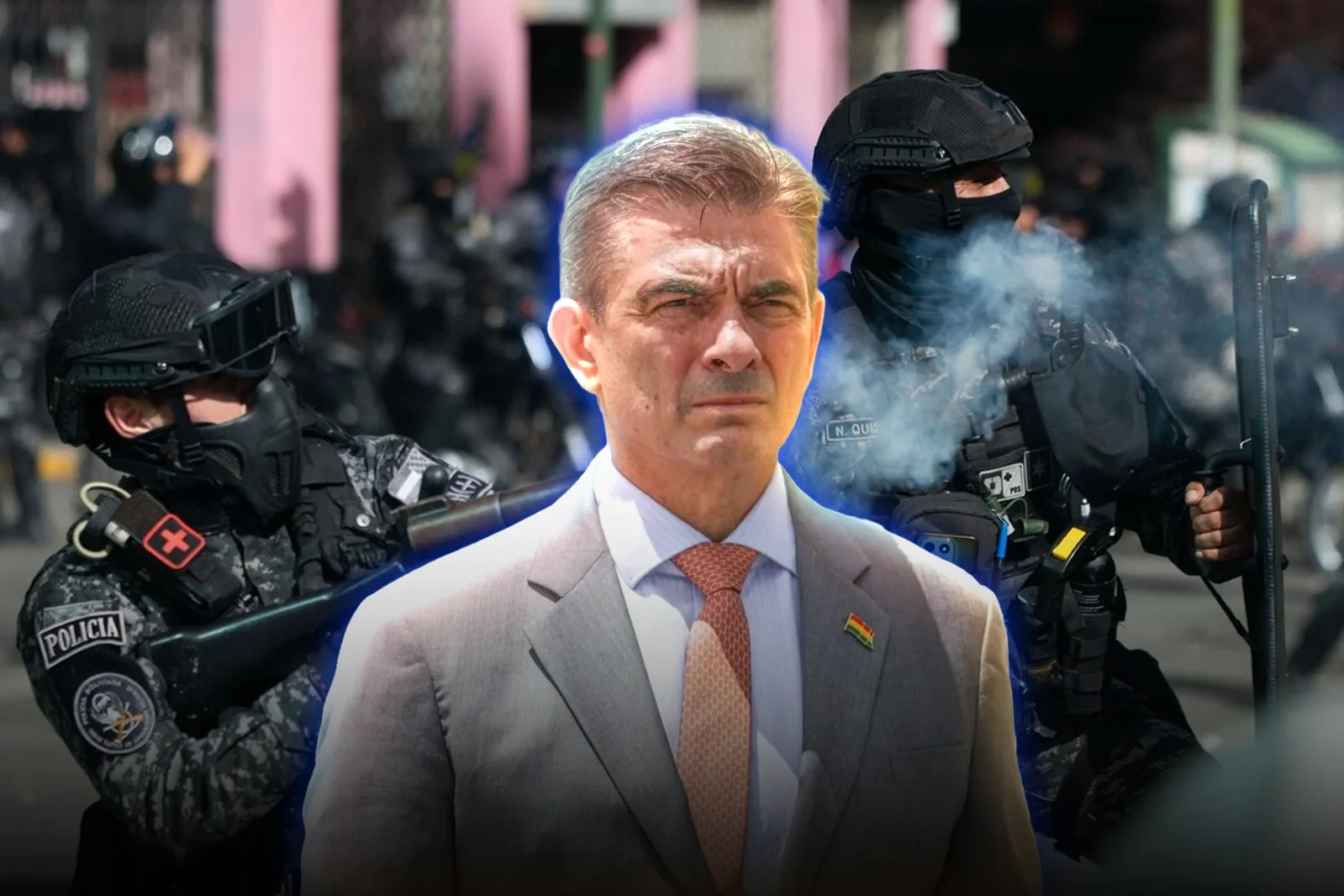









The government of Rodrigo Paz managed to reopen the Río Abajo corridor, the main supply route for food to the Bolivian capital, after a joint operation by police and military forces.
In one of the most significant advances since the beginning of the political and social crisis that has paralyzed Bolivia for more than a month, security forces managed to unblock the route connecting La Paz with the agricultural region of Río Abajo, considered one of the main sources of food supply for the capital. The operation was carried out without serious incidents and allowed the reopening of a strategic corridor for the entry of basic products.
The operation began in the early morning and was led by Defense Minister Ernesto Justiniano. Police and military forces advanced along about 37 kilometers, removing stones, logs, tires, and mounds of dirt that had been placed by protesters to block traffic. According to reports, residents from various localities applauded the passage of the security forces during the operation.
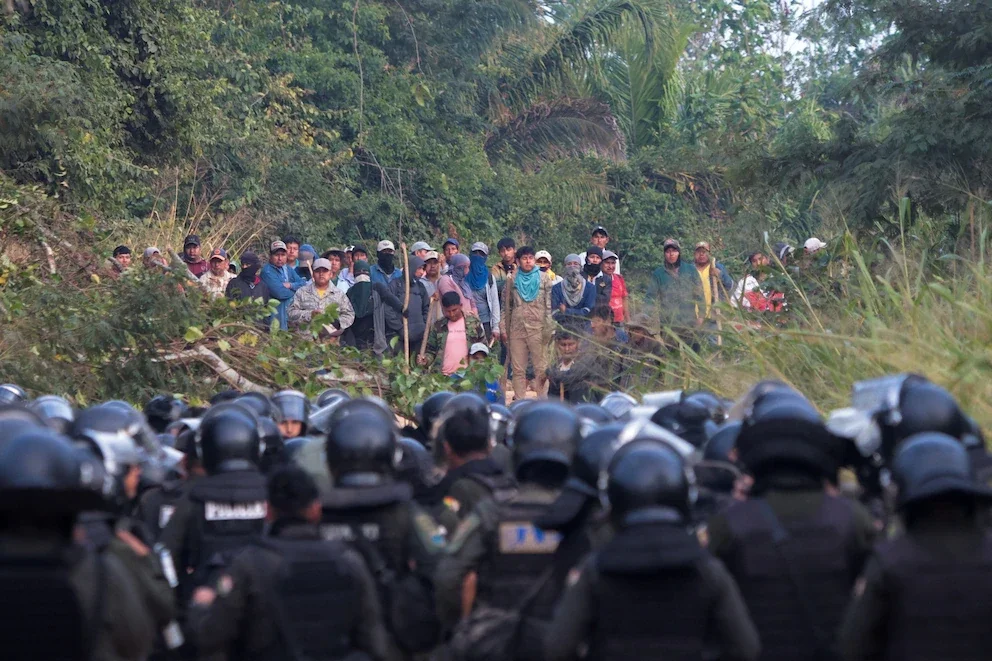
Security officials facing supporters of former dictator Evo Morales
The reopening of the route represents a relief for a city that has been practically besieged since early May. La Paz and the neighboring city of El Alto have suffered severe supply problems, with shortages of food, fuel, medicine, and medical oxygen. In some markets, the prices of basic products have multiplied several times due to difficulties in transporting goods.

After the operation, President Rodrigo Paz emphasized that his government will continue to work to restore free movement throughout the country using "dialogue and the legal instruments of the Constitution." The president also reiterated that he seeks to avoid an escalation of violence and that the actions of the security forces will continue to be aimed at protecting the population and ensuring supply.
The Bolivian president Rodrigo Paz
The blockades are driven by union sectors, peasant organizations, and groups aligned with former president Evo Morales, who have been protesting against the government for weeks. The crisis has already caused estimated economic losses in the billions of dollars and has generated growing concern about the humanitarian impact in various regions of the country.
Although the reopening of the Río Abajo route does not completely resolve the situation, it constitutes the most significant operational victory achieved by the government so far. For thousands of residents of La Paz, it means the possibility of gradually regaining access to food and essential supplies after weeks of scarcity and uncertainty.