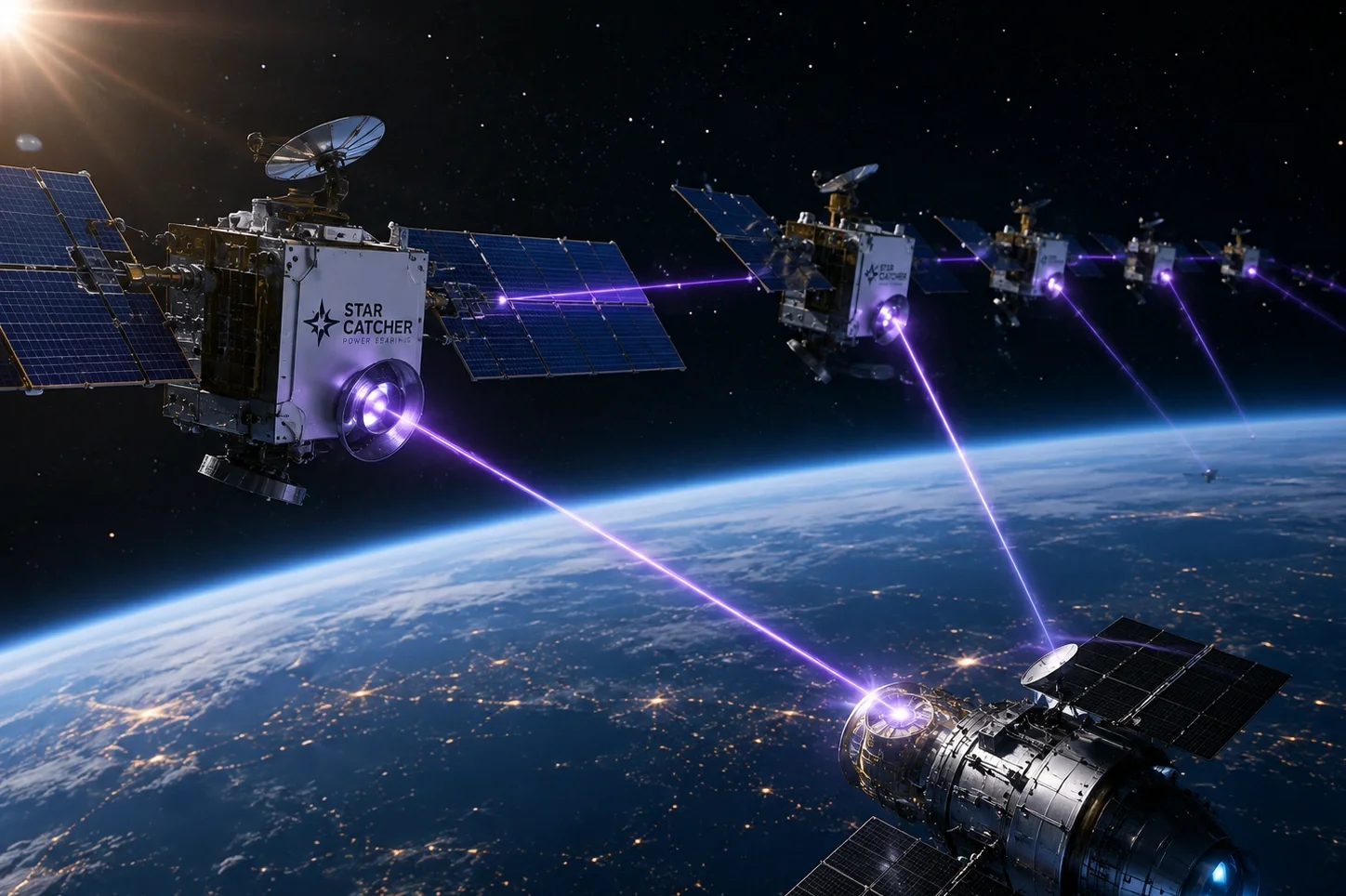







With the constant increase in space launches and increasingly ambitious missions, the need to find innovative solutions to provide energy to spacecraft beyond Earth arises. Traditional fuel has clear limits and, once depleted, complicates operations. In response, Star Catcher proposes a revolutionary alternative: to build the first electrical grid in space.
The company has just closed a Series A funding round for 65 million dollars, which, combined with what it already had available, totals 88 million. With this backing, they plan to conduct their first launch before the end of the year.
Instead of sending solar energy to Earth, as other initiatives attempt, Star Catcher will capture solar energy directly in orbit and transmit it to satellites and spacecraft that need it. This avoids problems such as the light pollution generated by terrestrial mirror systems.
The laser transmission system
The project is based on optical beaming, a method that converts solar energy into a multispectral laser. This laser will be redirected from a constellation of satellites in low Earth orbit to the spacecraft requiring recharging. The company aims to deploy about 200 satellites to create this distribution network.

In 2025, Star Catcher had already set a world record by wirelessly transmitting 1.1 kW of power to NASA's Kennedy Space Center. Now they seek to take the next step and make these transmissions directly in space.



