
Following the approval in the Netherlands, Tesla's driver assistance software arrives in a second European country. More nations in the bloc could join soon, which is key for Musk's and the company's objectives.
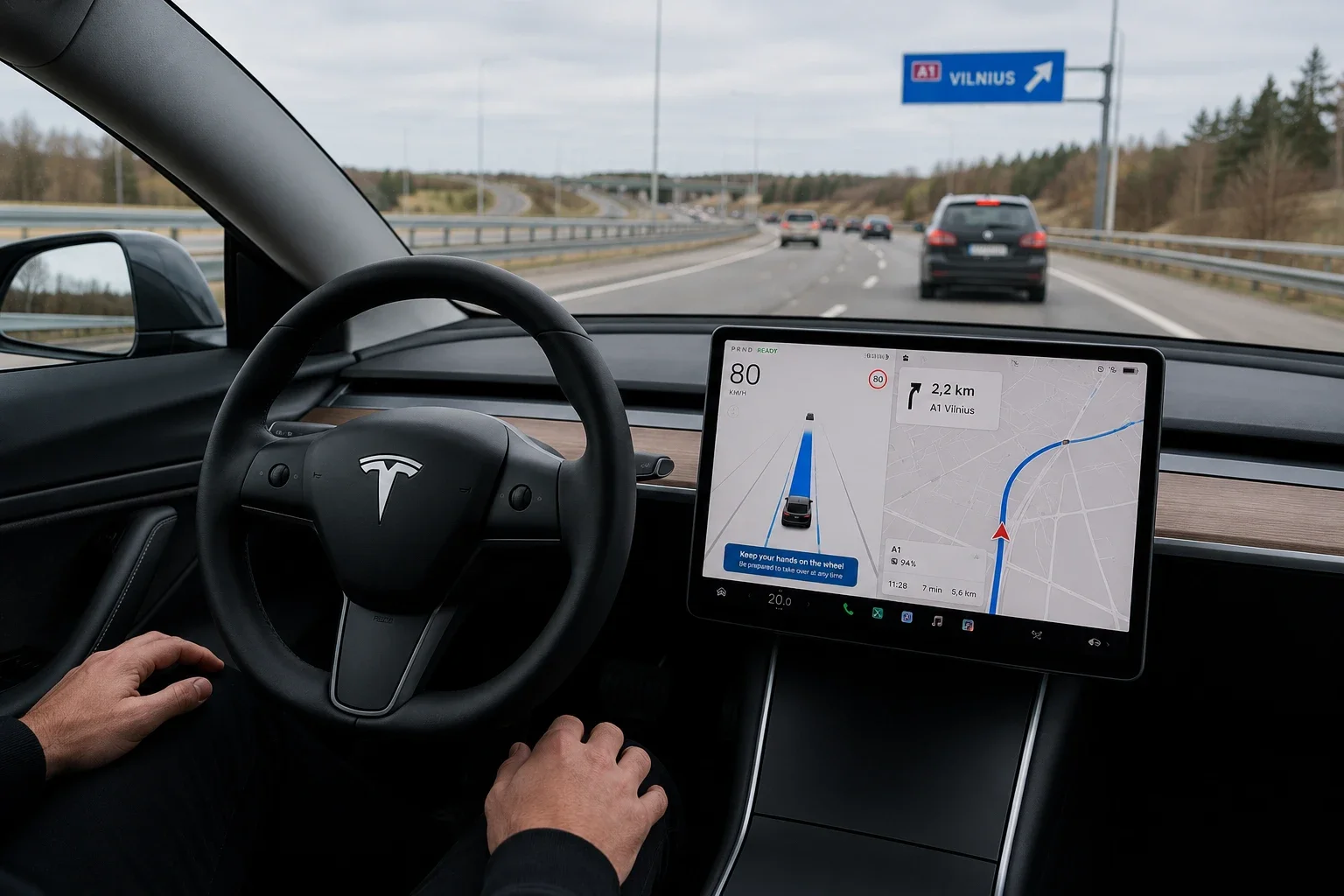
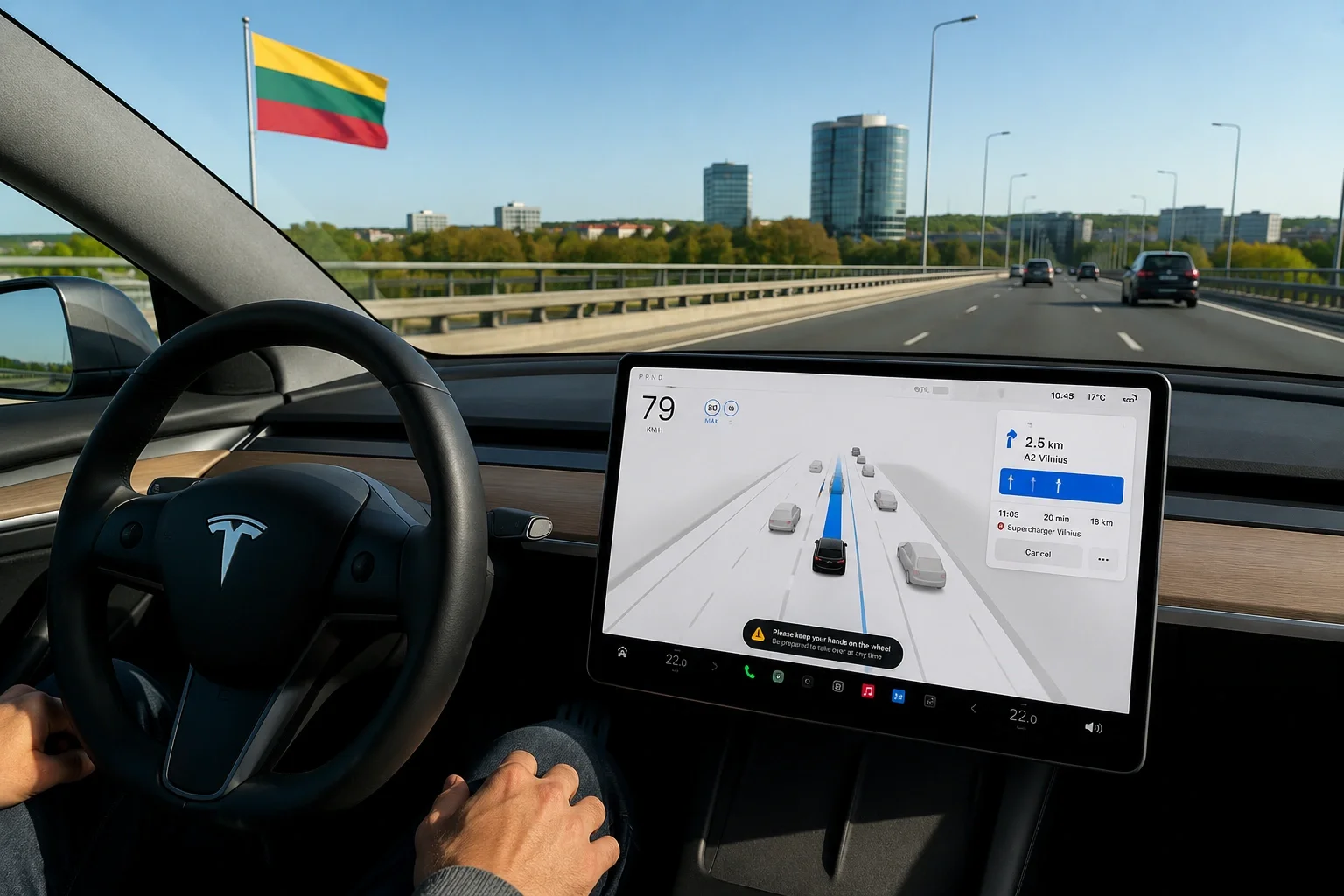
Tesla has taken a new step in its European expansion. The Full Self-Driving (Supervised) software, its advanced driver assistance system, is now available in Lithuania, the second country on the continent to approve its use.
The news comes just a month after the Dutch regulator RDW gave the green light. For Elon Musk's company, this advancement is crucial to position itself as a leader in artificial intelligence and robotics, beyond just being a car manufacturer.
The rollout in Europe is progressing gradually, influenced by the strict regulatory controls that differ from what happens in the United States. So far, only the Netherlands and Lithuania have it active, but other countries could join using the Dutch certification.
According to reports, Greece's transport ministry is preparing a bill to authorize the system. Belgium is also expected to approve it following the same path.
Strategic and Financial Importance
This growth is key to Tesla's ambitious plans. Elon Musk's compensation package, valued in the billions, is tied to meeting targets that include reaching 10 million active FSD subscriptions by 2035.
Currently, the company has nearly 1.3 million customers paying for the service globally. The system, which requires constant supervision from the driver, was launched in beta at the end of 2020 and has received continuous updates to improve its performance in maneuvers such as lane changes, parking, and general driving.

In January, Musk announced that access to FSD would only be available through a monthly subscription, currently priced at $99. This replaced the previous one-time payment option.
The software is part of Tesla's broader vision in AI and robotics. Although FSD Supervised is the only product accessible on a large scale to users, there is an unsupervised version being tested in a small fleet of robotaxis in Texas cities.
Global Context and Regulatory Challenges
Outside of Europe, the system is already operating in countries like Australia, Canada, China, Mexico, New Zealand, Puerto Rico, South Korea, and the United States.
The progress in the old continent has not been swift, precisely due to the more stringent regulatory requirements. However, if the Dutch approval manages to extend at the European Union level, the pace could accelerate significantly.
This development reinforces Tesla's effort to differentiate itself in the automotive market through autonomous driving technologies.
For now, Optimus, the company's humanoid robot, is still not in mass production or available to consumers. The current focus remains on perfecting FSD and expanding its geographical presence.
The coming months will be key to see how adoption progresses in more European nations and if the growth expectations in subscriptions that drive the company's goals are met.
With each new country that joins, Tesla brings its goals closer to becoming an undisputed benchmark for smart mobility and vehicle autonomy.