
A river god mosaic found in the ruins of Aspendos in Turkey

A river god mosaic found in the ruins of Aspendos in Turkey

An archaeological finding from the 3rd century A.D. reveals the figure of "Young Eurymedon," a symbol of the nearby river, in a structure that could have been an ancient pool next to the Theater street

Share:

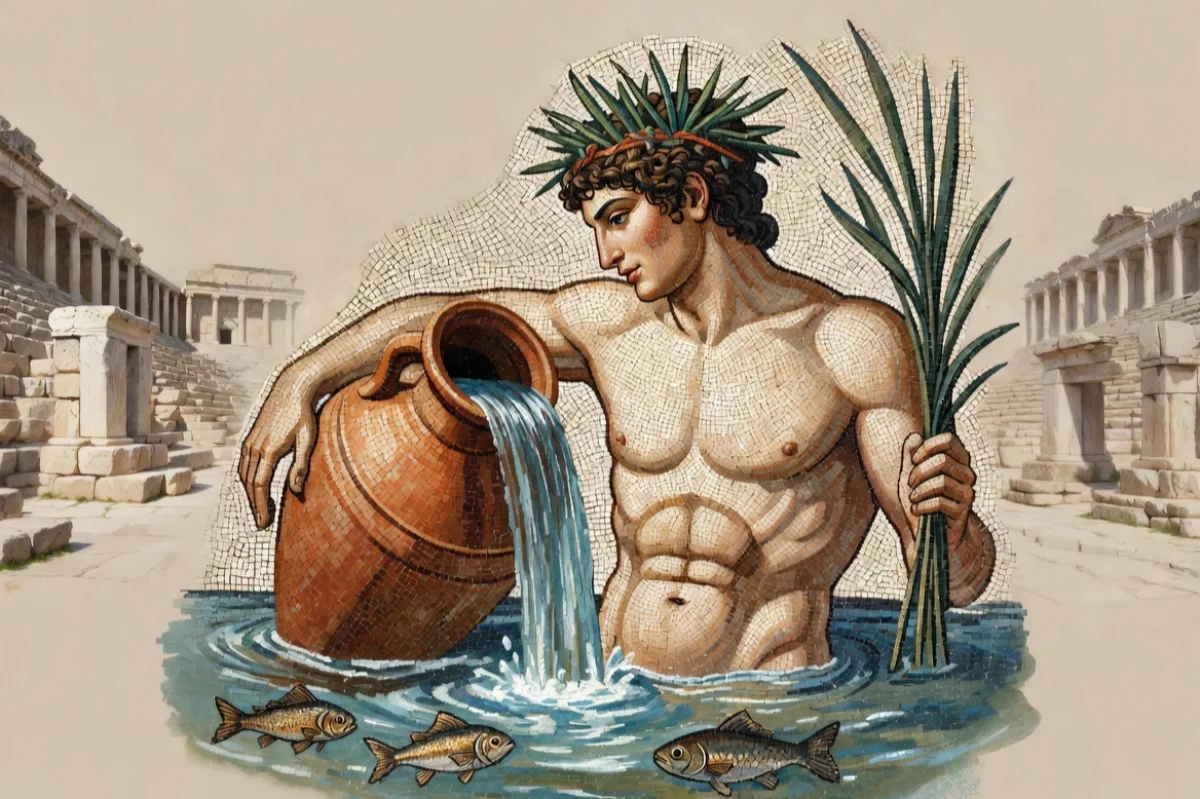
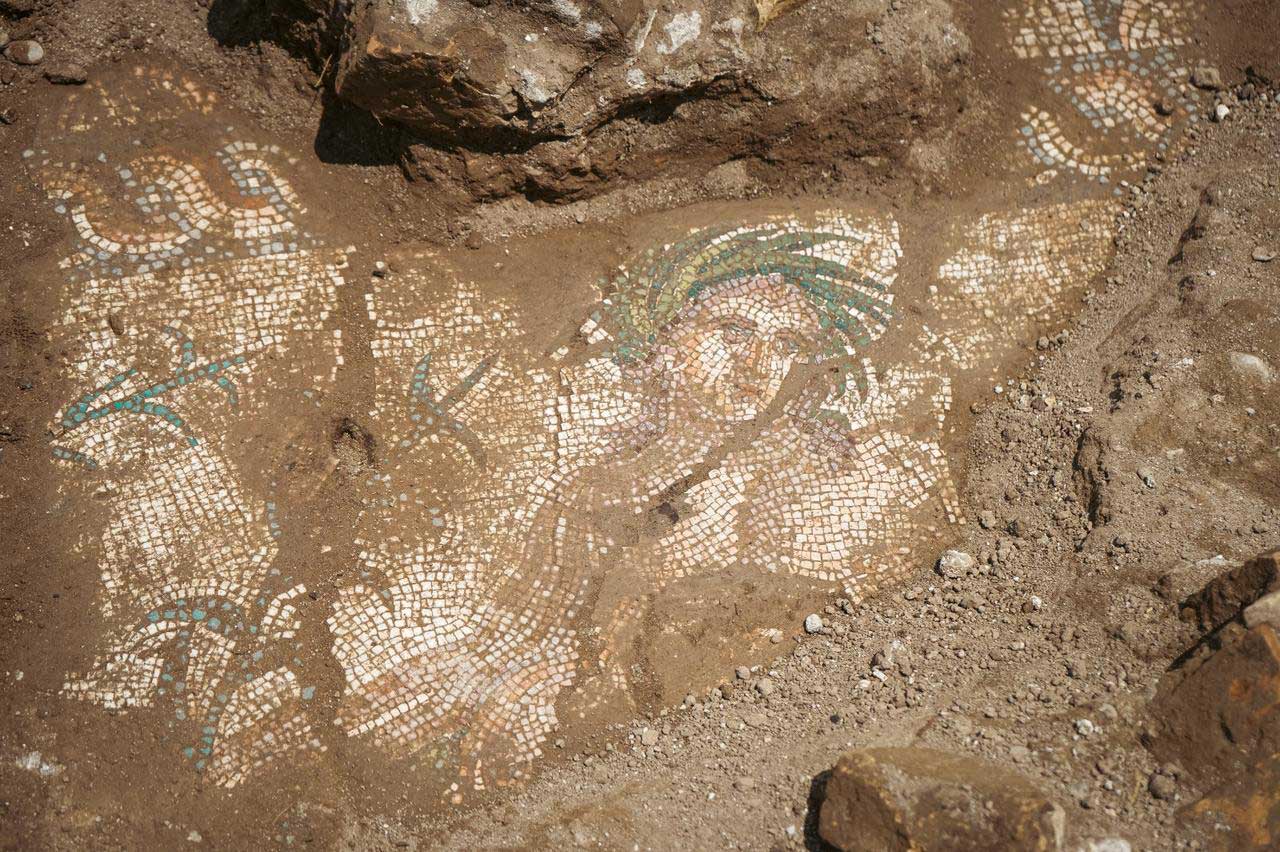
In the ancient city of Aspendos, in southern Anatolia, an archaeological team discovered a 3rd-century A.D. mosaic depicting a river god. The piece, found in Turkey, shows the "Young Eurimedon," the personification of the Eurimedon River that flowed near the city.

The figure wears reed leaves on its head and holds some in one hand, while leaning on an amphora from which water flows, symbolizing the fertility of the land. Fish swim in the vital waters, highlighting the importance of the liquid element for life in the region.

This discovery not only enriches knowledge about Roman art in Anatolia but also provides valuable data on the mosaic techniques of the time. This was expressed by Nuri Ersoy, Turkey's Minister of Culture and Tourism, who emphasized the artistic richness of the site.

The mosaic appeared in a structure that likely functioned as a pool, about 24 meters long and 6 meters wide, located along the street of the Theater, which connected the acropolis with the city's theater.
News - Mosaic Depicting a River God Uncovered in Turkey - Archaeology Magazine

Historical context of the finding

According to indications, the pool would have been divided with interior walls after an earthquake shook the area in 262 A.D. This detail helps to understand how the inhabitants adapted their constructions after natural disasters.
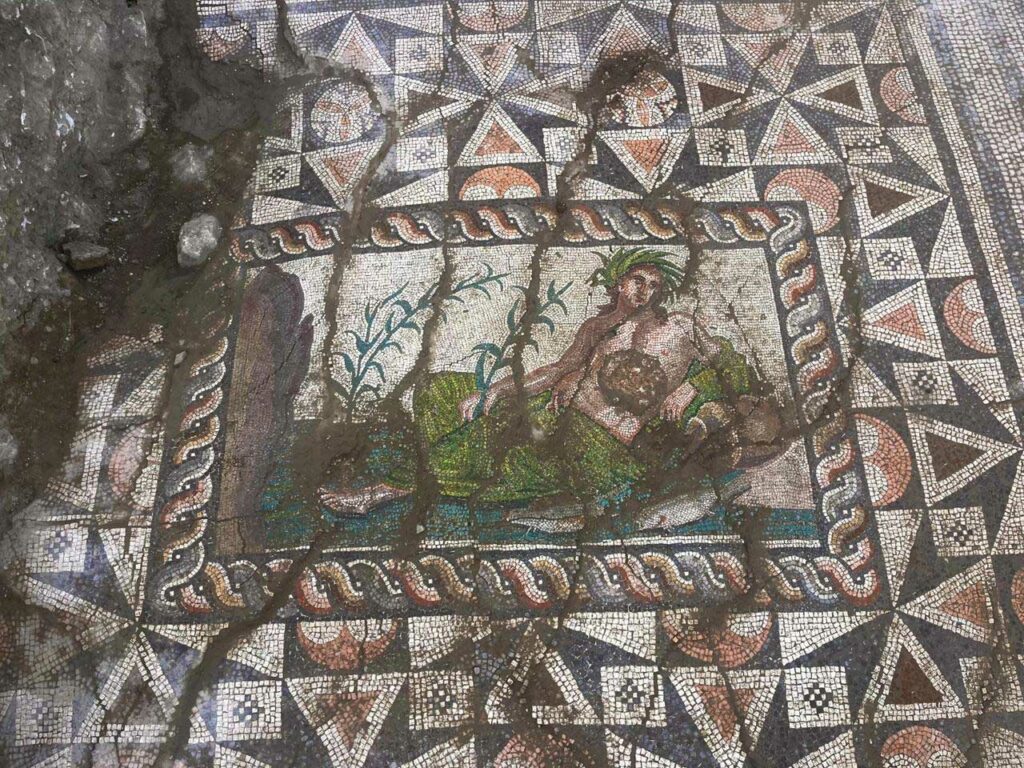

The work reflects the mastery of Roman artisans in combining mythological elements with natural representations. The river god embodies the strength and generosity of the river, fundamental for agriculture and urban development in Aspendos.

News - Mosaic Depicting a River God Uncovered in Turkey - Archaeology Magazine

Excavations like this continue to reveal the cultural vitality of ancient Anatolian cities under Roman rule. The mosaic adds to other recent findings in Turkey, consolidating the country's importance on the global archaeological map.

Specialists are now analyzing the piece to determine its context and possible restorations accurately. The image of the god with its leafy crown and the water source conveys a message of prosperity that resonated in society at the time.

These types of representations were not merely decorative: they served symbolic functions in public or semi-public spaces such as pools and baths, where water was the protagonist.