The tomb belonged to Wahtye, a high-ranking priest who lived during the Fifth Dynasty of Ancient Egypt. The analysis of his remains and those of his family opened a surprising hypothesis
Under the chapel, researchers excavated five burial shafts. The work allowed them to recover remains belonging to the priest and members of his family, whose presence had also been recorded in the representations on the walls.
The condition of those burials contrasted with the decorative richness of the upper level. Wahtye himself appeared in a relatively simple wooden coffin, and his remains did not show the type of preparation one might expect given his social position.
Researchers also located remains attributed to his wife Weret Ptah, his mother Merit Meen, and his children.
The number of family members who had died young raised questions about what might have happened. The possibility that a disease had affected the group began to gain traction.
It was the analysis of the skeletons that provided a crucial clue.
What specialists found in the bones
Dr. Amira Shaheen examined the bone remains and detected alterations consistent with anemia.
One of the elements that caught her attention was the distension of certain bones. Similar changes were also observed in remains attributed to Wahtye's mother.
The specialist then began to wonder if behind those anomalies there could be a disease that might have affected different family members.
“The entire family could have died due to a disease or epidemic, most likely malaria,” Shaheen suggested while analyzing the discovery, as noted in the official material about the documentary Secrets of the Saqqara Tomb.
Malaria is a potentially fatal disease caused by parasites of the genus Plasmodium, transmitted to humans through the bite of infected mosquitoes.
The hypothesis is particularly appealing due to the environmental conditions of the ancient Nile valley, where the presence of water could provide favorable spaces for the transmitting mosquitoes.
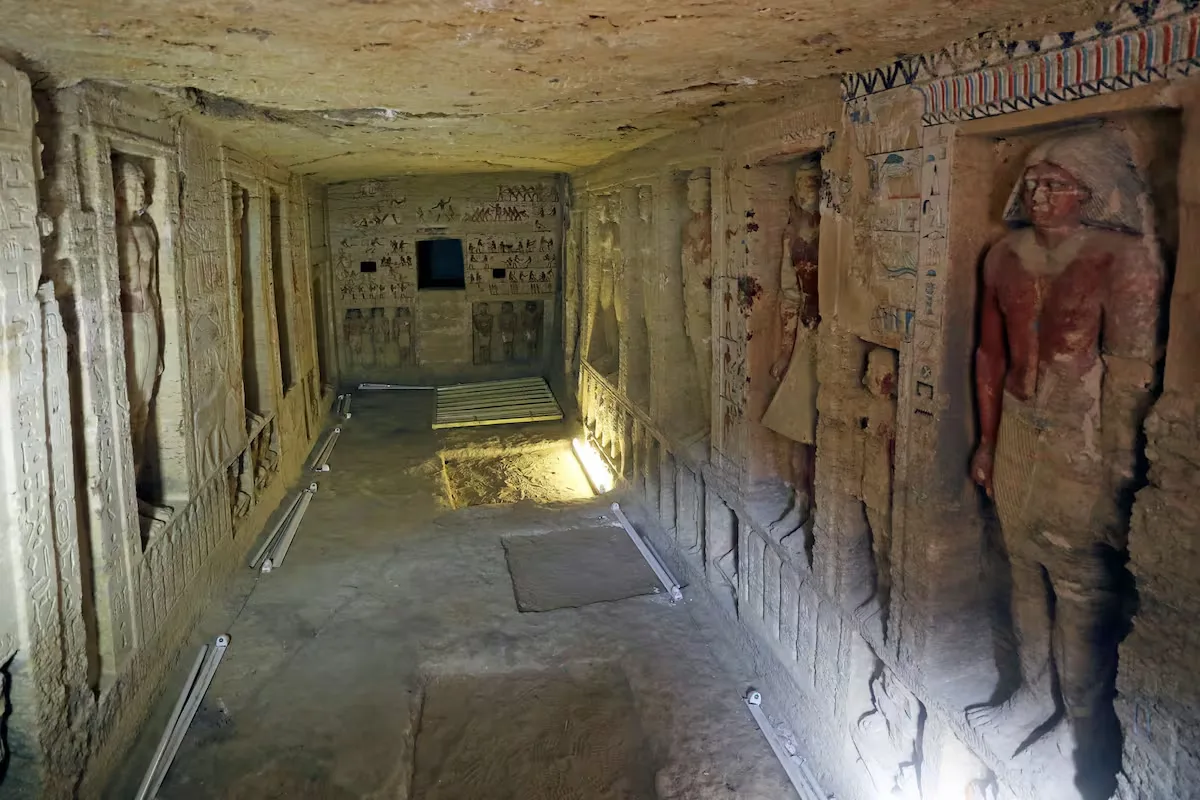
For approximately 4,400 years, a tomb remained practically intact beneath the sands of Saqqara, one of the most important necropolises in Egypt. When a team of archaeologists managed to access it in 2018, they found walls still covered in colors, dozens of statues, and inscriptions that allowed them to identify the man for whom it had been prepared.
It was Wahtye, a priest and high-ranking official who lived during the Fifth Dynasty and served during the reign of Pharaoh Neferirkare Kakai. The exceptional state of preservation led Egyptian authorities to classify the discovery as one of the most important in recent decades.
However, the greatest mystery was not in the decorated walls of the chapel. Below the floor were several burial shafts containing the remains of Wahtye and members of his family.
The amazing discovery beneath the tombs
The subsequent study of those bones revealed alterations that led Dr. Amira Shaheen, a professor of Rheumatology at the Faculty of Medicine at Cairo University, to propose a surprising hypothesis: the family may have suffered from malaria.
The tomb of Wahtye that remained closed for 4,400 years
The discovery occurred in Saqqara, about 30 kilometers south of Cairo. The enormous funerary complex houses monuments from different periods of Egyptian history and features the stepped pyramid of Djoser as one of its main attractions.
The tomb of Wahtye was discovered in 2018 and surprised from the very first moment due to its preservation. The walls still retained much of their original pigments despite having been buried for over four millennia.
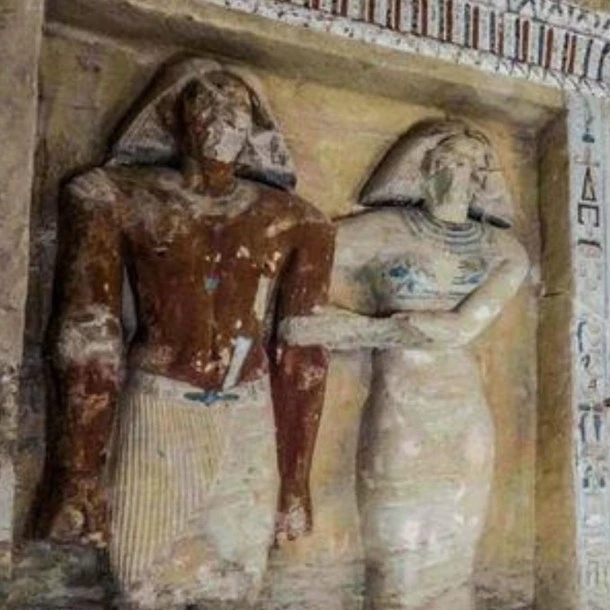
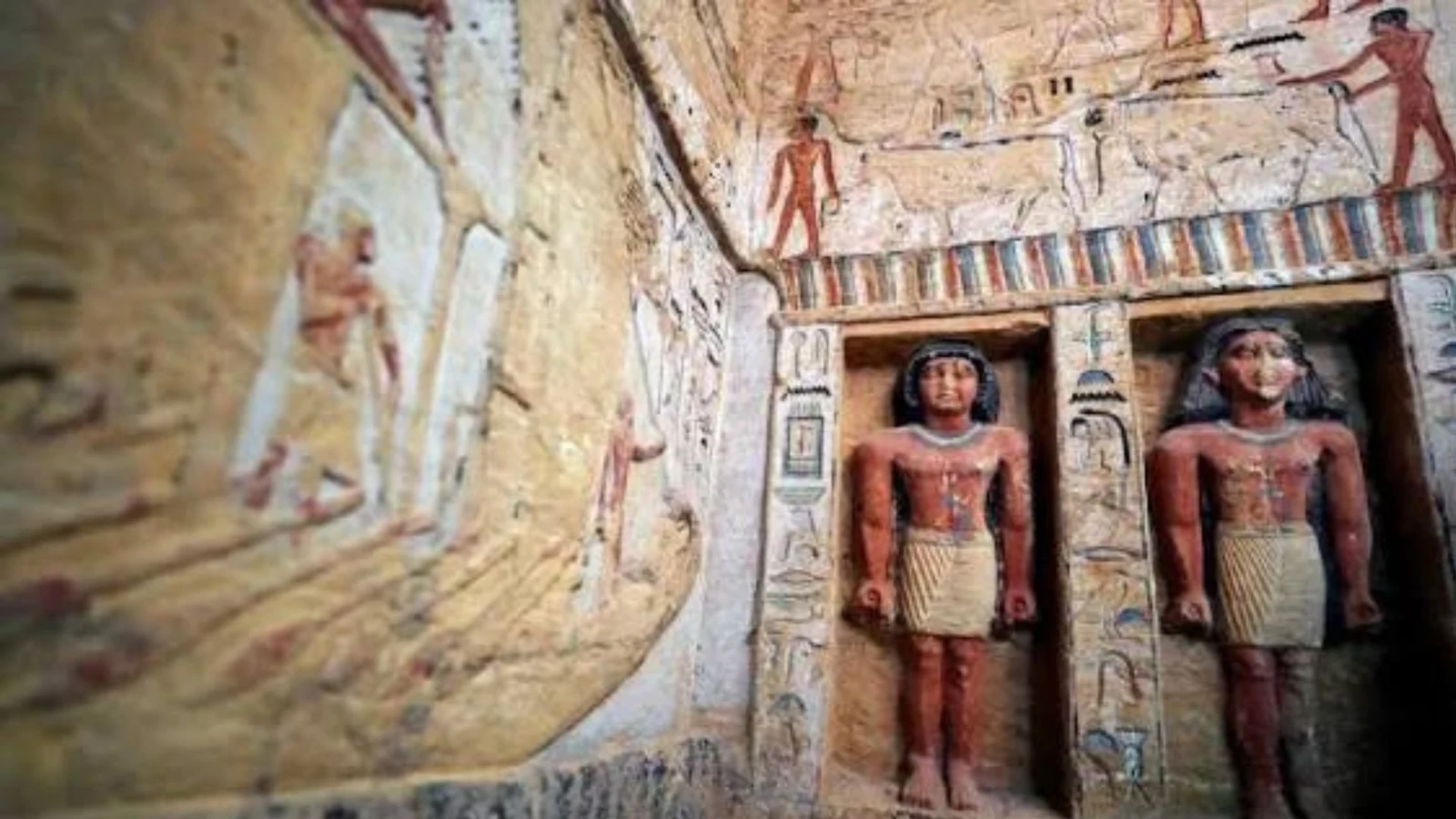
The structure measures approximately 10 meters long and three meters wide. Inside, 55 statues carved into the walls were found, as well as representations of the priest, his wife, his children, and his mother.
Many of the young relatives died in strange ways
The scenes provide a glimpse into various aspects of daily life in Ancient Egypt. The reliefs depict activities related to food and drink production, navigation, music, and other tasks that also had a symbolic function related to the afterlife.
The inscriptions also revealed the high position Wahtye held. The priest was associated with administration and royal cults during the reign of Neferirkare Kakai, one of the pharaohs of the Fifth Dynasty.
But while the visible part of the tomb offered information about the prestige Wahtye wanted to project, what was found below began to tell a much darker story.