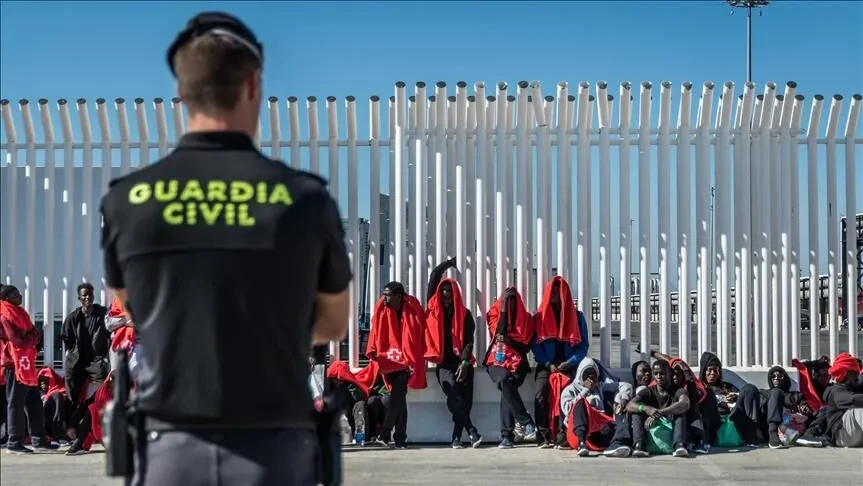
The participation of the Foreign Affairs brigades, they point out, has been reduced to limited functions. "The Police will be limited to documenting the cards validated by Migration", they explain.
In parallel, they question the preparation of the personnel responsible for processing the applications. "They are not qualified" and lack "training", they assert regarding the ministry's team. In this context, they interpret that "the Government's intention is for everyone to come in", a statement that demonstrates the ideological motivations of the Government.
The internal forecasts of the National Police also point to a surge beyond official estimates. While the Government initially estimated around 500,000 regularizations, police officials placed the figure between 1.2 and 1.3 million, a volume that they claim has already been surpassed by the registered applications. "The system is going to break", they warn.
The questioning of the process is not new. The General Commissariat of Foreign Affairs and Borders had already issued a critical report since the beginning of the initiative, in which it doubted both the urgency and the viability of the reform.
The document, signed by the central chief commissioner of Operations, Alfredo García Miravete, stated: "Given that this project takes as a direct precedent the popular legislative initiative considered by Congress on April 9, 2024, a need detected almost two years ago, it does not seem to be an unforeseen situation, nor one that can sufficiently justify the urgent processing."
The report also warned about possible "significant negative effects", including a potential "pull effect", social tensions, and difficulties in terms of security and public order.
It also pointed out the risk of saturation of essential services. "There is fear among broad segments of the population that a massive and rapid influx of new immigrants will increase the burden on the healthcare, educational, and social services systems", the document explained.
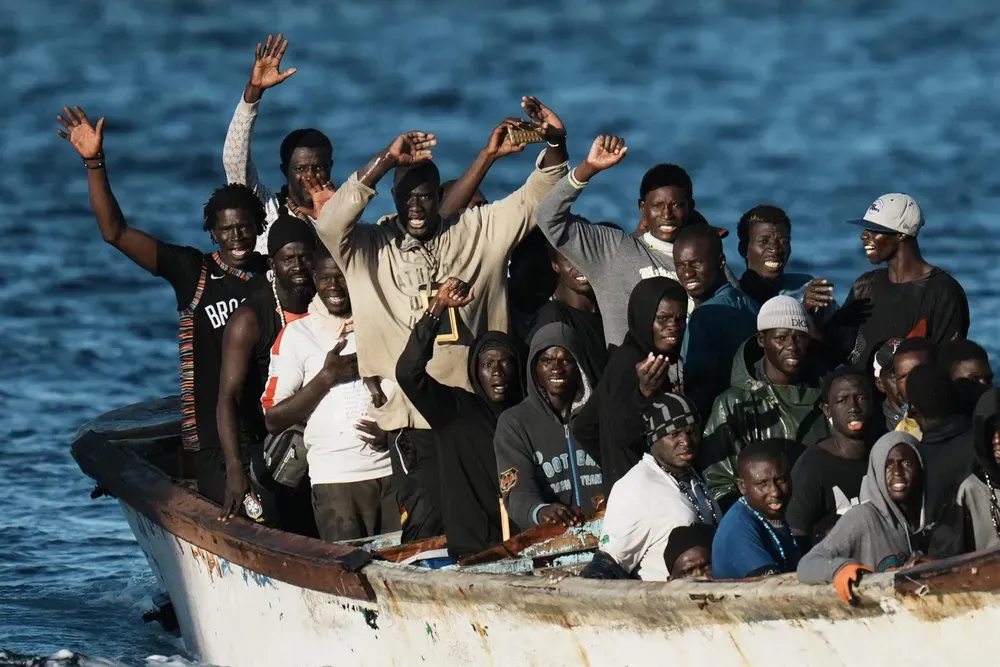
The mass regularization promoted by the Government of Pedro Sánchez in Spain could lead to the legalization of more than three million illegal immigrants along with their families within a one-year period.
This is estimated by high-ranking officials in the Foreign Affairs department, who base their calculations on the multiplier effect of family reunifications that the 1,200,000 initial applicants could request.
As they explain, the final volume could widely triple the number of individual applicants. "For every person whose situation is regularized, at least three more are added if a reunification is requested and granted", they warn from the department, expressing a growing concern about the actual scope of the process.
Illegal immigrants
The discontent within the involved agencies is not limited solely to the magnitude of the measure. It is also directed towards the management of the procedure, especially due to the decision of the socialist president Pedro Sánchez to exclude the National Police from the direct control of the procedures.
From Foreign Affairs, they denounce that this exclusion was made "deliberately", despite being a usual competence of the body, and that the process has been left in the hands of the Ministry of Migration.
Police officials stated that this change weakens the mechanisms for document verification and increases the risk of errors in sensitive matters such as criminal records.