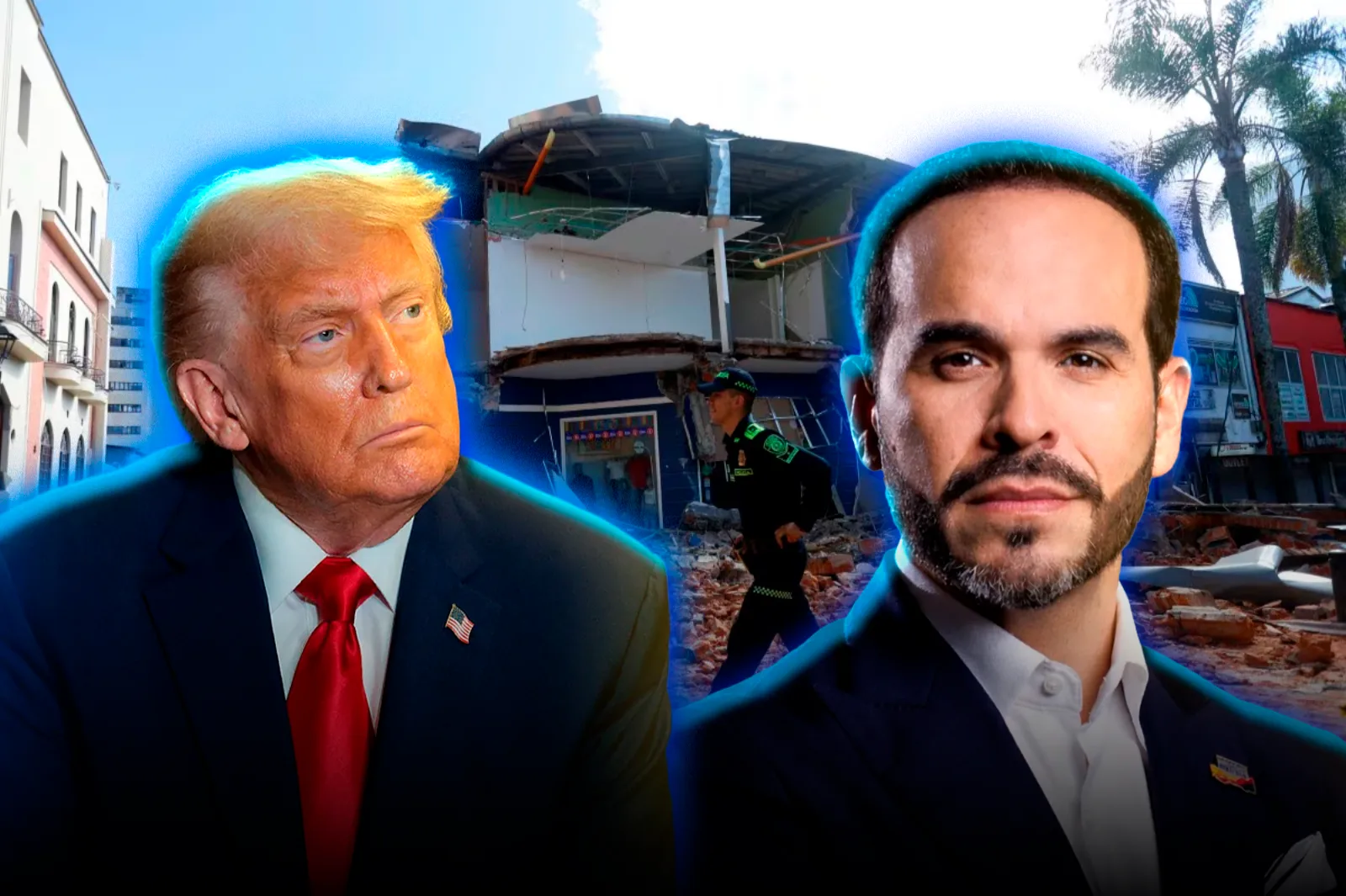
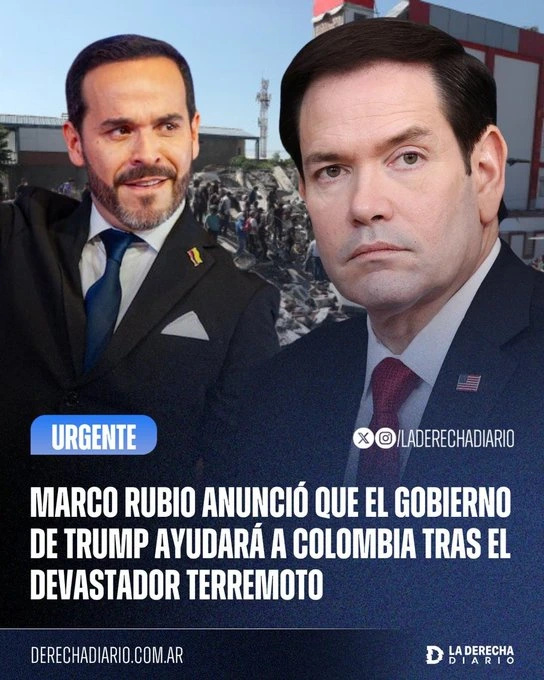
Marco Rubio confirmed that the administration is monitoring the situation and is ready to support the Colombian people and the right-wing government of Abelardo in the face of the emergency
This display of authority and efficiency stands in stark contrast to the political opportunism of former leftist president Gustavo Petro, who attempted to divert attention from the national emergency by demanding: “That the officials of the Ungrd say what is happening in Hidroituango”.
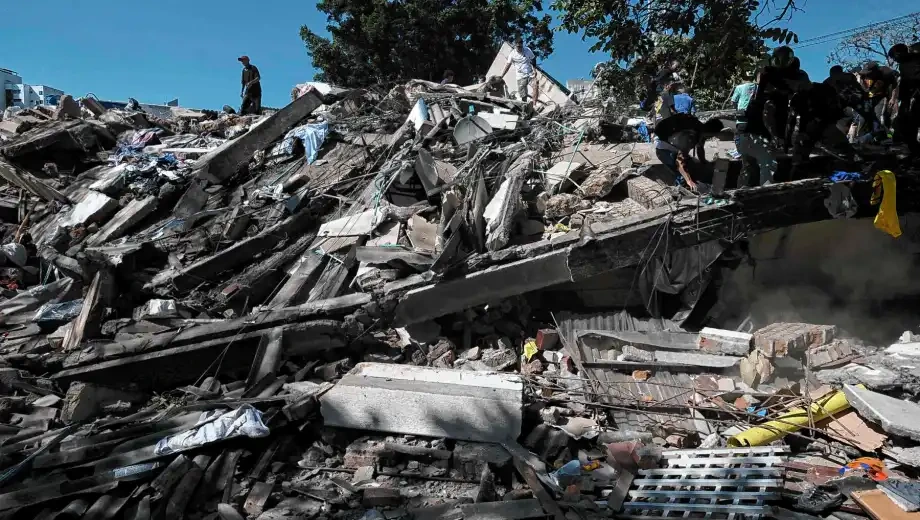
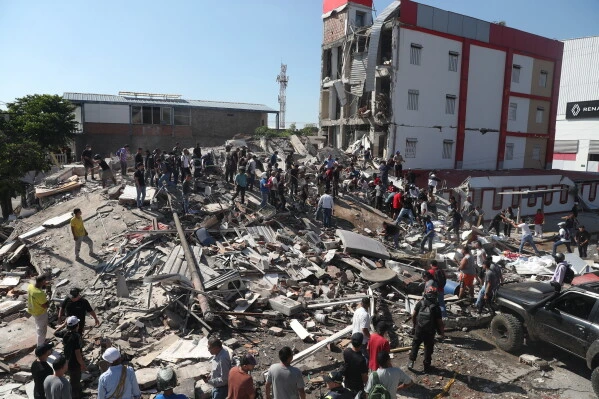
Diving into the specific details of the catastrophe and the public order measures adopted, a regrettable toll of victims has been confirmed at the national level.
While the initial morning reports indicated at least 20 fatalities, of which 18 were from the city of Pereira, subsequent live reports raised the death toll to over 110 people nationwide.
To safeguard the safety of the population and facilitate rescue efforts, the mayor of Pereira, Mauricio Salazar, immediately decreed a strict curfew and the suspension of school classes, ensuring that “the objective of these measures is that emergency teams have no obstacles in reaching the affected areas”.
Earthquake in Colombia
Meanwhile, in Manizales, more than 100 buildings were reported affected, which forced the suspension of classes and the establishment of temporary shelters for the victims.
The violence of nature also disrupted volcanic activity and infrastructure in the southwest of the country. The Puracé Volcano emitted ash columns of up to 300 meters above its crater, forcing the Popayán airport to suspend all its air operations due to the seismicity and gases remaining above historical baseline levels.
Finally, the SGC confirmed that the main earthquake was followed by at least five aftershocks with magnitudes greater than 3.0, detailing an aftershock of magnitude 3.8 at 10:01 AM with a depth of 88 kilometers, in addition to other secondary seismic movements of magnitudes 2.8 and 4.8.
The authorities of the National Risk Management System and the Ungrd remain on high alert, coordinating continuously under the directives of President De la Espriella
A devastating earthquake of magnitude 7.4 shook Colombian territory at 7:34 AM on Monday, August 10, 2026. In light of the tragedy's magnitude, the response from the government of Donald Trump was swift. The Secretary of State of the United States, Marco Rubio, announced that the Administration is “closely monitoring the strong earthquake that shook Colombia and is ready to support the Colombian people and the Administration of President Abelardo De la Espriella”.
Rubio emphasized the total American willingness, declaring on his official X account: “The Trump Administration is closely monitoring the major earthquake that struck Colombia and is ready to support the people of Colombia and the Administration of President Abelardo de la Espriella”.
"The Trump administration is closely monitoring the strong earthquake that struck Colombia and is ready to provide assistance"
In line with this international backing, U.S. Senator Bernie Moreno publicly praised the crisis management, highlighting the “Excellent leadership by President Abelardo de la Espriella. The United States is ready to help our great ally”.
Additionally, the U.S. Embassy in Colombia issued preventive alerts urging American citizens to enroll in the STEP program.
This historic earthquake, classified by the director general of the Colombian Geological Service (SGC), Julio Fierro Morales, as “the strongest earthquake felt in the last decade in the country”, had its epicenter in the municipality of San José del Palmar, in the department of Chocó.
The depth of this main seismic event was recorded at 96 kilometers by the SGC (although other initial official reports from the press placed it at 107 kilometers and the SGC at 88 kilometers). This natural phenomenon evokes the historical precedent of November 23, 1979, when the same area experienced an earthquake of magnitude 7.2.
Earthquake in Colombia
On the internal front, President Abelardo de la Espriella immediately took on the direct coordination of the official state response, demonstrating an unwavering determination to protect the nation.
From the National Crisis Room of the Ungrd (National Unit for Disaster Risk Management), the president led a strategic meeting with the director of the entity, Javier Pava, and the Minister of the Interior, Rodrigo Lara, to assess the damage and plan the deployment of immediate aid to the hardest-hit areas.