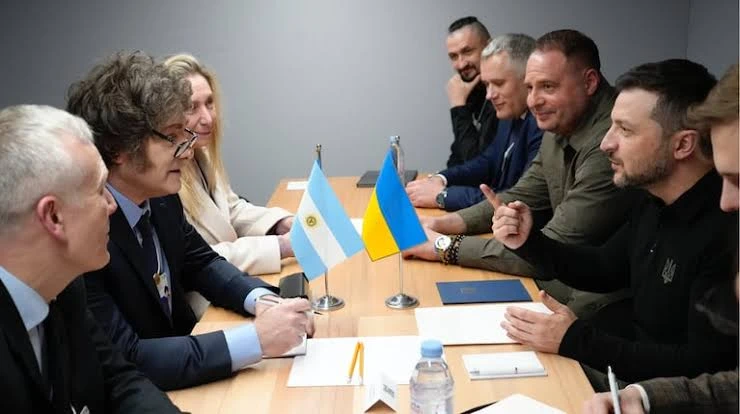
The spokesperson for the Ukrainian Ministry of Foreign Affairs, Heorhii Tykhyi, reaffirmed the invitation to Argentine President Javier Milei to visit Ukraine, although there is still no set date.
“When President Milei finds the time and opportunity to visit Ukraine, we will be delighted to welcome him here,” said the official, who emphasized that the invitation was made personally by President Volodymyr Zelensky.
This announcement was made during a virtual press conference with media from Latin America and the Caribbean, where the spokesperson also addressed various aspects of the conflict with Russia and sought to strengthen his country's international positioning.
Javier Milei and Volodymyr Zelensky
In this context, Tykhyi warned that Russia is attempting to “kidnap” the nuclear power plant in Zaporizhzhia by trying to reconnect it to its own power grid, a maneuver he described as unprecedented in the history of atomic energy.
He indicated that this situation constitutes a case of “nuclear blackmail” by Moscow, urging countries in the region to speak out against this scenario.
No Surrender
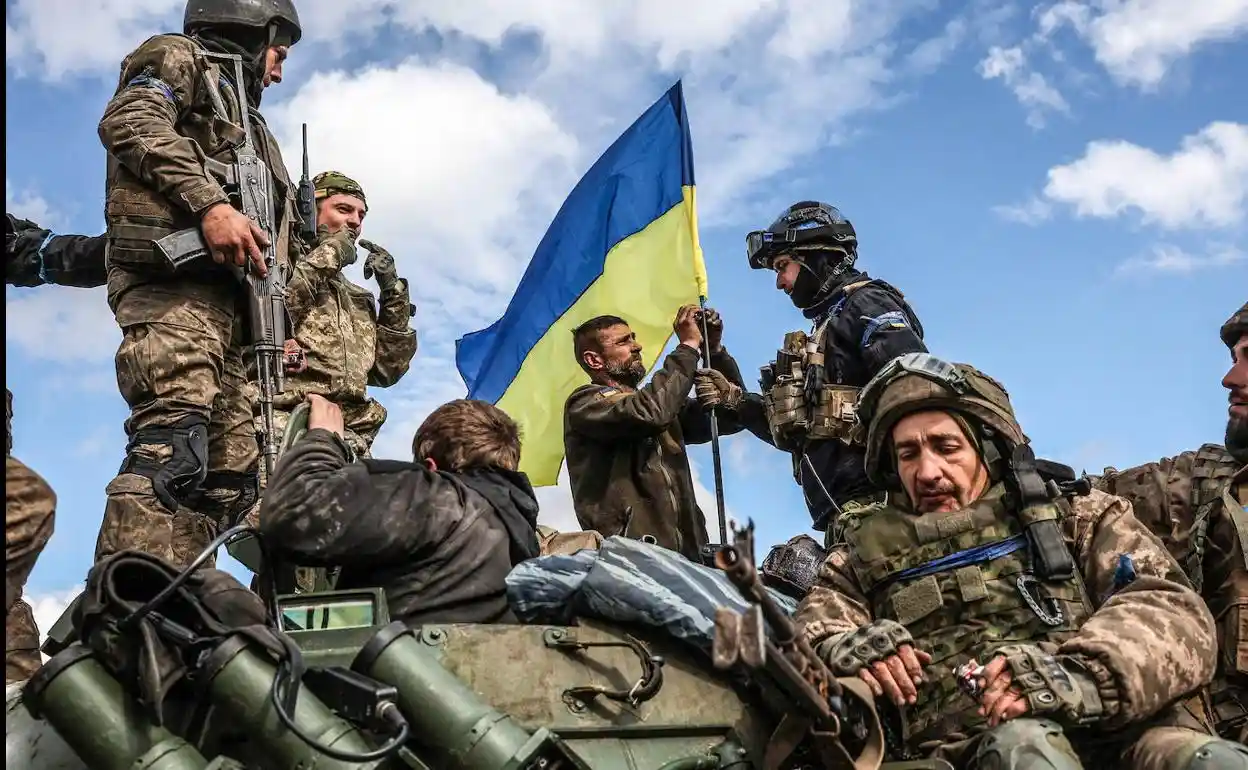
When asked about Ukraine's resistance in the conflict, the official was categorical: “surrender is not an option.” In his response, he mentioned reports of executions of civilians, rapes, and torture chambers.
Ukrainian soldiers
“We want Russia to return to its borders and live in its own country, and let us live in peace in ours. We have never posed a threat to Russia,” Tykhyi stated.
Additionally, he emphasized that the situation on the battlefield has evolved since the beginning of the invasion: “Ukraine is not the Ukraine they faced in 2022,” he asserted, adding: “we are bringing the war back to where it started, back to Russia.”
Ukrainian Strategy to End the War
Regarding the strategy to end the conflict, the spokesperson explained that Ukraine is working on two complementary axes.
On one hand, a diplomatic proposal that involves freezing the current frontline as a preliminary step to broader negotiations. On the other, sustained pressure on Russia through international sanctions, weakening its military industry, and actions that increase the cost of continuing the war.