

Unexpected life found in the body of Ötzi, the 5,300-year-old Ice Man

Unexpected life found in the body of Ötzi, the 5,300-year-old Ice Man
Imagen de Editorial Team

Most read in Argentina

Bone marrow: the silent factory of blood cells

  1. Máximo Kirchner was arrested while driving a truck with an outstanding warrant

  2. The Argentine National Team crushed Bolivia 4-0 in their first friendly of the FIFA date

  3. Milei started Argentina Week with meetings with OECD leaders and major companies

  4. RIGI: Toyota will make the largest investment in the history of the Argentine automotive industry

porEditorial Team
Argentina

Researchers separated microbes from their time from those that arrived later and found original gut bacteria alongside cold-adapted yeasts that may have accompanied it in the glacier

Add La Derecha Diario on
Share:

More than five thousand years after his death, Ötzi the Iceman still harbors a remarkable mix of ancient and modern microorganisms. A research team managed to distinguish which of these living beings were part of his body in life and which settled afterward, either in the glacier or during the decades of current preservation.

The analyses included ice from the surface of the mummy, meltwater from the interior, swabs, and material from intestinal and stomach tissues. A soil sample from the discovery site, kept frozen since 1991, was also studied. Genetic traces of Ötzi's original gut flora appeared in those remains.

This microbial community resembles the few known from early human populations. Many of these bacteria are rare in people from today's industrialized societies. That is why the mummy offers an uncommon window into the microorganisms that inhabited the human body millennia ago.

The most unexpected finding was cold-adapted yeast species. They appeared in skin samples, meltwater, and stomach contents. These yeasts are related to strains from extreme places like Antarctica, reinforcing the idea that they originated from the glacier and may have remained alongside Ötzi for thousands of years.
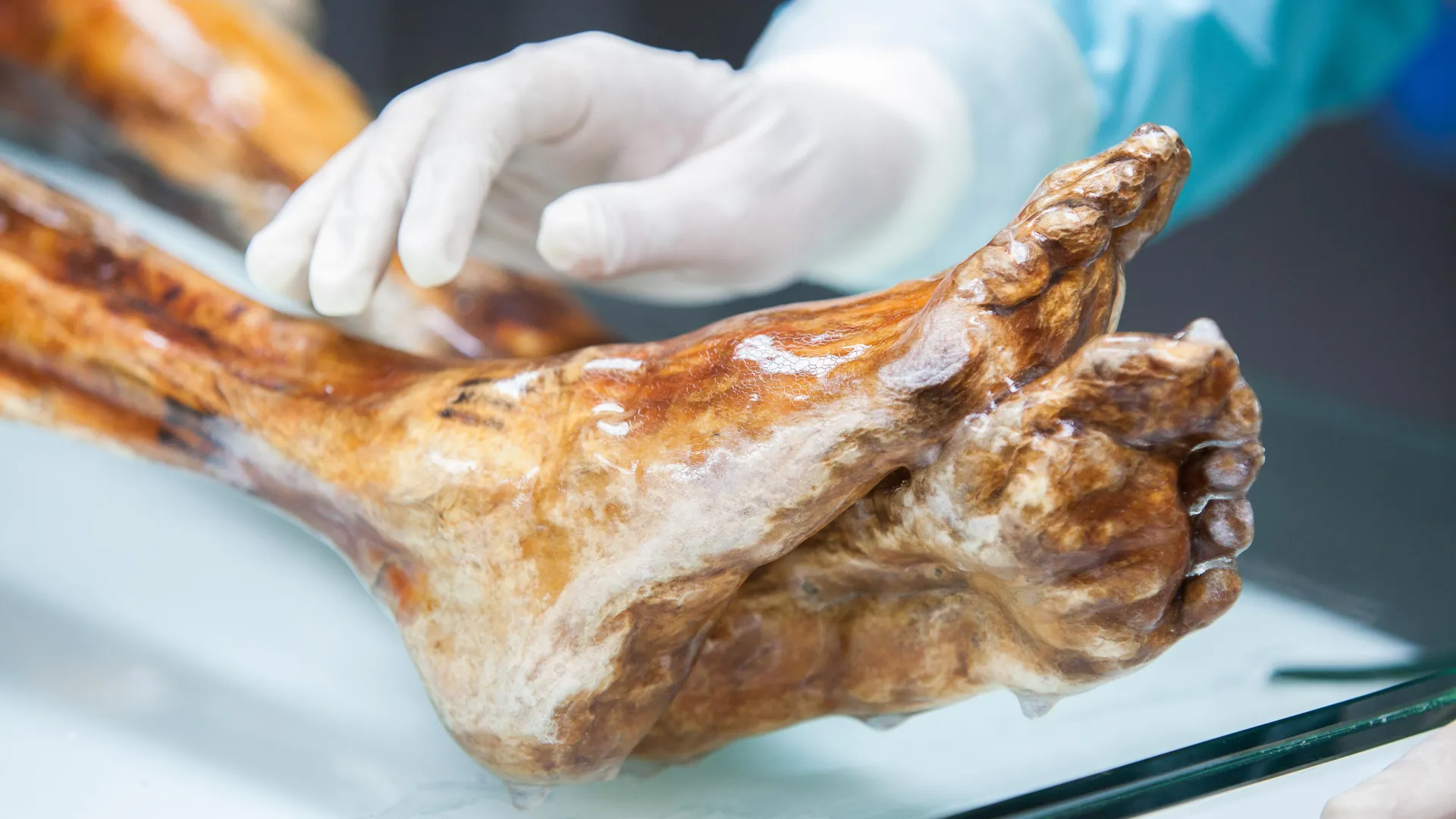

Scientists find unexpected life on Ötzi the Iceman’s 5,300-year-old body

A dynamic biological system

The researchers detected both highly degraded ancient DNA and well-preserved genetic material. This combination indicates that the microorganisms are not just remnants of the past: they are still present under the current storage conditions, at minus six degrees and with high humidity. Some may be in a dormant state.

“We see continuity here,” explains Frank Maixner, director of the Institute for Mummy Studies at Eurac Research. “These yeasts accompanied Ötzi on his long journey through the millennia.” According to the researcher, the mummy is not a static relic but a dynamic biological system.


La Derecha Diario on X

  1. URGENTE — LULA INUNDA A PROPÓSITO A LA ARGENTINA: ITAIPÚ SUELTA EL AGUA DE EL NIÑO Y EL PARANÁ SE DESBORDA EN EL LITORAL La Represa de Itaipú, controlada por el régimen de Lula, mantiene abiertas varias compuertas de su vertedero deliberadamente desde finales de septiembre y descarga alrededor de 10.700 m³/s hacia el río Paraná. El agua liberada por las represas brasileñas de la cuenca alta, en medio de fuertes lluvias en la previa del fenómeno de El Niño, llega directo a Argentina y obliga a Yacyretá a abrir su vertedero principal ante caudales de unos 28.000 m³/s. Esta acción deliberada del dictador Lula da Silva está provocando que el Paraná se acerque al nivel de alerta en Ituzaingó, se cierren las Cataratas del lado argentino y que haya riesgo de inundaciones severas en Entre Ríos y Corrientes.

    2 hours ago

  2. TIPAZO: @FlavioBolsonaro agradeció el apoyo de los repartidores que trabajan con sus motos y aseguró que serán respetados en su gobierno. "Tendrás dignidad y un presidente que los mire con cariño. Cuenten con nosotros".

    2 hours ago

  3. URGENTE — TORNADO EN CHILE: Imágenes registraron un tornado en Santiago de Chile, en el sector de la Alameda, en un suceso que no ocurría en la capital chilena desde finales del siglo XIX.

    3 hours ago

  4. ARGENTINA VOLVERÁ A TENER CAPACIDAD SUBMARINA: Francia y Alemania ofrecieron financiar al 100% la compra de tres submarinos de ataque convencionales para reconstruir una capacidad que la Armada Argentina perdió tras la tragedia del ARA San Juan. La competencia enfrenta al Scorpène francés de Naval Group con el Tipo 209NG alemán de TKMS. Ambas propuestas cumplen los requisitos técnicos y contemplan una operación estimada en unos USD 2.300 millones, con financiamiento total en cuotas. La decisión final quedará en manos del Gobierno de Milei y, una vez firmado el contrato, la primera unidad podría incorporarse entre cinco y seis años después.

    3 hours ago

  5. URGENTE — SE VIENE LA DERECHA EN FRANCIA: La líder derechista Marine Le Pen alcanzó el 37% de intención de voto en una nueva encuesta. https://derechadiario.com.ar/internacionales/marine-pen-alcanza-37-en-encuestas-aventaja-ampliamente-izquierda-radical-en-francia

    3 hours ago

La Derecha Diario logo
TwitterInstagramYouTubeTikTokFacebook
Derecha Diario TV

Nosotros

  • Quienes Somos
  • Autores
  • Donar

Privacidad

  • Protección de datos
  • Canales
  • Sitemap
  • RSS

Contacto

  • info@derechadiario.com.ar
PUBLICIDAD
La Derecha Diario logo
ESX logoInstagram logoYouTube logoTikTok logoFacebook
ARGENTINAUNITED STATESECUADORISRAELMEXICOURUGUAY
DERECHA DIARIO TV
  • ES
    XInstagramYouTubeTikTokFacebook
  • DERECHA DIARIO TV
  • Sections
  • ARGENTINA
  • UNITED STATES
  • ECUADOR
  • ISRAEL
  • MEXICO
  • URUGUAY
  • Countries
  • La Derecha Diario logoLA DERECHA DIARIO
  • La Derecha Diario México logoLA DERECHA DIARIO MÉXICO
  • La Derecha Diario Uruguay logoLA DERECHA DIARIO URUGUAY
  • La Derecha Diario Ecuador logoLA DERECHA DIARIO ECUADOR
  • La Derecha Diario Israel logoLA DERECHA DIARIO ISRAEL
  • La Derecha Diario Estados Unidos logoLA DERECHA DIARIO ESTADOS UNIDOS
  • Topics
  • GUERRA EN IRÁN
  • The Newspaper
  • QUIENES SOMOS
  • AUTORES
  • PUBLICIDAD
  • DONAR

Related news

Martín Varsavsky invested again in Argentina: “The country is heading in the right direction, the opposite of Europe”

Martín Varsavsky invested again in Argentina: “The country is heading in the right direction, the opposite of Europe”

The espionage folders on judges, opponents, and businessmen found in CFK's vault

The espionage folders on judges, opponents, and businessmen found in CFK's vault

The United Kingdom arrested an Iranian on suspicion of preparing acts of terrorism at a US base

The United Kingdom arrested an Iranian on suspicion of preparing acts of terrorism at a US base

Trump Effect: the US economy recorded its lowest unemployment rate in over 50 years and poverty also decreased

Trump Effect: the US economy recorded its lowest unemployment rate in over 50 years and poverty also decreased

The Trump administration begins a series of refunds for excessive charges to nearly a million Obamacare users

The Trump administration begins a series of refunds for excessive charges to nearly a million Obamacare users

National Lottery: all the winning numbers from Thursday, October 1

National Lottery: all the winning numbers from Thursday, October 1

Three of the four yeast species have the genetic capacity to degrade phenol. That compound was used after the discovery to eliminate fungi from the surface. It is possible that some have utilized the substance as a food source. Microbiologist Mohamed S. Sarhan, the lead author of the study, points out that the microbiome of a mummy is unique because it combines microbes over five thousand years old with others introduced since the discovery.

Imagen 1442253

The South Tyrol Archaeological Museum takes care of Ötzi's preservation and continuously monitors his condition. Current conditions are very stable, but specialists warn that more research is still needed to understand how glacial mummies are preserved over time.

Possible uses beyond archaeology

The study, published in the journal Microbiome, could help improve the conservation methods of Ötzi and other ancient remains. It also opens doors to practical applications. Cold-adapted microorganisms function at temperatures that slow down or stop many other species.

This capability makes them interesting for industrial processes that require less energy, such as low-temperature fermentations.