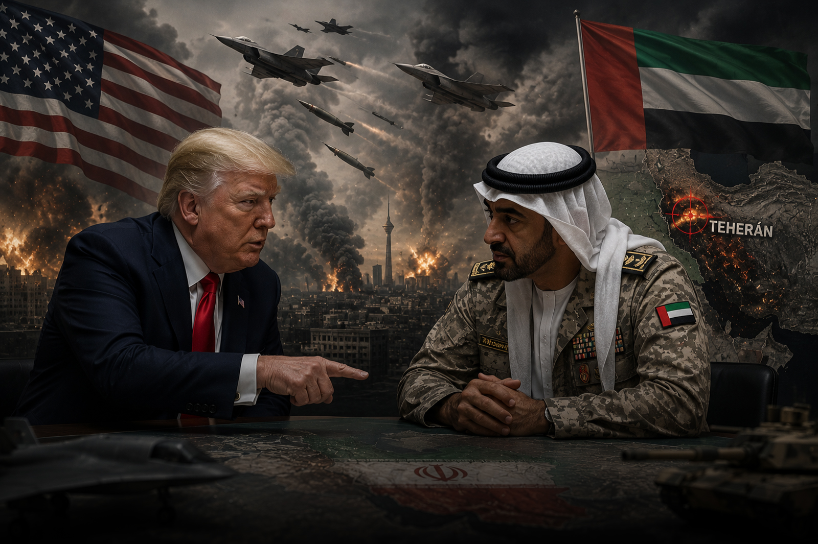
The United Arab Emirates secretly carried out dozens of airstrikes against Iran in the war that began last February. Some attacks continued after the ceasefire negotiated in April by the parties, according to what The Wall Street Journal learned this Friday.
The information obtained by the newspaper comes from U.S., Arab, and Israeli officials. These sources stated that Emirati forces targeted military facilities of the regime, energy infrastructure, and other strategic sites, with Abu Dhabi moving away from a defensive posture and taking a more direct role in the fighting.
The role of the Emirates intensified after Iran launched thousands of missiles and drones against Gulf states during the war. According to the officials cited by the newspaper, Iran had fired more than 2,800 missiles and drones at the UAE during the conflict.
A report revealed that the UAE joined Trump in the war against Iran and launched bombings against Tehran.
The Emiratis said enough
The Journal also noted that these attacks highlighted a growing divide among Gulf Arab states on how to confront Iran during these three months of fighting, as while the UAE decided to attack Tehran, the Kingdom of Saudi Arabia favored diplomacy and urged moderation.
The Saudis even pressured Washington to curb some Emirati operations for fear that an escalation would destabilize and harm the region's economies. In these attacks, Israel provided intelligence and military assistance to the UAE, thus deepening security cooperation between the two countries.
In addition to military operations, the report indicates that Abu Dhabi took steps to increase economic pressure on the Ayatollah regime by restricting certain commercial activities linked to Tehran and tightening controls on financial networks.
According to the Journal, Emirati leaders concluded that a more robust response was necessary after Iranian attacks hit targets across the Gulf and damaged critical infrastructure in the country and the region.