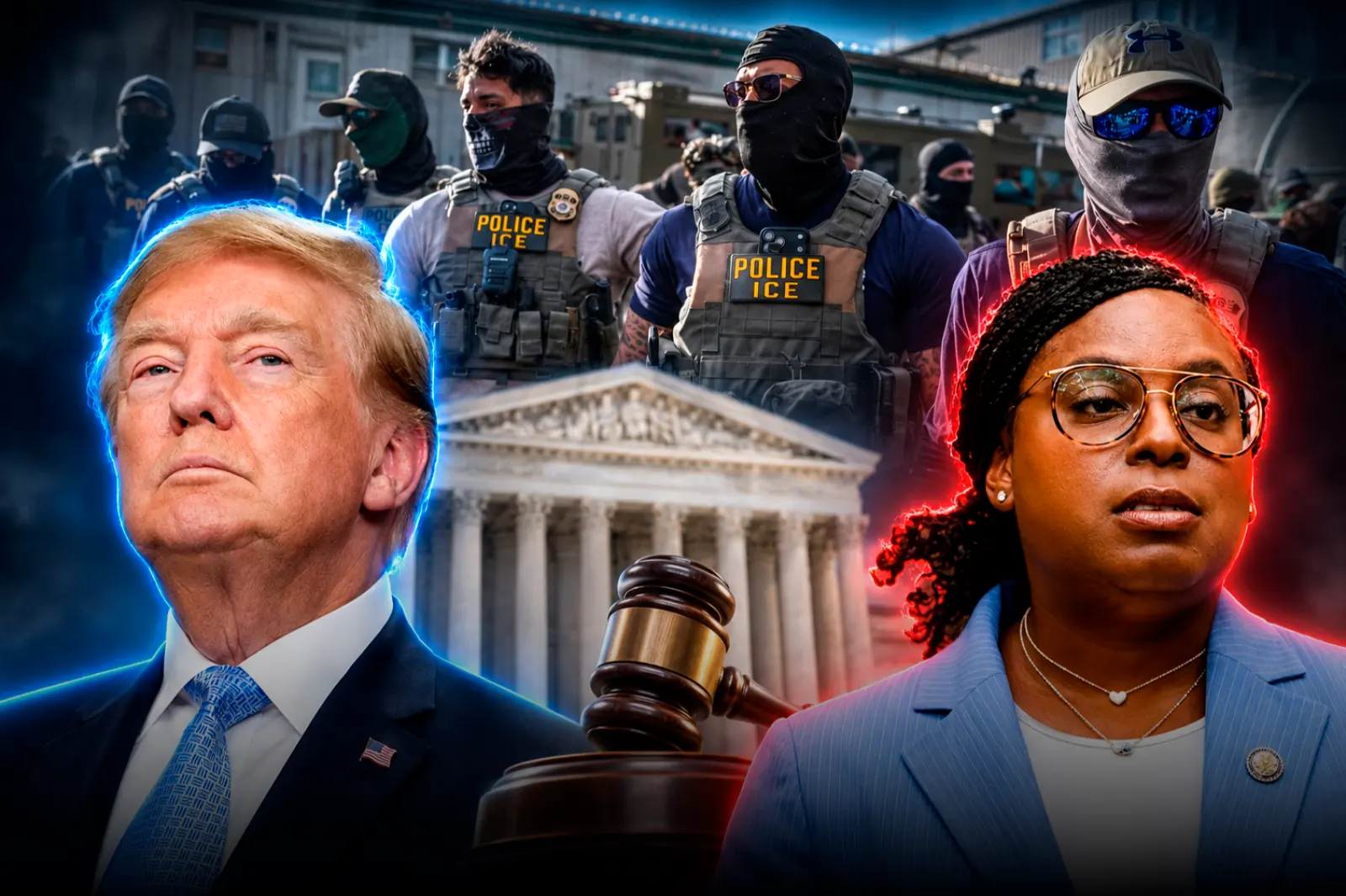
The administration of President Donald Trump achieved a new judicial victory on Thursday, after a federal court rejected the attempt by Democratic Congresswoman LaMonica McIver to avoid criminal proceedings for her involvement in a physical confrontation with agents from the Immigration and Customs Enforcement (ICE) in New Jersey. The decision represents another setback for the progressive legislator, who could face charges related to a confrontation that occurred at an immigration detention center in 2025.
The Third Circuit Court of Appeals of the United States denied McIver's request for reconsideration of the ruling issued in August 2026, which allowed at least two of the three charges against her to proceed. Thursday's ruling upholds that determination and weakens the congresswoman's efforts to use her legislative immunity to evade criminal responsibilities.
McIver, a Democratic representative from New Jersey, had argued that her actions during the incident were protected by the Speech or Debate Clause of the U.S. Constitution, which grants certain protections to members of Congress so they can perform their legislative duties without undue interference from the Executive Branch.
The US justice system denied the arguments of a Democratic representative accused of assaulting immigration agents
However, a panel of three judges rejected that argument in a divided vote of two to one. The judges concluded that the conduct attributed to her was not related to the legislative process and could not be covered by the constitutional protections reserved for parliamentary activities.
The socialist legislator reacted with strong criticism against President Trump and the Department of Justice, which she accused of using the judicial system for political purposes.
''Donald Trump continues to send warnings to Democrats in Congress and at all levels of power, but the case they are building against me goes far beyond a warning. Due to a Department of Justice turned into a political weapon and because I dared to do my job and oversee ICE, I face 17 years in prison,'' she stated in a press release.
She also described the decision as disappointing and stated that she and her lawyers are evaluating all available legal alternatives.
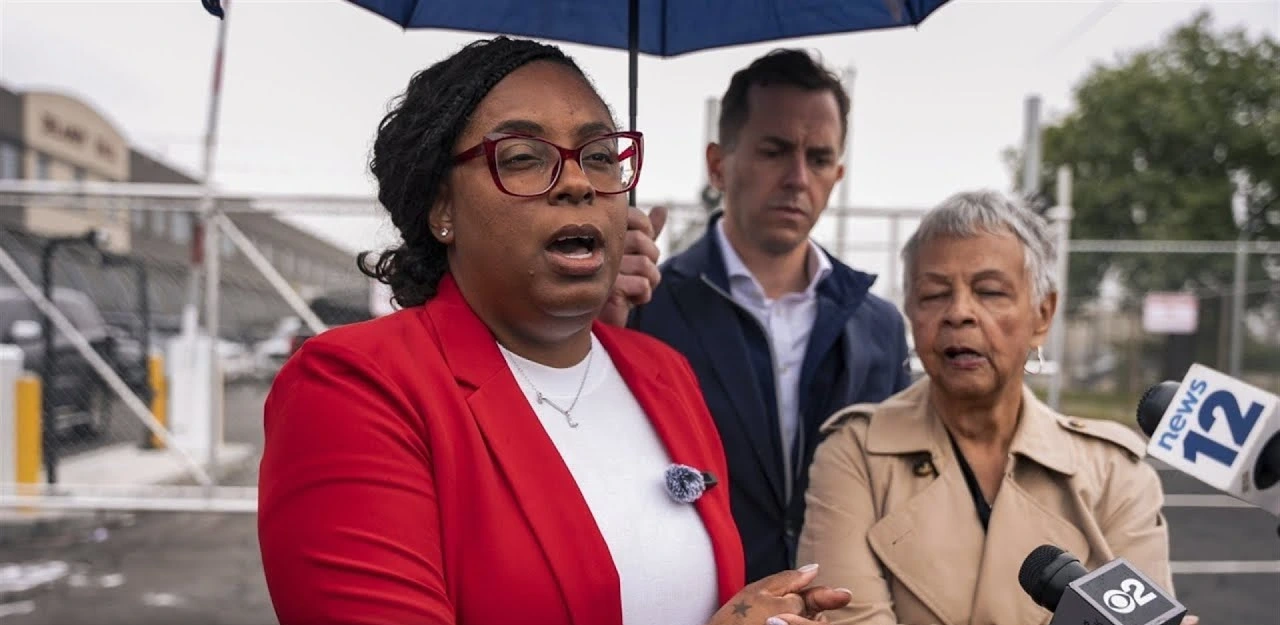
The case dates back to May 2025, when a group of Democratic officials made an unannounced visit to the Delaney Hall immigration detention center in Newark, New Jersey. What began as an inspection ended in a confrontation between lawmakers and federal agents, amid tensions over the Trump administration's immigration operations.
The episode also resulted in the arrest of Newark's mayor, Ras Baraka, who had participated in the visit.
The Democratic mayor of Newark, New Jersey, was arrested during clashes between McIver and security forces
McIver was charged with three counts, including assault and obstruction of federal agents. According to court documents, the congresswoman allegedly struck an agent with her forearm while he was attempting to detain Baraka. In another incident, she allegedly used both forearms to strike an official as she was returning inside the restricted access area of Delaney Hall.
When analyzing the first charge, the court agreed with the decision of a lower court and determined that McIver's intervention during the mayor's arrest did not have a recognizable connection to any constitutionally protected legislative function.
Regarding the second charge, the judges maintained that pushing and deliberately hitting others also does not constitute an activity related to the legislative process.
''Like the acts charged in the first count, the actions of forcefully pushing through and hitting someone are unequivocally outside the legislative activity,'' wrote the two judges who supported the decision.
The court decision represented a new victory in court for the Donald Trump administration.
Judge Thomas Ambro expressed his disagreement and defended McIver's position. In his dissenting opinion, he argued that preventing a legislator's access to a Department of Homeland Security (DHS) facility could obstruct a parliamentary oversight inspection. However, that stance did not change the outcome of the ruling.
The legal battle could still reach the Supreme Court if McIver decides to continue challenging the charges. Meanwhile, the congresswoman will have to face the consequences of a process that once again scrutinizes the limits of legislative oversight over federal immigration operations.