This Friday, within the framework of Expo Prado, the Confederation of Business Chambers (CCE) hit the nail on the head. Leonardo Loureiro and other leaders from the private sector did not limit themselves to asking for fewer procedures. They demanded concrete measures regarding two structural costs that weigh heavily: energy and logistics. Without addressing them, they said, Uruguay will not improve its competitive capacity.
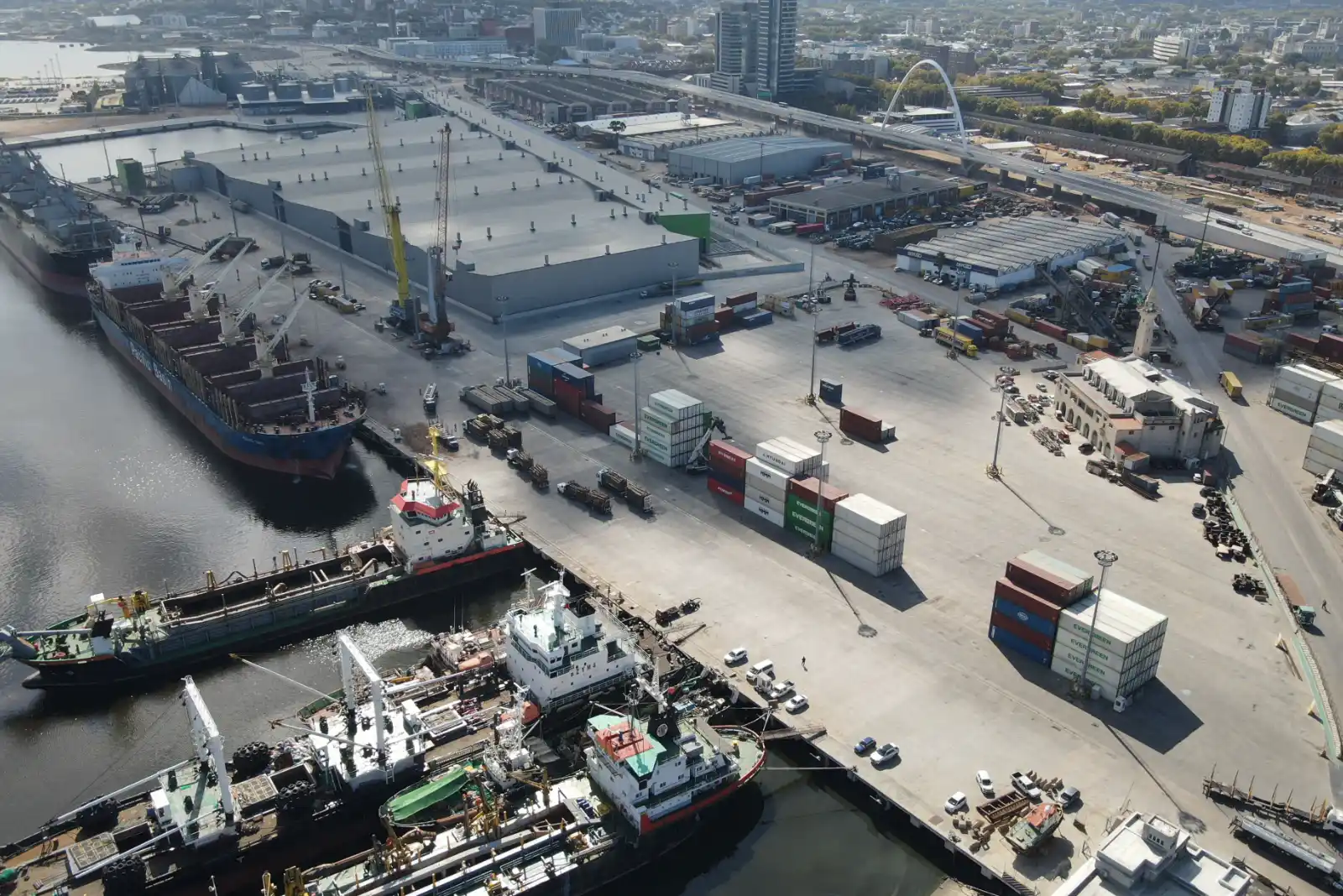
The diagnosis is not new, but the urgency is. Uruguay has a predominantly renewable electricity matrix, a recognized environmental asset. However, the rates that companies pay remain higher than those in Argentina, Brazil, and Chile in several industrial segments. Diesel, in turn, carries extra costs that finance urban transport fares and other subsidies. These extra costs are passed on to agricultural, industrial, and transportation production. In the port of Montevideo, container rates have returned to levels prior to promises of reduction, while operations face bottlenecks. The result is predictable: higher costs than those in the region and narrower margins for exporting.
Ludwig von Mises clearly explained why these problems are not solved with more intervention. When the state concentrates production or the pricing of key inputs —as happens with UTE and Ancap— the mechanism of economic calculation disappears. Prices stop reflecting real scarcity and consumer preferences. They become political instruments. A subsidy for transport fares financed by overpricing diesel does not “protect” public transport users: it simply transfers the cost to those who produce and export. The same happens when electricity rates are used to generate transfers to general revenues. The entrepreneur sees an artificially elevated cost; the system loses signals to invest in efficiency or new capacities.
Hans-Hermann Hoppe takes the argument a step further. Private property and voluntary exchange are not only more efficient: they are the only way to align long-term incentives. A state monopoly on energy or port infrastructure responds to electoral cycles and pressures from organized groups, not to the need to reduce unit costs. When the port or electricity generation operates under public cash logic, the incentive is to maximize transfers or avoid union conflicts, not to minimize the cost per container or per megawatt. Hoppe insisted that competition —even the threat of competition— disciplines better than any regulation. As long as Uruguay maintains monopoly schemes or administered prices on critical inputs, calls for “competitiveness” will be statements of good intentions.
The current situation illustrates the point. The government has partially cushioned international oil price increases, avoiding passing the total on to consumers. This alleviates in the short term, but does not eliminate the structure of extra costs. Entrepreneurs point out that reviewing the fare trust or the stabilization factor of LPG does not mean abandoning accessible public transport: it means deciding who finances it and with what mechanism. The same applies to electricity. Turning the renewable matrix into an economic advantage requires that prices reflect real generation and transmission costs, not revenue or covert redistribution objectives.
In logistics, the problem is similar. Uruguay aspires to consolidate itself as a regional hub, especially in light of a potential Mercosur-European Union agreement. However, high port rates, delays, and labor rigidities increase the cost of moving goods. Every extra dollar per container reduces competitiveness against alternatives in the region. Mises reminded us that capital and labor flow to where the costs of doing business are lower. If Uruguay does not correct these differentials, investments will go to where they are corrected.
The demand from Expo Prado is not a request for privileges. It is the acknowledgment that competitiveness is not decreed: it is built by eliminating distortions. Reducing energy and logistics costs requires reviewing cross-subsidies, opening space for greater competition in segments where monopoly currently prevails, and aligning rates with real costs. Without that, the discourse of “investment, talent, and productivity” will remain in the air. Entrepreneurs made it clear this Friday. The question is whether the rest of the actors —government and society— are willing to listen to the implications.