
The Uruguayan State: an obese giant that stifles investment and punishes those who want to produce

The Uruguayan State: an obese giant that stifles investment and punishes those who want to produce
porEditorial Team
Uruguay

The Uruguayan State and politicians destroy investment and economic development.

Compartir:

The survey just presented by Uruguay XXI, based on responses from 244 US-based companies operating in the country, leaves no room for doubt. 79% say they are “satisfied or very satisfied” with the investment climate. But when asked what is actually holding back the growth of their businesses, the verdict is devastating: 40.3% point to the time taken by administrative procedures as the main obstacle. It is followed, remotely, by access to markets, a shortage of qualified talent and the rigidity of the labor market.


In other words, Uruguay offers a good macro framework... but then it ties you up your hands and feet with a bureaucracy that devours time and money. And that red tape is no accident. It is the visible face of a much deeper problem: an obese, very expensive and increasingly voracious State that, in the name of “protecting” and “regulating”, ends up destroying the conditions that allow

real wealth to be created.


The trap of high taxes


Uruguay maintains one of the highest tax burdens in Latin America: around 27.4% of GDP in total revenue (according to the latest OECD data) and a gross revenue of the DGI of around 20% of the product. VAT at 22%, Income Tax from Economic Activities (IRAE) at 25%, personal income tax that reaches 36% in the highest brackets, retirement contributions and health care that exceed 20% of the gross salary... All of this is not “solidarity”. It is a tax on productive effort

.


Every peso that the businessman pays in taxes is a peso that he does not invest in machinery, training, research or expansion. Every peso that the State collects is spent on maintaining a public apparatus that grows faster than the economy. The structural fiscal result closed 2025 at around -3.9% of GDP (and the global result close to 4.8-5% according to different sources), driven by public spending that continues to rise. The government spends more than it earns and, instead of cutting back, it continues to increase transfers, supplies and state payrolls.


Hazlitt would explain it with crystal clarity: you see the public employee who receives his salary, you see the retiree who receives his liabilities, you see the subsidy that “helps” this or that sector. What you can't see is the private employment that was never created, the company that chose to settle in Paraguay or the Dominican Republic, the talented young man who emigrated because here the State takes more than half of

what it produces.


Fragmented and inefficient public spending


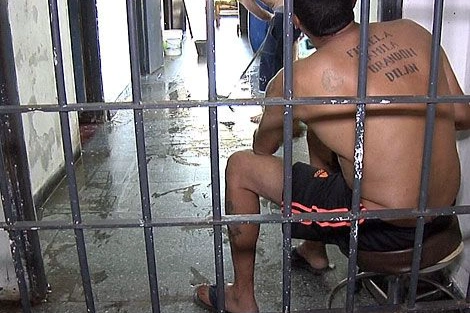
The Uruguayan State isn't just big: it's inefficient by design. It has ministries, autonomous bodies, directorates, commissions and councils that overlap in functions. The “archeology of tasks” that some analysts have done with artificial intelligence reveals dozens of dependencies that do exactly the same thing. Real public spending (including public companies, BPS, municipalities and autonomous communities) far exceeds 30% of GDP when all the items are added together

.


And that expense doesn't generate productivity. On the contrary: it generates more bureaucracy. Each new regulation, each inspection, each additional permit, each “one-stop shop” that in practice continues to refer to three more windows, increases the cost of doing business. According to recent levels of bureaucracy, in Uruguay, a medium-sized businessman spends more than 400 hours a year just complying with administrative procedures. That is not competitiveness. This is a handbrake put on by the State itself.


Labor rigidity and talent drain

The


survey also makes it clear: the labor market is another bottleneck. Rigid labor laws, high layoff costs, restrictions on teleworking, high pension contributions... Everything conspires to make companies prefer not to grow or not to hire. Meanwhile, the most prepared young people are leaving. Uruguay loses human capital because the State, with its model of total “protection”, ends up protecting those who are already in the system and punishing those who want to enter

or innovate.


The consequences that are not seen


Here is the fundamental economic lesson: every weight that the State spends on bureaucracy, on clientelary social plans or on subsidies for inefficiency is a burden that is taken away from the private sector. Every process that takes six months is a project that is postponed indefinitely. Each additional tax is a signal to the foreign investor: “Come... but you pay the price”.


American businessmen don't ask for subsidies or privileges. They ask for what any reasonable person asks for: clear rules, quick procedures and a State that doesn't steal their time or capital. They want to be able to compete on an equal footing with countries that, with fewer natural resources than Uruguay, have drastically reduced their bureaucracy and tax pressure

.


The current government speaks of “competitiveness” and promises a law to attack the bureaucracy. Hopefully that's true and not another announcement. Because if the size of the State is not attacked at the root, if the tax burden is not structurally lowered, if the procedures are not truly simplified and the labor market is made more flexible, Uruguay will continue to be “the most stable country... but also the most expensive and slowest

”.


And in a world where capital flies at the speed of a click, stability without agility ends up being a doom. The obese State does not protect the people: it impoverishes them. It keeps him tied to a model that no longer works. It's time to slim down the giant before it ends up suffocating what little is left of private initiative in

Uruguay.

Noticias relacionadas

“The street is not an option”: ten years later, the Broad Front discovers what it built

“The street is not an option”: ten years later, the Broad Front discovers what it built

Government confirms release of 2,000 prisoners

Government confirms release of 2,000 prisoners

Uruguayan justice is complicit in horror: Moisés Martínez is not a murderer

Uruguayan justice is complicit in horror: Moisés Martínez is not a murderer

Windrose sweeps Steam with more than 69,000 players in its debut

Windrose sweeps Steam with more than 69,000 players in its debut

Germany announced a reinforcement of military support for Ukraine amid NATO tension with the US

Germany announced a reinforcement of military support for Ukraine amid NATO tension with the US

Mayors push for municipal police in the face of the abandonment of Kicillof

Mayors push for municipal police in the face of the abandonment of Kicillof

La Derecha Diario logo
ESX logoInstagram logoYouTube logoTikTok logo
ARGENTINABOLIVIAECUADORISRAELMEXICOURUGUAYDERECHA DIARIO TV
  • ESXInstagramYouTubeTikTok
  • DERECHA DIARIO TV
  • Secciones
  • ARGENTINA
  • BOLIVIA
  • ECUADOR
  • ISRAEL
  • MEXICO
  • URUGUAY
  • Países
  • La Derecha Diario logoLA DERECHA DIARIO
  • La Derecha Diario México logoLA DERECHA DIARIO MÉXICO
  • La Derecha Diario Uruguay logoLA DERECHA DIARIO URUGUAY
  • La Derecha Diario Ecuador logoLA DERECHA DIARIO ECUADOR
  • La Derecha Diario Bolívia logoLA DERECHA DIARIO BOLÍVIA
  • La Derechadiario República Dominicana logoLA DERECHADIARIO REPÚBLICA DOMINICANA
  • La Derecha Diario Israel logoLA DERECHA DIARIO ISRAEL
  • La Derecha Diario Estados Unidos logoLA DERECHA DIARIO ESTADOS UNIDOS
  • Temas
  • GUERRA EN IRÁN
  • JUICIO POR YPF
  • El Diario
  • QUIENES SOMOS
  • AUTORES
  • PUBLICIDAD
  • DONAR
La Derecha Diario logo
TwitterInstagramYouTubeTikTok
Derecha Diario TV

Nosotros

  • Quienes Somos
  • Autores
  • Donar

Privacidad

  • Protección de datos
  • Canales
  • Sitemap

Contacto

  • info@derechadiario.com.ar
PUBLICIDAD