
Wilson Ferreira Aldunate: The biggest smoke-seller in the history of Uruguay

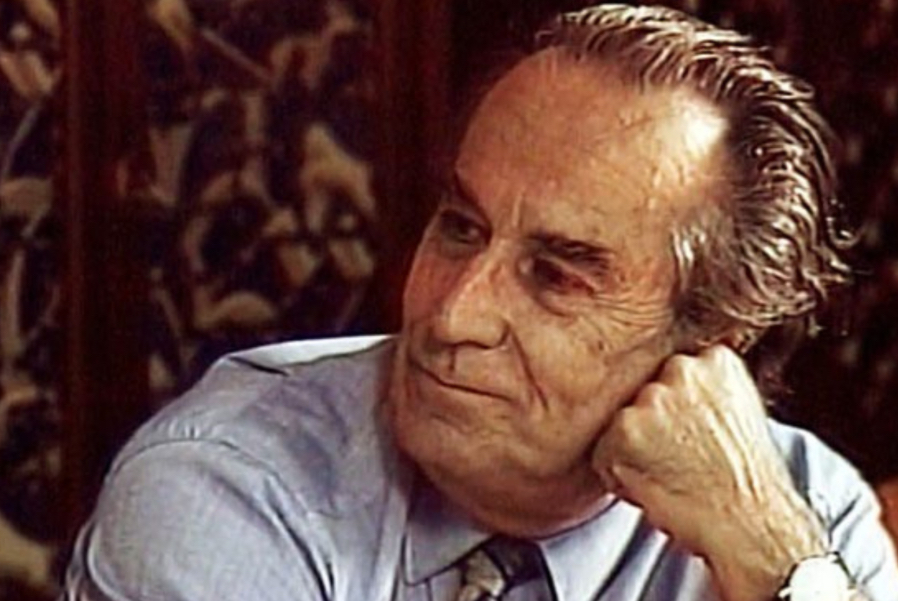
Wilson Ferreira Aldunate: The biggest smoke-seller in the history of Uruguay
Wilson Ferreira.
porEditorial Team
Uruguay

A hell of a socialist who gave beautiful speeches.

Compartir:

Wilson Ferreira Aldunate is revered as an icon of Uruguayan nationalism, an unwavering democrat and a visionary leader. But if we scratch the surface of his myth, what emerges is a politician who disguised profoundly statist and socialist ideas with a white poncho, betraying the liberal and private property principles that the National Party historically defended. His obsession with agrarian reform was not a mere technical adjustment to the Uruguayan countryside: it was a radical interventionist project that smelled of developmental socialism, inspired by CEPAL models and figures such as Carlos Quijano, who would have suffocated private initiative and concentrated power in the State. We are going to intellectually disarm this house of cards, focusing on the essentials:

their hidden socialist ideas.


The Economic and Social Development Project: Socialism with the scent of CIDE


The core of Wilson's proposals was his famous Economic and Social Development Project (PDES), exhibited in the 1971 program “Our Commitment to You” and maintained in 1984. Its main pillars included:


-Radical agrarian reform

.

-Nationalization of banking and foreign trade.

-Massive promotion of the national industry through state interventionism.

-State investments in education, science and technology.


This was not rural conservatism; it was pure statist developmentalism, based on the prescriptions of ECLAC and the Commission on Investments and Economic Development (CIDE), where Wilson actively participated as Minister of Livestock and Agriculture. The CIDE diagnosed stagnation and proposed centralized planning, financial and tax reforms, and a strong State that would correct “market failures”. Wilson not only embraced these ideas: he made them his own, prioritizing agrarian reform as an “absolute priority” since his time in the Social Democratic Nationalist Group, influenced by Quijano

.


Nationalizing banking and foreign trade means taking control of credit and foreign exchange from the private sector, so that “work and savings will bear fruit here”. It sounds nice, but in practice it's pure statism: the State decides who accesses credit, who exports and at what price, eliminating economic freedom. This is light socialism, or at least interventionism that historically leads to inefficiency, corruption and capital flight. Wilson sold “national development”, but offered a model that would have turned Uruguay into a Creole version of Peronism or democratic socialism, with the State as the great arbiter of the

economy.


Agrarian Reform: Expropriations Disguised as Social Justice

Here is the socialist heart of


his thinking. Wilson promoted, from the CIDE and its ministry (1963-1967), an Agrarian Reform Bill that included mass expropriations. His plan limited rural property to about 2,500 hectares (or equivalent in the CONEAT index), expropriating the “excess” of land in unproductive estates to be redistributed via the State.
- Expropriation with compensatory payment (but always under state coercion).

- Creation of cooperative colonies and forms of collective tenure.

- Progressive taxes on land concentration to force sales or expropriations.

- Elimination of large estates and small estates through state intervention.


This was not modernization of the countryside; it was forced redistribution of private property, a classic of agrarian socialism. Inspired by the Alliance for Progress and by experiences such as Allende's Chilean or Cuban (even if Wilson denied it), his proposal would have weakened private property, discouraged private investment and concentrated power in state bureaucracies. The Rural Association of Uruguay (ARU) saw this clearly and diluted it in Congress: out of seven proposed agricultural laws, the one on structural reform was castrated. Wilson mourned electoral fraud in 1971, but his statist radicalism frightened

vast productive sectors.


Basically, Wilson shared the leftist diagnosis: large estates were “uneconomic and antisocial”, land concentration impeded development, and only the State could correct it. That is agrarian collectivism, not white rural liberalism. His reform did not seek market efficiency, but rather “equity” through expropriation and cooperatives, which inevitably generates dependence on the State,

low productivity and social conflicts.


Statism as a legacy: From CIDE to interventionist Wilsonism

,


Wilson was not a liberal; he was a white developmentalist who imported left-wing ideas to the National Party. His enthusiasm for planning (CIDE), for state industrial promotion, for centralized administrative reform and for taxes such as income or land concentration, moves him away from traditional herrerism and brings him closer to social democratic or Peronist models. Even in exile and post-dictatorship, he promoted a mixed economy, state corporations such as CONADEP (which he imagined) and decentralization, which was

not real autonomy, but more intervention.


His ideas would have led Uruguay to greater statism: more bureaucracy, less economic freedom, more dependence on the State. The “progress” it promised was illusory; in practice, it would have replicated the failures of other Latin American countries that bet

on forced redistribution and nationalizations.


Wilson Ferreira Aldunate was a consummate smoke-seller: he wrapped developmental socialism in patriotic and nationalist rhetoric, betraying the values of property and freedom that the White Party should defend. His proposals were not “modernization”; they were statism in disguise, with expropriations, nationalizations and central planning that would have sunk the Uruguayan economy. Uruguay narrowly avoided that path, but the myth persists. It's time to call him by his name: a leader who sold socialist smoke with a white poncho. Let's wake up once and for

all.

Noticias relacionadas

“The street is not an option”: ten years later, the Broad Front discovers what it built

“The street is not an option”: ten years later, the Broad Front discovers what it built

Government confirms release of 2,000 prisoners

Government confirms release of 2,000 prisoners

Uruguayan justice is complicit in horror: Moisés Martínez is not a murderer

Uruguayan justice is complicit in horror: Moisés Martínez is not a murderer

Windrose sweeps Steam with more than 69,000 players in its debut

Windrose sweeps Steam with more than 69,000 players in its debut

Germany announced a reinforcement of military support for Ukraine amid NATO tension with the US

Germany announced a reinforcement of military support for Ukraine amid NATO tension with the US

Mayors push for municipal police in the face of the abandonment of Kicillof

Mayors push for municipal police in the face of the abandonment of Kicillof

La Derecha Diario logo
ESX logoInstagram logoYouTube logoTikTok logo
ARGENTINABOLIVIAECUADORISRAELMEXICOURUGUAYDERECHA DIARIO TV
  • ESXInstagramYouTubeTikTok
  • DERECHA DIARIO TV
  • Secciones
  • ARGENTINA
  • BOLIVIA
  • ECUADOR
  • ISRAEL
  • MEXICO
  • URUGUAY
  • Países
  • La Derecha Diario logoLA DERECHA DIARIO
  • La Derecha Diario México logoLA DERECHA DIARIO MÉXICO
  • La Derecha Diario Uruguay logoLA DERECHA DIARIO URUGUAY
  • La Derecha Diario Ecuador logoLA DERECHA DIARIO ECUADOR
  • La Derecha Diario Bolívia logoLA DERECHA DIARIO BOLÍVIA
  • La Derechadiario República Dominicana logoLA DERECHADIARIO REPÚBLICA DOMINICANA
  • La Derecha Diario Israel logoLA DERECHA DIARIO ISRAEL
  • La Derecha Diario Estados Unidos logoLA DERECHA DIARIO ESTADOS UNIDOS
  • Temas
  • GUERRA EN IRÁN
  • JUICIO POR YPF
  • El Diario
  • QUIENES SOMOS
  • AUTORES
  • PUBLICIDAD
  • DONAR
La Derecha Diario logo
TwitterInstagramYouTubeTikTok
Derecha Diario TV

Nosotros

  • Quienes Somos
  • Autores
  • Donar

Privacidad

  • Protección de datos
  • Canales
  • Sitemap

Contacto

  • info@derechadiario.com.ar
PUBLICIDAD