
The official numbers from the 2025 accountability report are striking: the Central Government and the Social Security Bank recorded a deficit of 4.1% of GDP when excluding extraordinary income from the Social Security Trust. This amounts to about 3.7 billion dollars in imbalance. The primary result worsened from -0.8% to -1.4% of GDP, while primary expenditures reached 28.9% of GDP, an increase of 0.8 percentage points compared to the previous year. Revenues remained stagnant at around 27.5% of GDP.
Uruguay already operates with one of the highest tax burdens in the region. Despite extracting that significant portion of the productive effort of the population, the State cannot balance its accounts. Spending continues to expand beyond the real growth of the economy, which barely reached 1.8% in 2025.
Diverted resources and missed opportunities
The deficit is not just a simple accounting mismatch. Every peso that the State takes through taxes or finances with debt is a peso that is no longer available for those who generate it: workers, entrepreneurs, and savers. That money could be used to expand businesses, invest in technology, create productive jobs, or improve voluntary consumption by families. Instead, it is channeled towards expenses determined by political and bureaucratic criteria.
When public spending grows steadily —in pensions that represent almost 10% of GDP, transfers, salaries, and the operation of agencies— there is an allocation of resources that does not respond to the real valuations of the people. Projects and programs are maintained by inertia or pressure from organized groups, without an automatic mechanism to subject them to the test of whether they generate enough value to justify their cost. The result is structural waste: resources that are consumed without creating the wealth necessary to sustain them in the future.
Taxes that hinder and debt that mortgages
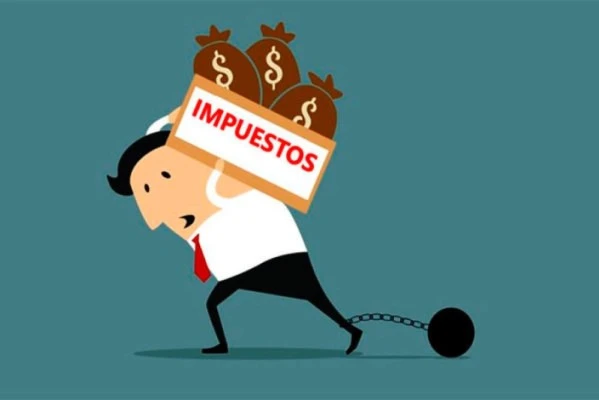
A tax pressure close to 27% of GDP is not neutral. It reduces the margin for saving and investing. It penalizes productive success and increases the cost of economic activity. When growth is at such low levels as 1.8%, it becomes clear that the economy struggles to generate the resources that the State demands year after year.