The migration crisis that plagues the continentEuropean, fueled for years by lax open border policies, has found a strong brake in the political heart of the European Union. In a European context that is finally forced to tighten its guidelines to accelerate the returns of those who lack the right to remain in the territory, Belgium has decided to lead by example and apply the firmness that its citizens demand.
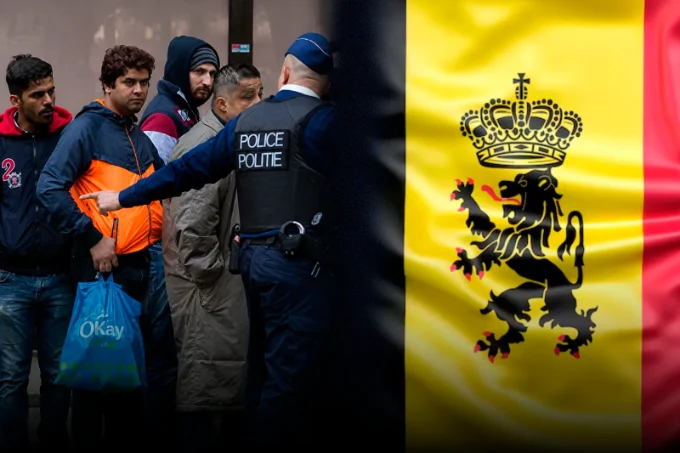
This August 28, the capital, Brussels, became the scene of an unprecedented national security action, originally reported by journalist Unai Cano, that redefines the fight against illegal immigration. The Belgian Immigration Office designed and executed a highly effective strategic plan to locate and process foreigners in irregular situations who were evading state controls.
Belgium
The authorities previously made a public appeal directed at people without the necessary documentation, inviting them to come to official offices under the pretext of registering their cases and studying their administrative situation for eventual regularization.
However, the clever maneuver served as a funnel for control: dozens of undocumented foreigners and asylum seekers voluntarily responded to the call, thus facilitating their location for law enforcement.
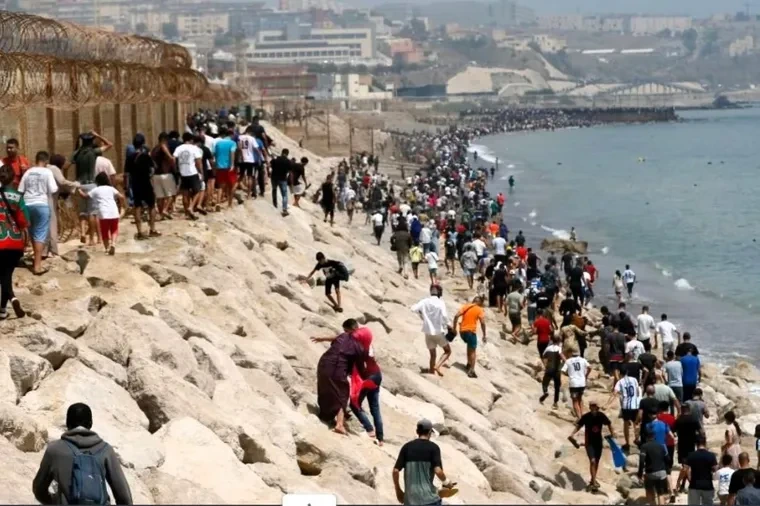
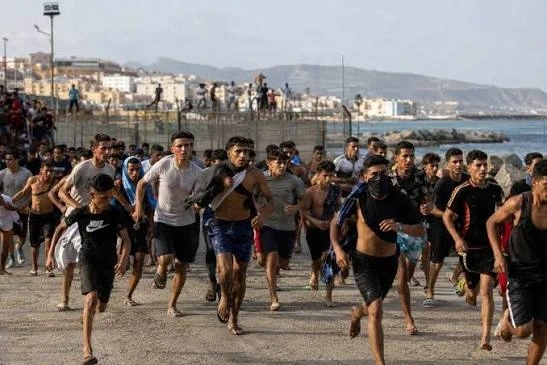
Maghrebis invading Europe
Once the foreigners gathered at the state facilities, the security forces acted in a coordinated and determined manner. The agents proceeded to close the access points to prevent escapes, rigorously identified each of those present, collected their personal data, and meticulously checked their respective identities and countries of origin.
As a direct result of this operation, some of the foreigners who came under administrative deception ended up detained immediately. Without wasting time, the Belgian authorities began processing the legal procedures aimed at their expulsion and definitive return to their countries of origin.
Maghrebis invading Europe
As expected, the strong action of the Belgian government has sparked rejection from certain circles defending immigrant rights, who question the use of administrative appointments to capture people in irregular situations.
Additionally, various Moroccan media reacted with indignation to the loss of impunity for their compatriots, labeling the operation as a trap and an illegal ambush. However, it is worth noting that these accusations strictly correspond to a biased and subjective assessment from those foreign media and not to an official qualification from the authorities of Belgium, who remain firm in the application of the law and the safeguarding of national sovereignty.