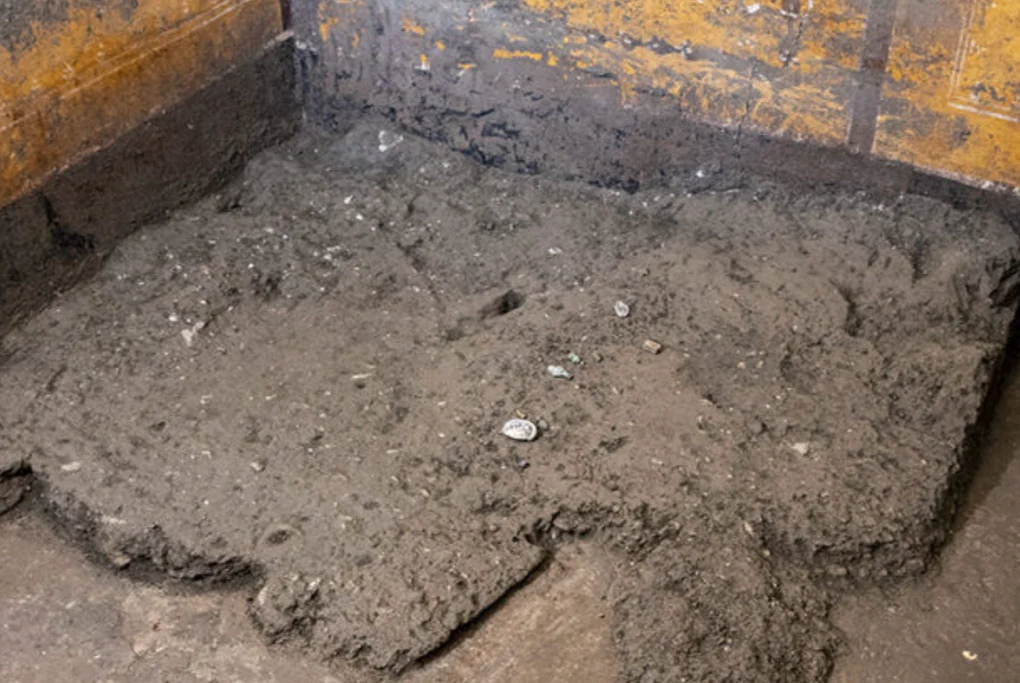
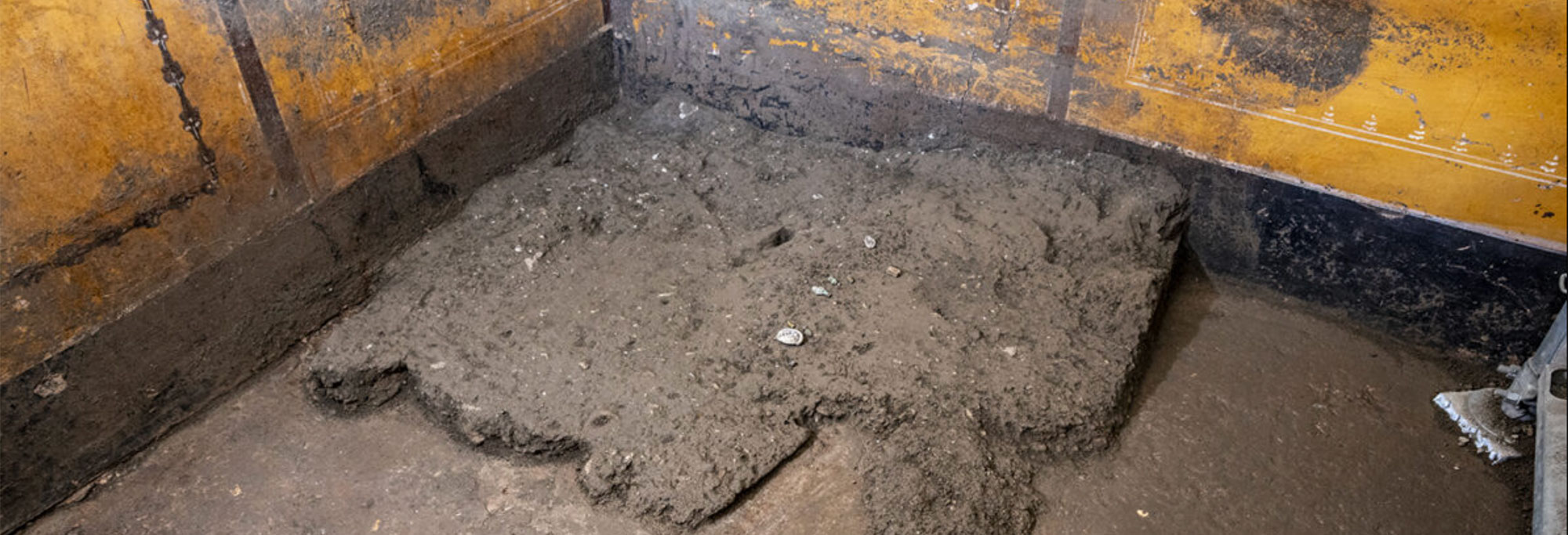
The furniture, buried by the eruption of Vesuvius in 79, contained a protective collar for children and utensils that reveal the daily life of its inhabitants
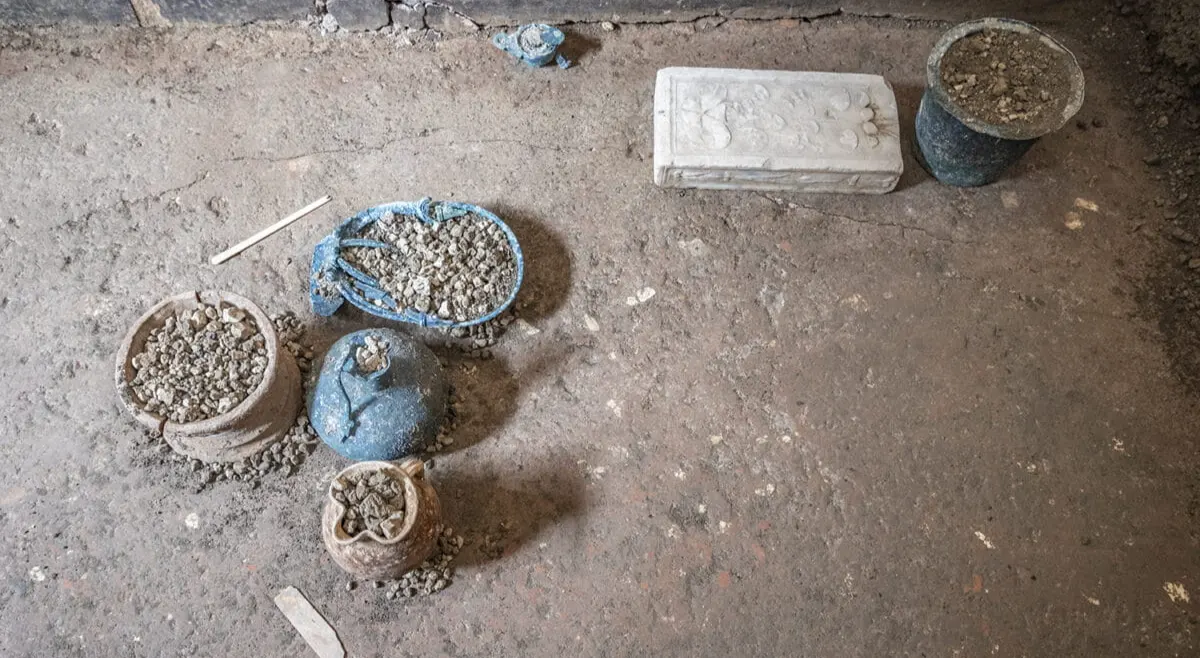
A wooden box contained lead weights that researchers interpret as tools used for trade. A small woven container held 38 bronze coins. These elements reinforce the idea that the cupboard housed both personal items and instruments related to the economic activity of the house.
Zuchtriegel emphasized the value of these everyday findings: “Pompeii is not just a place of great works of art. It is also a place where the most ordinary objects restore the human dimension of the past.” The collection allows us to reconstruct habits, beliefs, and domestic practices that would otherwise remain invisible.
The discovery adds new information about private life in one of the most well-known cities of the Roman world. Each piece recovered from the cupboard provides concrete data about child protection, personal care, commercial activities, and religious devotions that were part of daily existence in Pompeii.
Work continues in the area of the Via dell’Abbondanza, and future analyses of the materials are expected to provide more details about the use of each object and the composition of the family that occupied the home. For now, the cupboard and its contents already offer a close and tangible glimpse into a home that was frozen in time by the eruption.
Archaeologists working in the center of Pompeii have discovered a wooden cupboard in a house located on the Via dell’Abbondanza. The inscriptions found in the property suggest that it may have belonged to a certain Cornelius Maximus, although researchers warn that the identity of those who lived there cannot be confirmed with total certainty.
Gabriel Zuchtriegel, director of the Archaeological Park of Pompeii, explained: “We cannot accurately reconstruct the identity of who lived in the house, but these fragments bring us closer to their daily life.” The discovery allows us to take a close look at what daily life was like in a home in the Roman city before the catastrophe.
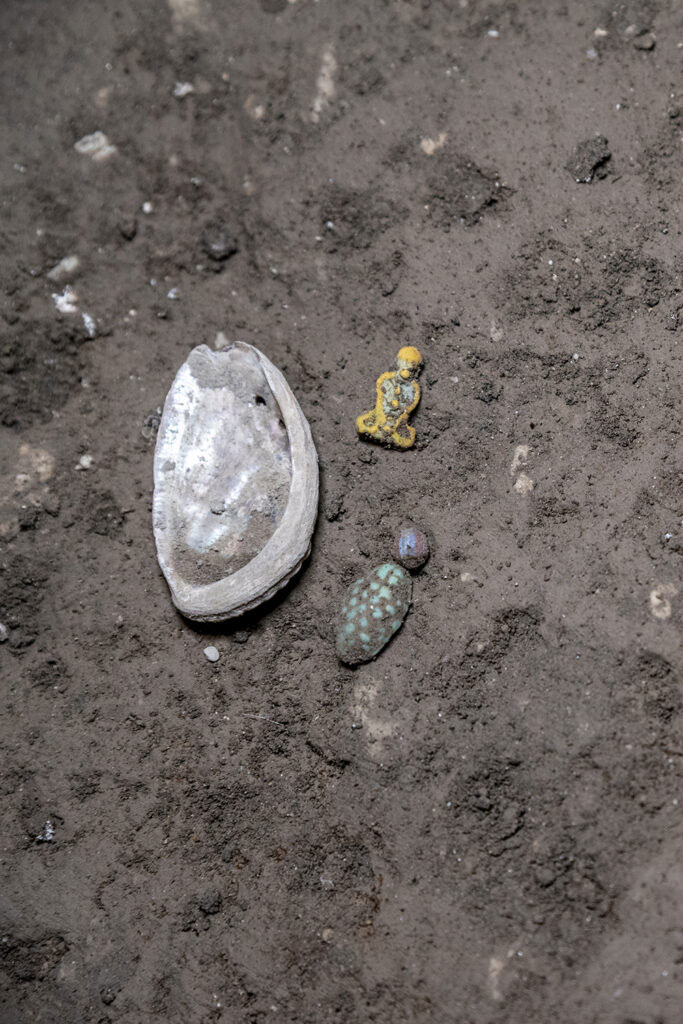
The cupboard was buried by the eruption of Mount Vesuvius in the year 79 AD. Inside, it preserved a necklace made up of at least 24 crepundia, amulets made of bone, glass paste, ceramics, and rock crystal. Some featured representations of the gods Bes and Mercury. Others were shaped like miniature hands and feet, pine cones, or bunches of grapes.
Specialists believe that the necklace was worn by a child as a protective amulet. The noise it made when moving may also have helped adults keep track of the child's location. Alongside these pieces were tweezers, a small glass vial that may have contained perfume or ointment, an incense burner, a cooking pot, and other containers made of bronze, glass, and ceramics.