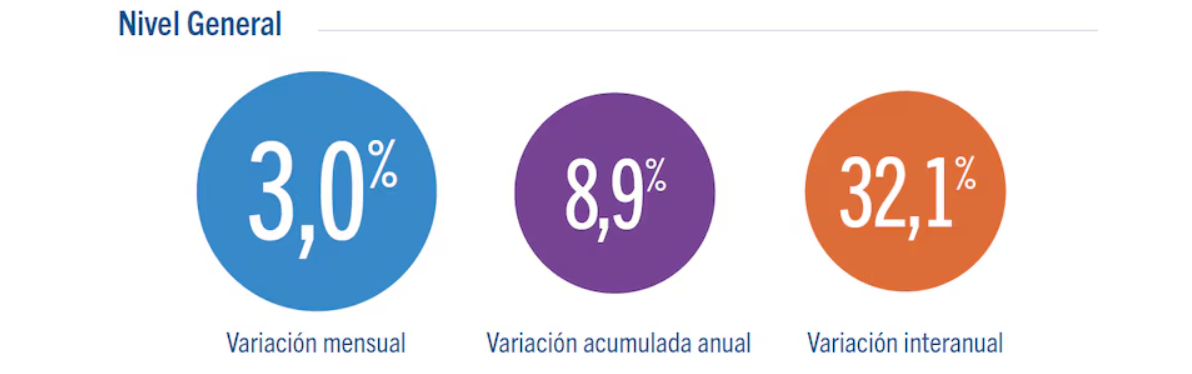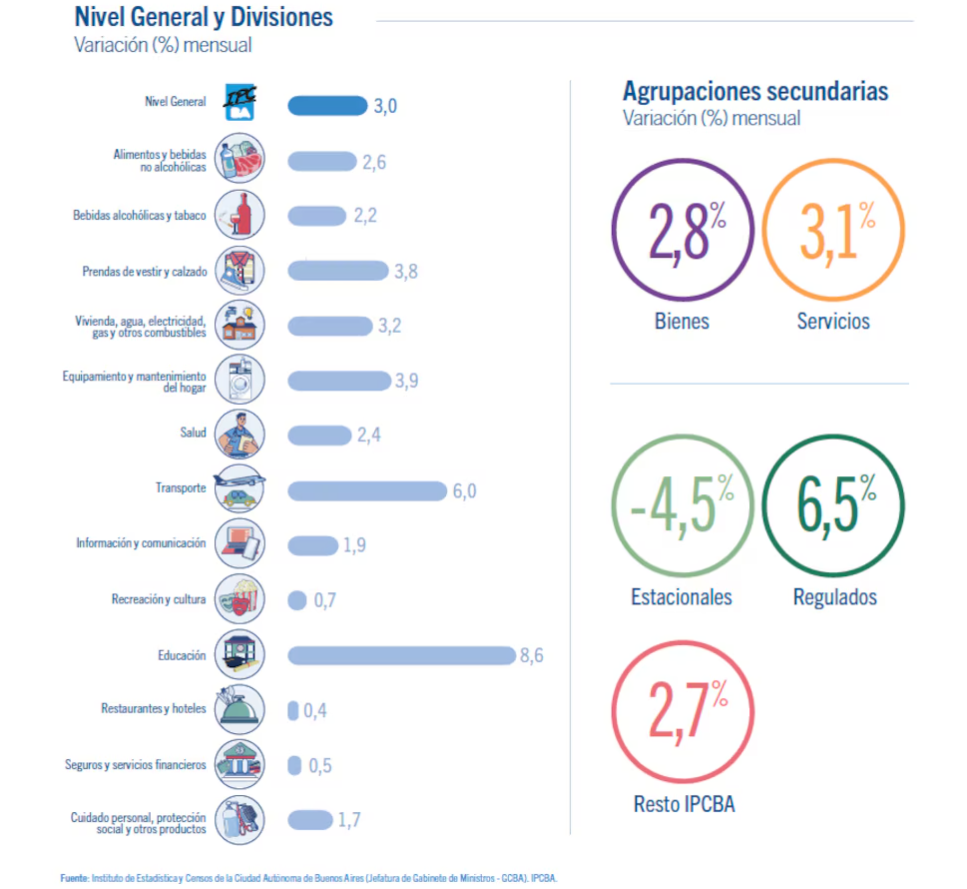











Inflation in the City of Buenos Aires registered 3% during March, according to the latest official report of the Buenos Aires Institute of Statistics and Censuses, in a figure that was strongly conditioned by external factors linked to the war in the Middle East and the global increase in energy prices.
The monthly increase was mainly driven by the increase in fuel, transport, education and regulated services, in an international context marked by the geopolitical crisis generated after the escalation of war between Iran, Israel and the United States, which raised the international price of oil above USD 100 per barrel in March.
The impact of the war in Iran hit fuels directly

One of the areas that put the most pressure on inflation was Transportation, which increased 6% in March, being the segment with the highest increase in the general index. According to the official report, the increase was mainly explained by the increase in fuel and the update of public transport fares
.The pressure on the pumps responded directly to the international jump in the price of oil, after the war in the Middle East generated a strong shock in the global energy market, with oil prices rising up to 40% since the beginning of the conflict and global concern for supply due to tension in the strategic Strait of Hormuz.
In this context, the national government sought to cushion part of the impact through partial freezes and containment mechanisms on the local price of fuels.