The financing of this imbalance included the use of Central Bank reserves, ANSES funds and monetary issuance, factors that contributed to the increase in inflation and a new economic crisis.






The data show sustained growth that occurs without fiscal deficits and populist policies, unlike Kirchnerism.
The financing of this imbalance included the use of Central Bank reserves, ANSES funds and monetary issuance, factors that contributed to the increase in inflation and a new economic crisis.





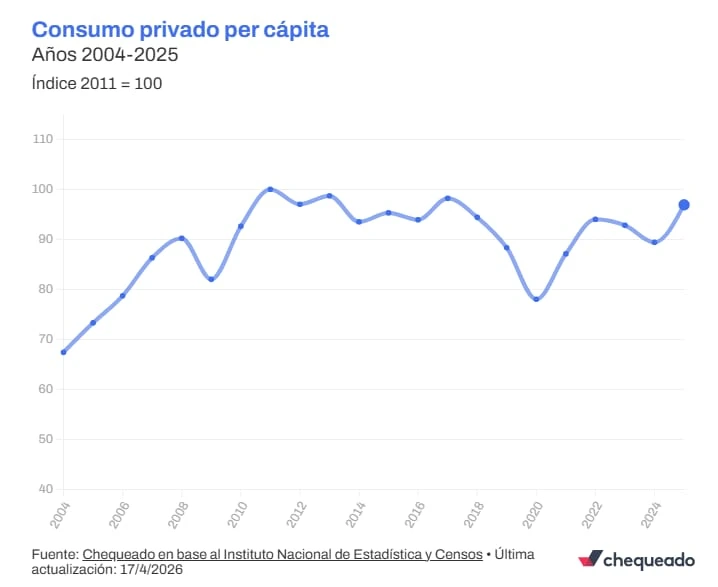
This kind of measure made it possible to achieve the highest level of consumption in the decade, although not in a genuine, sustainable way, and causing a destruction of macroeconomic variables.

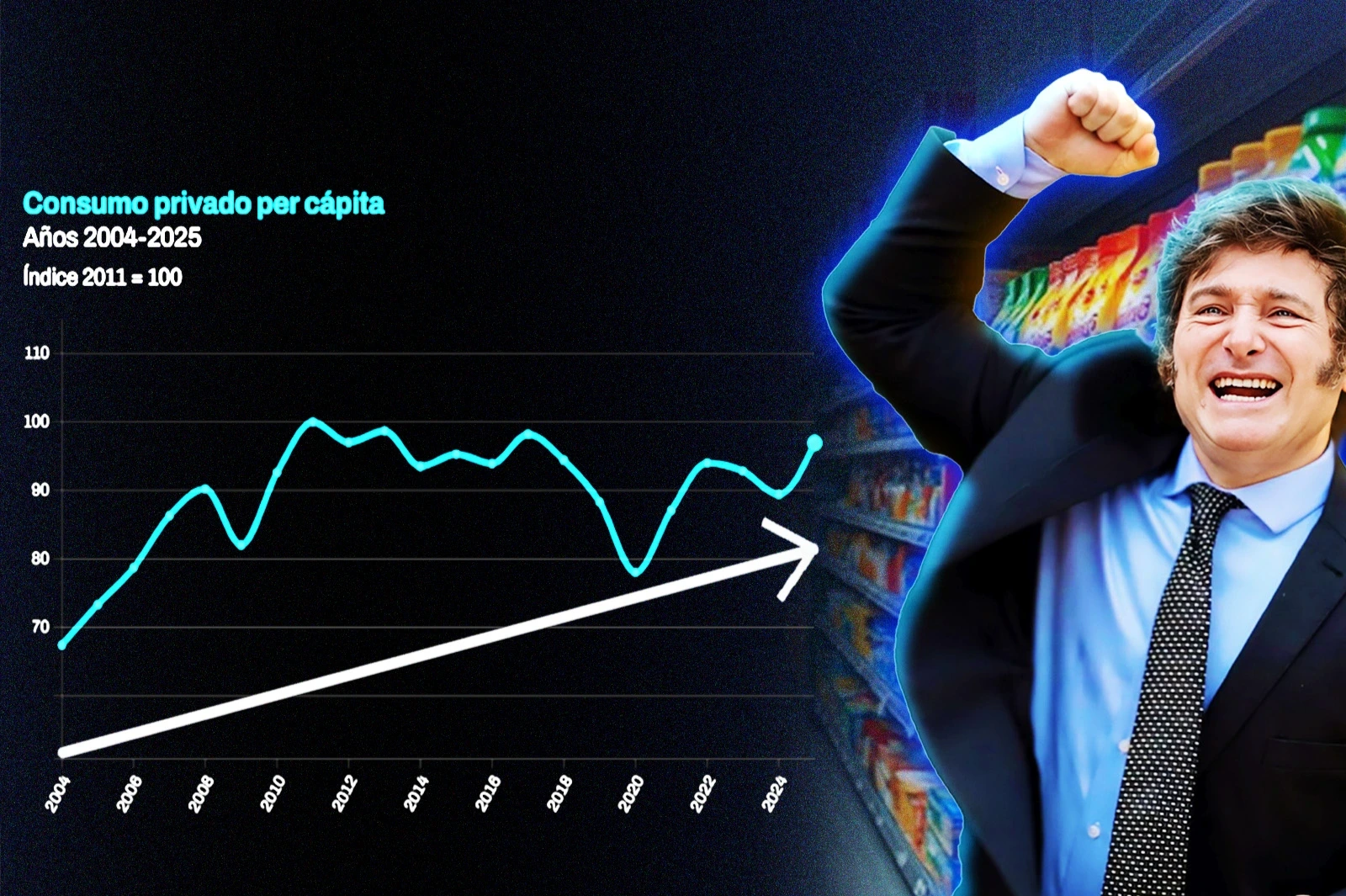
In contrast, the current situation presents a different scenario. Under the management of Javier Milei, consumption shows growth that, even without having surpassed the record in per capita terms, is developing in a framework without fiscal deficit and without populist policies aimed at artificially boosting demand through monetary issuance or generalized subsidies
.In this sense, the behavior of the series shows that, if the trend continues, per capita consumption could soon exceed the level reached in 2011, but under different macroeconomic conditions, with updated tariffs, reforms under way and in an economy in real growth.
Thus, although the specific data indicates that per capita consumption is still slightly below the historical maximum, the contextual analysis shows a change in economic dynamics, where consumption growth occurs without the fiscal and monetary imbalances that characterized the K period.
In this context, a Chequeado report, based on official data, also revealed that current per capita consumption is only 3.1% below the peak recorded in 2011, placing it at levels close to that maximum.
Although the figures are excellent, it must be borne in mind that the evolution of current consumption presents different characteristics compared to that historical peak.
The year 2011, under the government of the corrupt Cristina Fernández de Kirchner, was marked by a strong boost to consumption through the State apparatus and in an electoral context, with subsidies, price controls, and high public spending to artificially boost demand.
result of this populist policy, the fiscal deficit that year exceeded $52 billion, the largest of the Kirchner era. In addition, the initial budget was expanded by more than $60 billion through decrees throughout the year, in a scenario where spending grew at a faster rate than revenue