
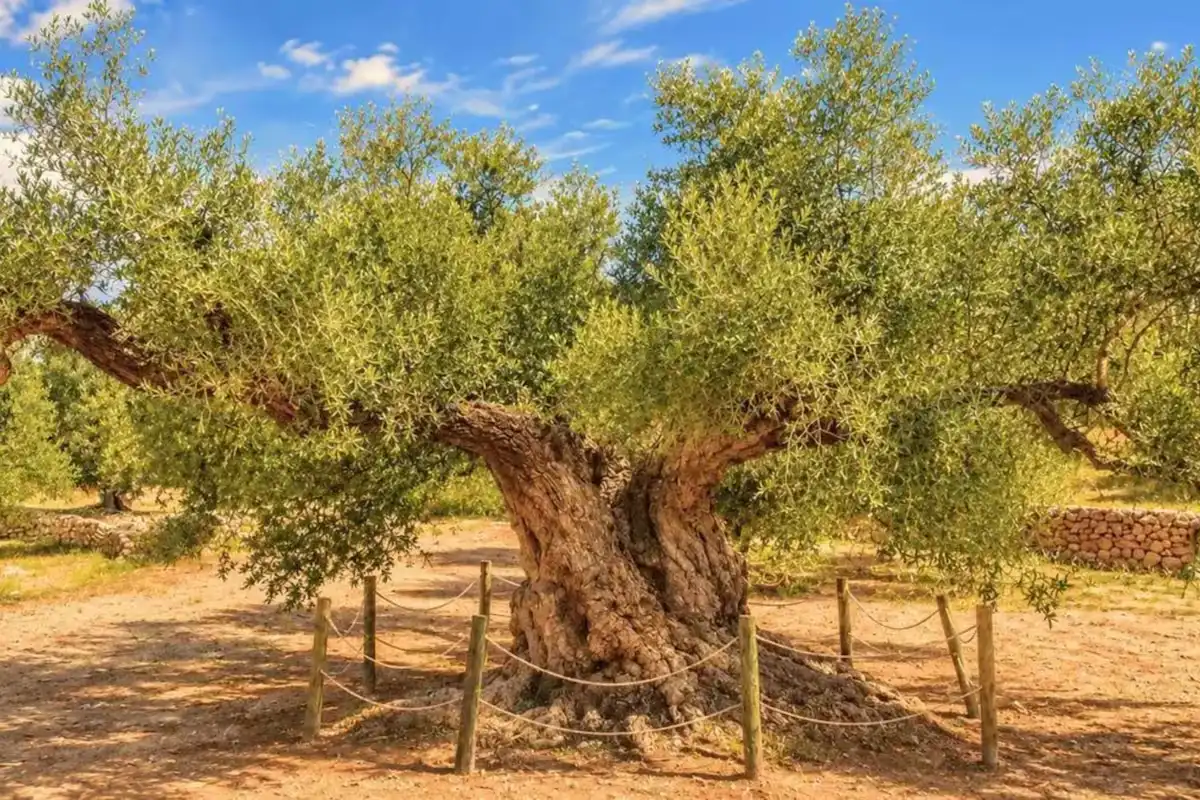

While Emperor Constantine I ruled the Roman Empire, a small olive tree began to grow in what is now Spain. According to estimates of its age, it was 314 and no one could imagine that this tree would survive for more than 17 centuries and would continue to produce olives
to this day.Known as the Farga del Arión, this specimen is found in Ulldecona, a municipality in the province of Tarragona, in Catalonia. Its extraordinary longevity made it one of the oldest olive trees in the world and a symbol of the Mediterranean's agricultural tradition
.Throughout its existence, the tree witnessed the fall of the Western Roman Empire, the beginning of the Middle Ages and the development of modern cities. As civilizations disappeared and European borders changed, their roots remained
in the same place.
Nowadays, the olive tree is part of the Natural Museum of Millennial Olive Trees of Arión, located on a farm belonging to the Porta i Ferré family. Numerous specimens are preserved there, which, in addition to their historical value, maintain a close relationship with olive oil production in the region
.What is the olive tree that survived the Roman Empire and still bears olives
One of the most striking characteristics of this tree is its size. Unlike young specimens, which usually have relatively thin trunks, the Farga del Arión developed a robust and irregular structure as a result of
its growth over centuries.Its trunk reaches 8.03 meters in perimeter, while its height is around 6.5 meters and its base is approximately 18 meters in diameter. The dimensions and shapes it acquired over time made it one of the main natural attractions of Ulldecona