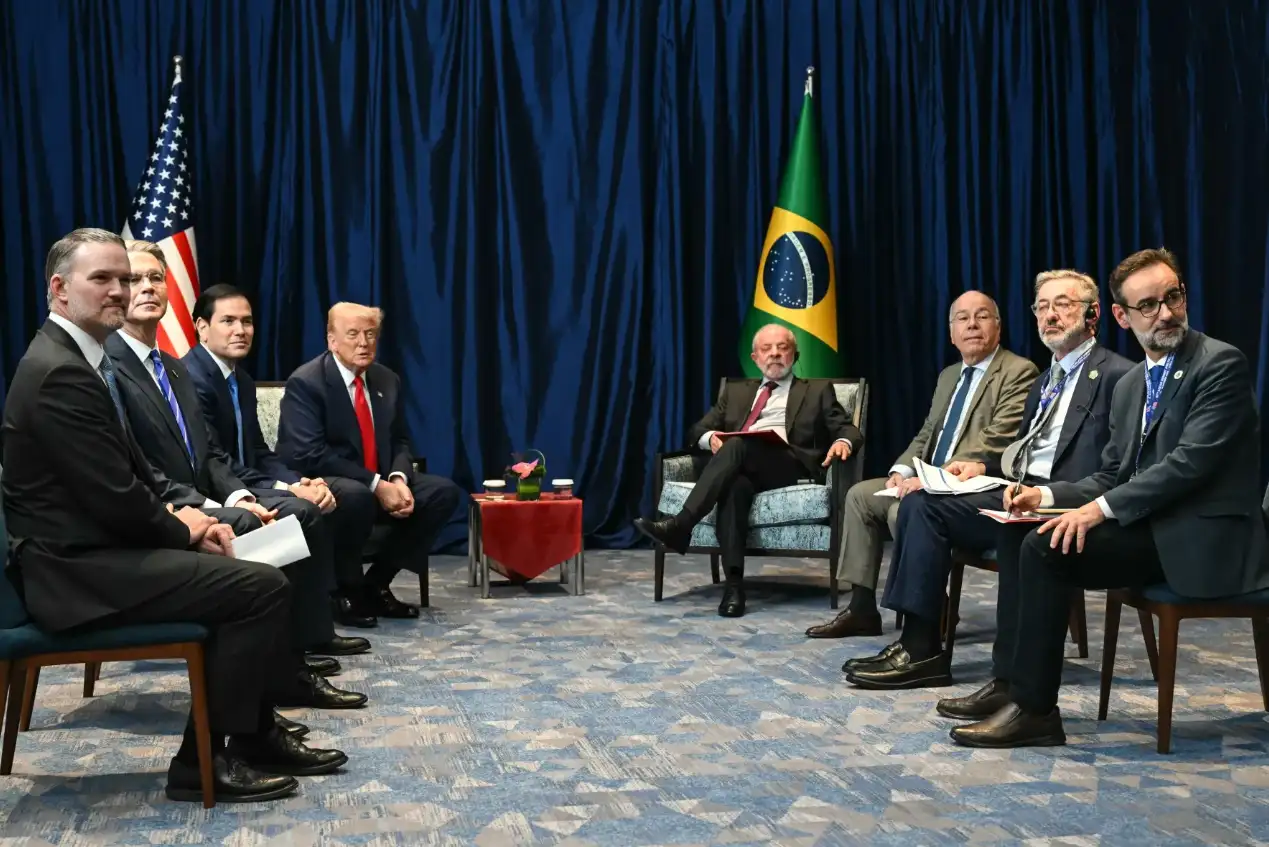

The U.S. Secretary of State, Marco Rubio, publicly defended President Donald Trump's decision to impose a 25% tariff on most imports from Brazil, stating that the responsibility lies with Brazilian President Luiz Inácio Lula da Silva for not negotiating "in good faith" with Washington.
In a message posted on his official X account, Rubio claimed that the measure is a response to the failure of talks between both governments and argued that the economic policies promoted by Lula harm both Americans and Brazilians themselves.
Marco Rubio supported Trump's decision
In his post, the head of U.S. diplomacy was emphatic in explaining the reason for the new tariffs.
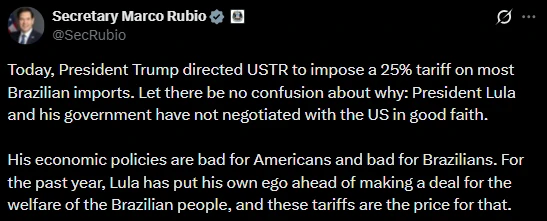
"Today, President Trump directed the U.S. Trade Representative to impose a 25% tariff on most Brazilian imports. Let there be no confusion about the reason: President Lula and his government have not negotiated with the United States in good faith," Rubio wrote.
The official added that, over the past year, the Brazilian leader prioritized his own political interests over the economic well-being of his population.

Rubio's message on X
"His economic policies are bad for Americans and bad for Brazilians. Over the past year, Lula has put his own ego ahead of reaching an agreement for the well-being of the Brazilian people, and these tariffs are the price of that," he stated.
Trade tensions between the United States and Brazil escalate
Rubio's statements reinforce the stance of the Trump administration, which in recent months has hardened its trade policy towards Brazil amid a growing deterioration of bilateral relations.
Washington maintains that Lula's government has taken an inflexible position during trade negotiations and believes that various policies promoted by Brazil affect U.S. economic interests.
The imposition of a 25% tariff on most Brazilian imports represents a new escalation in the trade conflict between the two countries and could impact key sectors of the Brazilian economy, especially those oriented towards exports to the U.S. market.
With this explicit support from Rubio, the White House aims to make it clear that the decision is part of a broader political and economic strategy aimed at pressuring Lula's government to reopen negotiations under conditions that Washington considers more favorable.