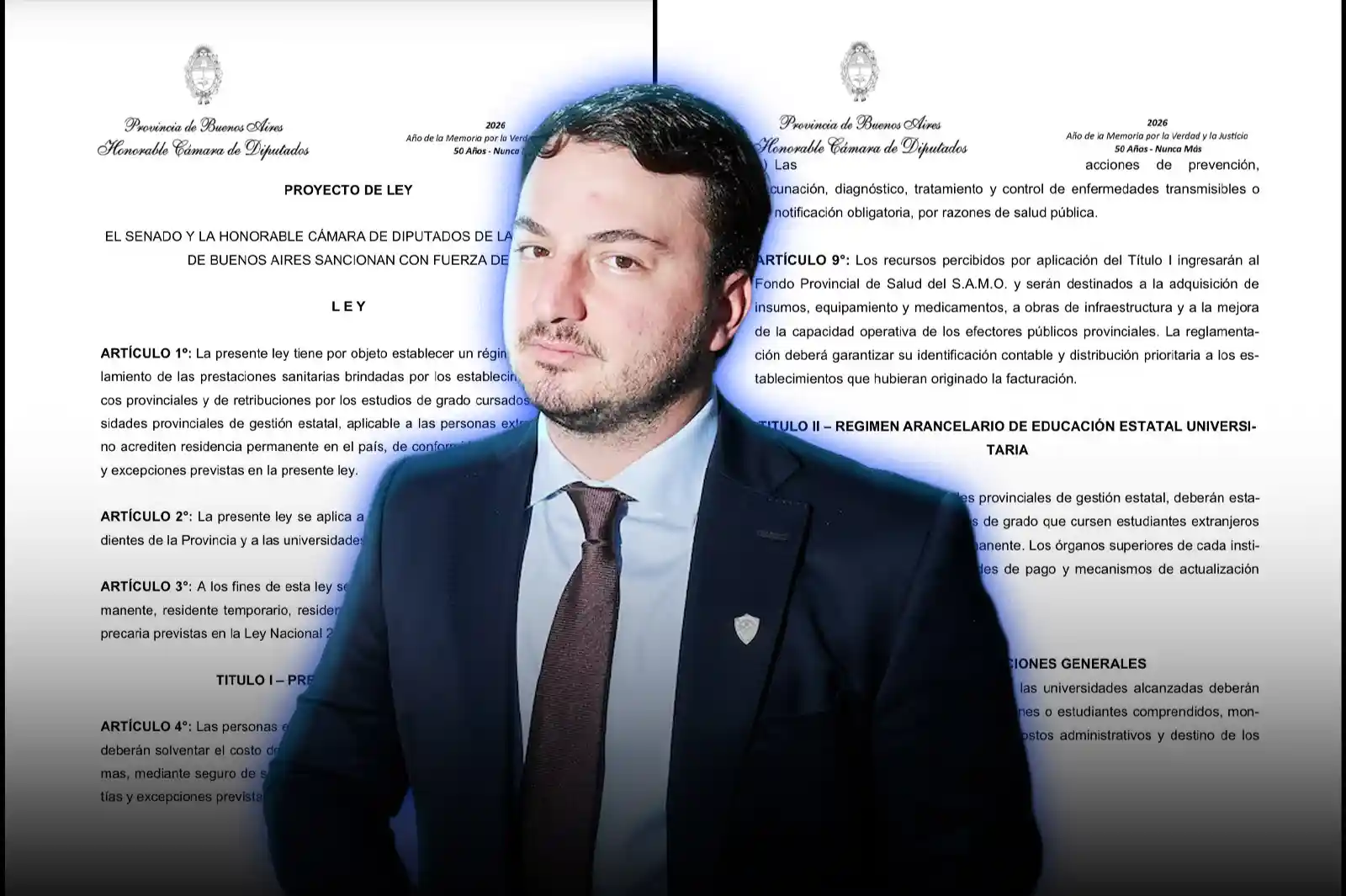

Amid the strong controversy generated by the mockery of foreign students after the defeat of the Argentine National Team in the 2026 World Cup final, the Buenos Aires deputy from La Libertad Avanza, Agustín Romo, presented a bill to charge for health and education for foreigners in the province of Buenos Aires.
The initiative arises in a context of strong controversy, after publications from foreign students attending public universities went viral, celebrating Argentina's downfall and including mockery towards national symbols and the Malvinas Cause.
This episode generated widespread condemnation and calls to review the benefits received by those who are not Argentine citizens.
The message from Agustín Romo
In this context, Romo announced the presentation of the project through his account on the social network X, where he expressed his stance directly.
“So there are foreigners living in Argentina, studying for free in Argentina, receiving free healthcare in Argentine hospitals while hating Argentina? Perfect. I just presented a project to charge for health and education for foreigners in the province of Buenos Aires,” he wrote.
The legislator's proposal aligns with the questions that multiplied on social media after the controversy, where thousands of users pointed out the contrast between access to free public services by foreigners and the offensive manifestations towards the country.
The bill
The project by Agustín Romo
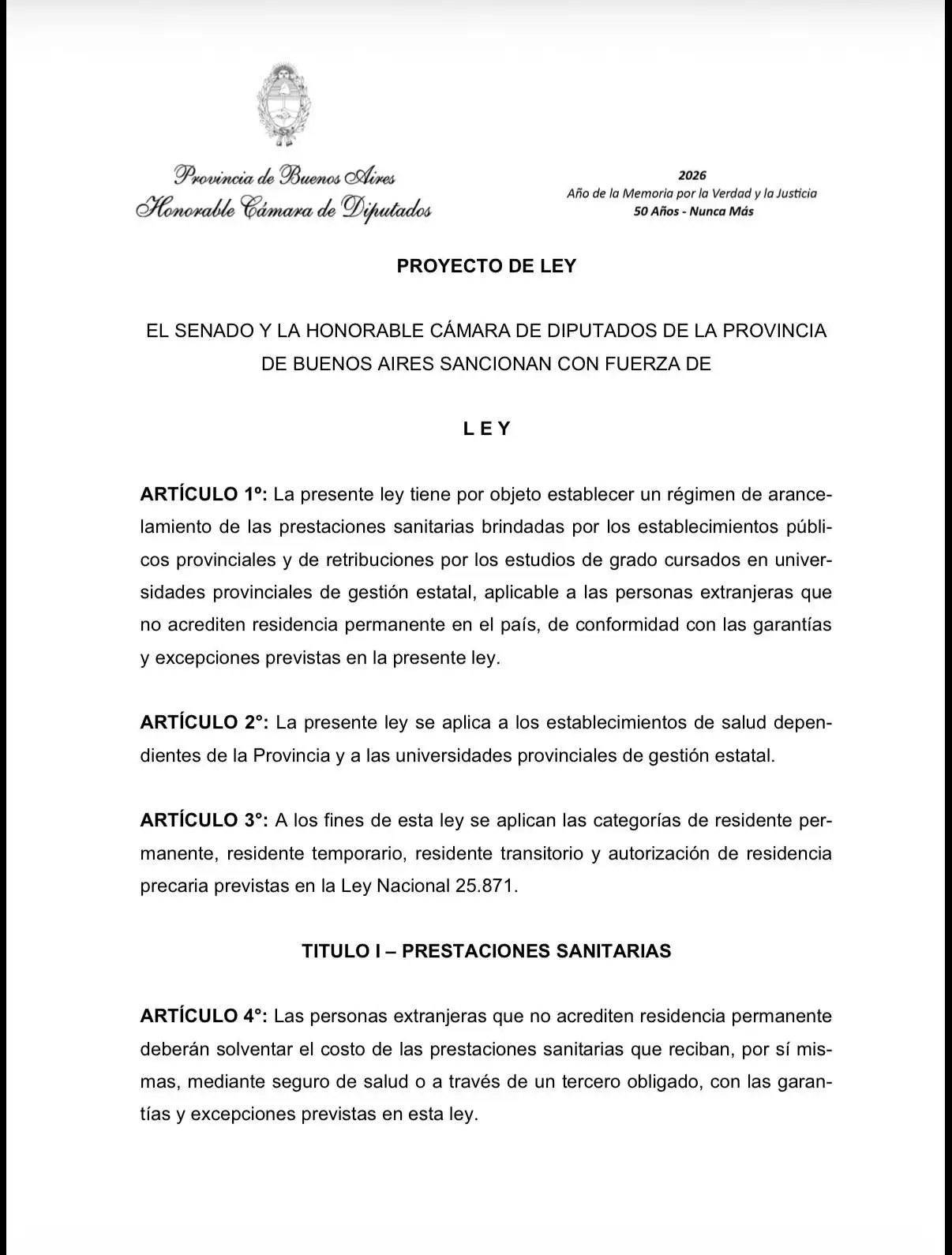
The text of the project establishes a concrete change in the current regime. Its provisions state: “ARTICLE 1: The purpose of this law is to establish a regime for charging for health services provided by provincial public establishments and for tuition fees for undergraduate studies at state-managed provincial universities, applicable to foreign persons who do not prove permanent residency in the country, in accordance with the guarantees and exceptions provided in this law.”
Thus, the proposal specifically targets foreigners who do not have permanent residency in Argentina, who would be required to pay for care in public hospitals and for university studies in institutions of the province.
The initiative is part of a broader debate that was reactivated after the 2026 World Cup, in which the access of foreign citizens to public education and the healthcare system in Argentina was discussed.
The criticisms arising from the mockery on social media served as a trigger for various sectors to raise the need to review the current conditions.
Meanwhile, the repercussions of the case continue in the academic sphere, where Argentine students have filed formal complaints with university authorities, requesting sanctions for the foreigners who disrespected Argentina and its national symbols.