In 2002, as Duhalde's minister, he implemented a measure that forced Argentines to convert their savings into dollars at $1.40 per dollar, while large companies settled their dollar debts at $1
This record of privileges and decay resurfaced today when President Javier Milei, during a radio interview at the Palermo Rural Exhibition, personally identified De Mendiguren as he circulated through the venue.
The president interrupted his technical analysis to publicly denounce the former minister: “Look... there goes someone who did a lot of harm to Argentina”, he stated emphatically.
Milei did not hold back in his descriptions of the industrial leader, labeling him a “thief” and responsible for “ruining the country with Duhalde and his whole gang”.
In a tone of indignation shared by those who suffered through the 2002 crisis, the head of state reaffirmed that “that guy stole 30 billion dollars from Argentines” and urged the public not to be indifferent: “when De Mendiguren passes by, tell him what it cost us”.
The President went so far as to define him as a “piece of shit” and a “human garbage”, directly blaming him for the “filthy decay” that followed the end of convertibility.
In the context of this confrontation, the Government recalled that politics has taken a total of 45 billion dollars from Argentines in recent years, adding the 15 billion from the end of convertibility and the 10 billion in reserves used by Cristina Kirchner.
To eradicate these practices, the Executive is promoting a reform of the Organic Charter of the BCRA under an unavoidable premise: “those who enact laws that alter fiscal balance will end up in prison for organized crime”, marking the end of the era where those responsible for state looting walked with total impunity.
In early 2002, while the Argentine citizens watched with anguish the systematic evaporation of their resources, one of the most iniquitous wealth transfers on record was being executed in the upper echelons of power. The architect of this plan was José Ignacio De Mendiguren, who made a direct leap from the top of the Argentine Industrial Union (UIA) to the Ministry of Production during the administration of Eduardo Duhalde.
The cornerstone of his management was the so-called asymmetric pesification, a financial engineering tool that acted as a mechanism of expropriation with clearly defined recipients.
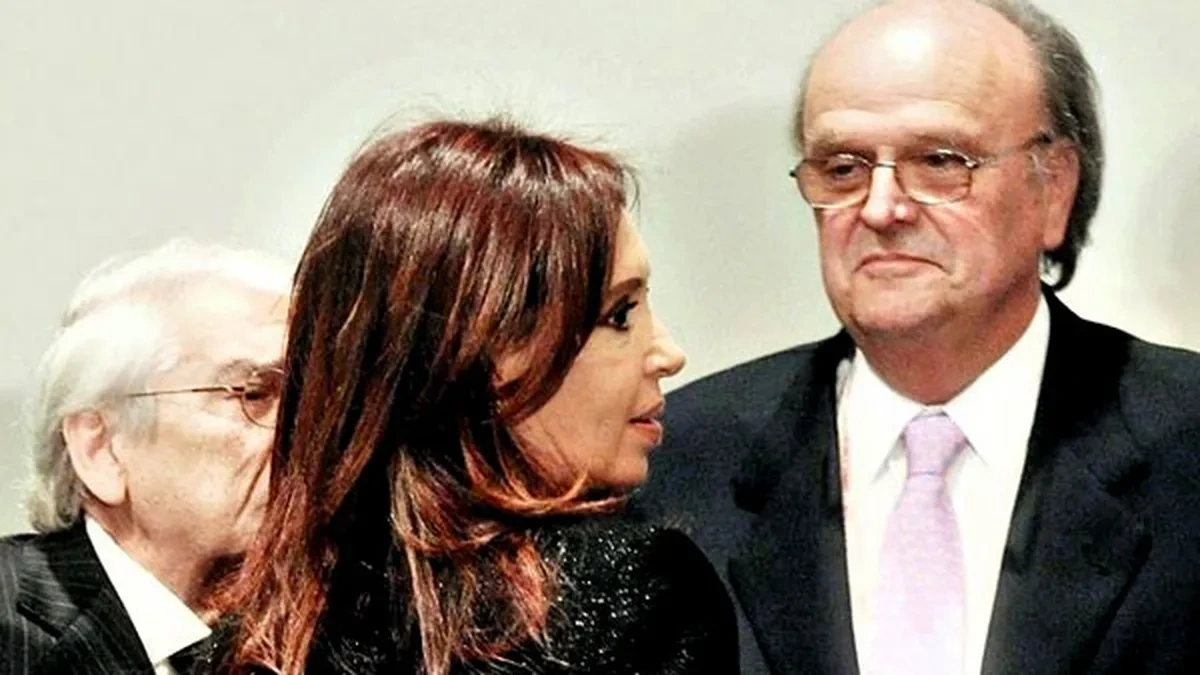
Cristina Fernández de Kirchner and José Ignacio de Mendiguren
While citizens who had deposited their savings in foreign currency were imposed an exchange rate of 1.40 pesos per dollar, the large indebted corporations —linked to the sector that De Mendiguren himself led— benefited from being able to settle their obligations under the one-to-one scheme.
This decision meant that more than thirty billion dollars were snatched from the pockets of those who saved to be given to those who speculated.
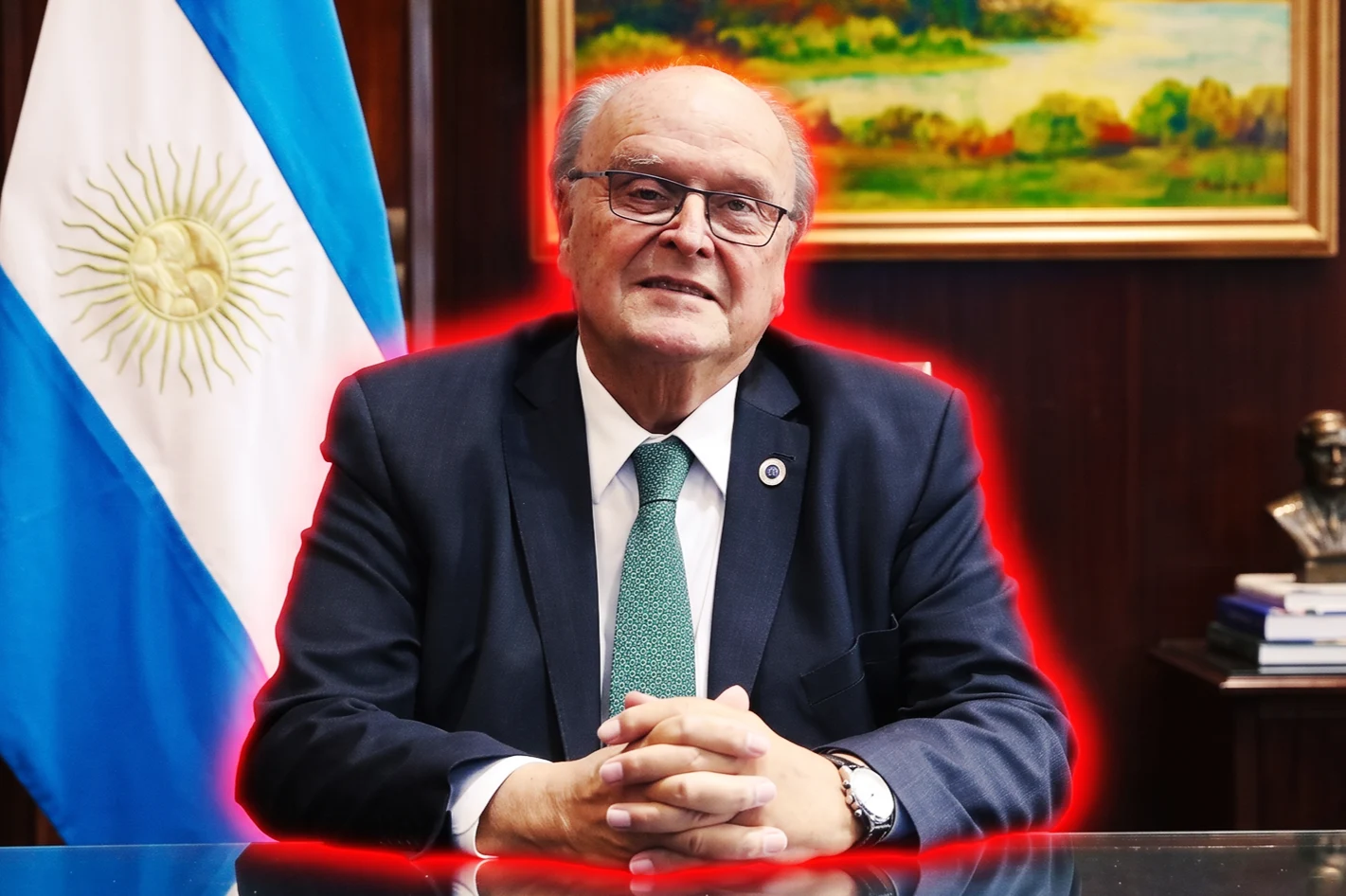
José Ignacio De Mendiguren
Despite the magnitude of this patrimonial damage, the former official enjoyed permanent political protection, being recurrently repositioned in relevant roles such as National Deputy, President of BICE, and Secretary of Industry. This recycling, supported by the ranks of Kirchnerism, also allowed him to maintain a strong protectionist lobby.
From his position as a textile businessman, he is accused of having pushed for the closure of commercial borders, forcing Argentines to pay exorbitant prices for low-quality national clothing and footwear, eliminating any possibility of access to competitive products from abroad.